Table of Contents
President Donald Trump moved to revive his global trade agenda this week following a Supreme Court ruling that struck down his previous legal authority, adding a layer of volatility to a tech sector already reeling from Artificial Intelligence (AI) disruption. Markets reacted sharply as the administration signaled a transition toward a 15% tariff "bridge," while software giants and semiconductor leaders braced for a week defined by high-stakes earnings and potential multi-billion-dollar mergers. The shifting policy landscape has stalled major trade agreements with India and the European Union, leaving investors to navigate a "risk-off" environment that has dragged the Nasdaq 100 toward session lows.
Key Points
- The Trump Administration is pivoting to Section 122 authority to impose a 10% to 15% tariff after the Supreme Court invalidated the use of the International Emergency Economic Powers Act (IEEPA).
- PayPal shares surged over 6% following reports of unsolicited takeover interest from a "large rival" and private equity firms, potentially signaling a wave of consolidation in the payments sector.
- Enterprise software stocks, including Salesforce and Workday, faced a significant sell-off as investors fear AI tools like Anthropic’s new cybersecurity offerings will disrupt traditional Software-as-a-Service (SaaS) business models.
- Market bellwether NVIDIA remains flat ahead of its Wednesday earnings report, with analysts warning that the stock requires a "massive beat" to overcome high valuations and slowing momentum.
The Rebranding of the Tariff Agenda
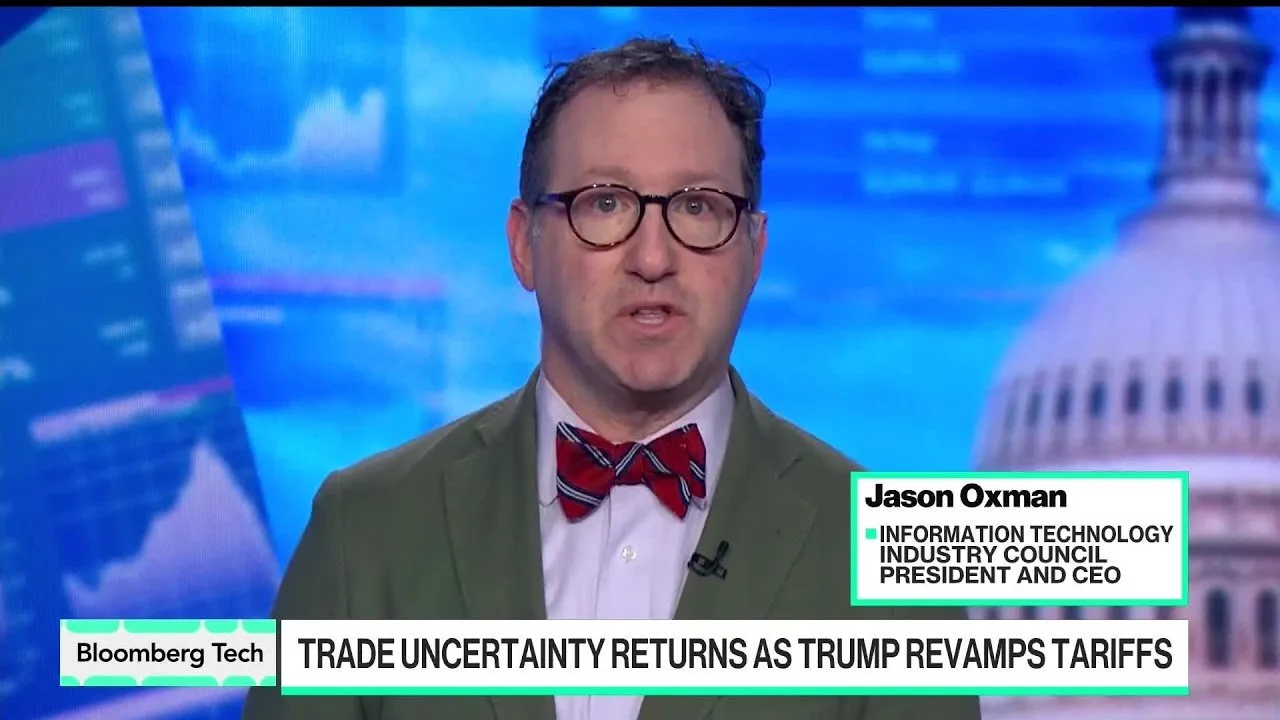
Following the Supreme Court’s decision to strike down the administration's use of IEEPA for global tariffs, the executive branch has quickly pivoted to alternative legal frameworks. On Saturday, President Trump announced via Truth Social a plan to implement a 10% tariff using Section 122, with intentions to raise that rate to 15%. This move is being characterized by the administration as a temporary "bridge" until more permanent, sector-specific trade investigations can be completed.
The sudden legal shift has immediately chilled international diplomacy. India has reportedly suspended meetings intended to finalize trade details, while the European Union is holding off on parliamentary ratification of deals struck last year. Senior Tech Editor Mike Shepard noted that this uncertainty might undermine the administration’s leverage ahead of a scheduled meeting with Xi Jinping in China next month.
"The administration is really trying to ensure all of the trade agreements it reached with trading partners over the past year do not come undone. They try to offer some assurance that this setback was temporary... but those authorities will take months to investigate and carry out. That is going to add a whole lot of uncertainty." — Mike Shepard, Senior Tech Editor.
The impact extends to key tech allies, including Taiwan, Japan, and South Korea. The administration has historically used the threat of tariffs to secure domestic investment in U.S. manufacturing. Without immediate tariff leverage, concerns are mounting that promised investments in Arizona and Texas chip plants could slow.
AI Anxiety and the Software Sell-Off
While hardware providers have largely dominated the AI narrative, the software sector is currently facing an existential crisis. Shares of Salesforce have plummeted 34% year-to-date, with Snowflake and Workday also seeing deep losses. The prevailing fear among institutional investors is that AI is no longer just a tool for software companies, but a potential replacement for them.
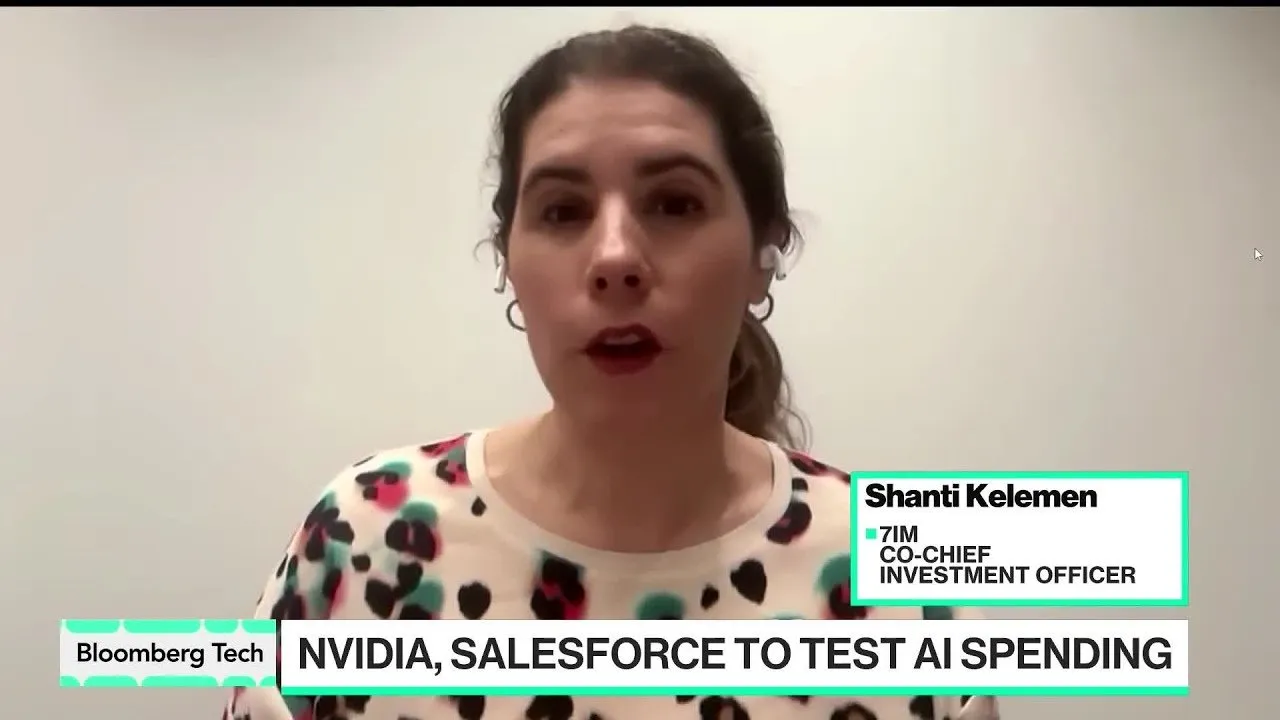
The release of new coding and cybersecurity tools from Anthropic and OpenAI has accelerated this trend. Shanti Kelemen, Co-CIO of 7IM Holdings, suggests that the market has entered a period of indiscriminate selling as it struggles to identify which software firms will survive the transition.
"For a long time, we didn't know who the AI winners and losers were... now people have realized they don't know who the winners will be, just indiscriminately selling a lot of the market. AI can dramatically reduce the cost to deliver programming, but executing that transition is difficult." — Shanti Kelemen, 7IM Holdings Co-CIO.
The unease has even permeated the private credit market. Blue Owl Capital recently "gated" one of its funds, preventing investor withdrawals. Analysts point to the firm’s heavy exposure to Software-as-a-Service (SaaS) companies, which were previously considered non-cyclical, as a primary driver of the current liquidity freeze.
NVIDIA and the M&A Landscape
All eyes are on NVIDIA, which is set to report earnings on Wednesday. Despite its central role in the AI buildout, the stock has traded sideways for several quarters. Trading at 24 times historic earnings, the semiconductor giant faces immense pressure to prove that the massive capital expenditures from Meta, Amazon, and Microsoft are continuing at pace.
Simultaneously, the tech sector is seeing a resurgence in M&A chatter. PayPal became the latest target of takeover speculation, with Bloomberg reporting interest from a large rival in acquiring the entire company. This follows a difficult 12-month period where PayPal shares fell 46%, making it an attractive target for private equity looking to "pick through the rubble" of the payments sector.
In the media space, the battle for Warner Bros. Discovery assets continues to intensify. Netflix is navigating a Department of Justice (DOJ) probe regarding its bid for the company’s studio and streaming business, while Skydance and Paramount are expected to submit a "best and final" offer that could reach $32 per share for the entirety of the company.
"I know I’m speaking to people around David Ellison; they feel like they need to put forward an offer that will make it hard for Netflix to match because Netflix shareholders are getting a little restless about this." — Lucas Shaw, Bloomberg.
As the 150-day window for the Section 122 tariff investigation begins, the tech industry remains in a defensive posture. The combination of high interest rates, aggressive trade policy, and rapid AI-driven disruption has forced a re-evaluation of valuations across the S&P 500. Investors will look to NVIDIA’s management team on Wednesday for any guidance that might stabilize the sector's volatile trajectory into the next quarter.