
Table of Contents
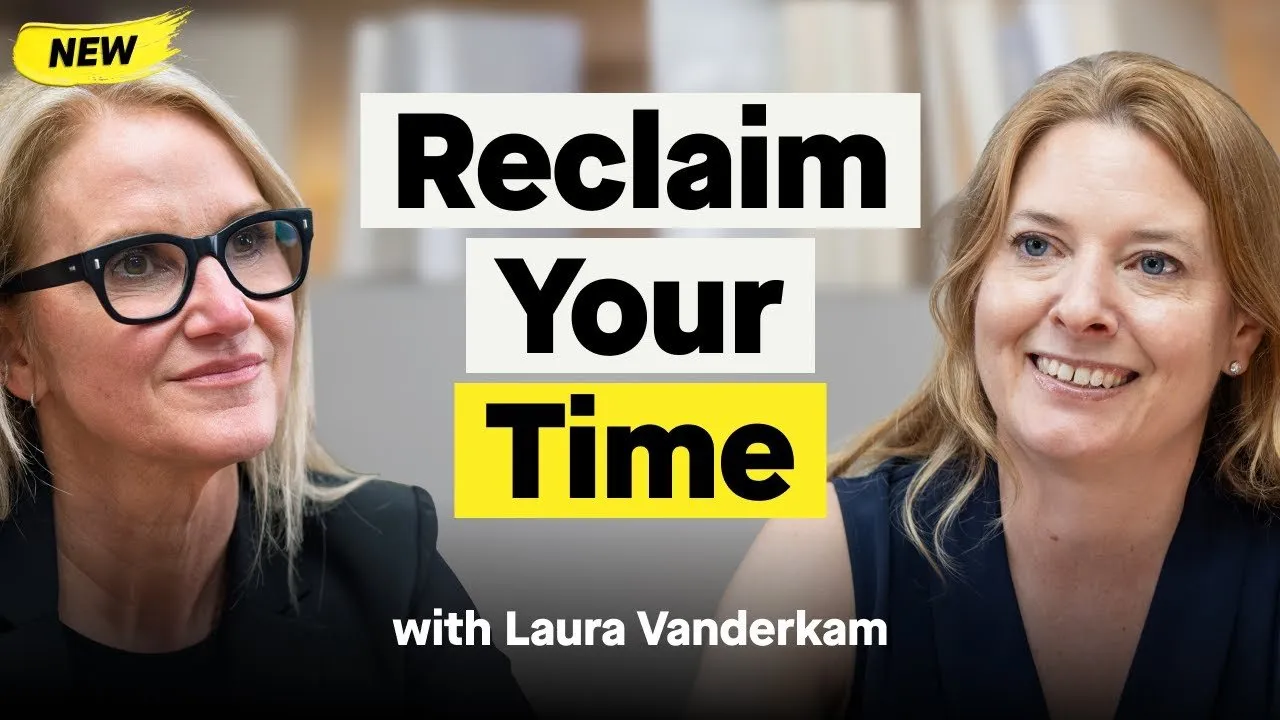
Most of us live with a constant, nagging narrative: we are overwhelmed, we are behind, and there is simply not enough time. We view our lives as a series of obligations, moving from one "have-to-do" to the next, with little space left for what we actually want to do. However, time management expert Laura Vanderkam suggests that this feeling of scarcity is often a matter of perspective and mathematics rather than reality. By auditing how we spend our weeks and applying specific structural rules, it is possible to reclaim discretionary time—even in the midst of a chaotic schedule.
In a revealing conversation with Mel Robbins, Vanderkam breaks down the philosophy behind her book, Tranquility by Tuesday. The core message is empowering: you are the kind of person who can make space for things that are fun, restorative, and meaningful. It requires shifting from a reactive state to a proactive one, using nine proven strategies to construct a life that feels as good as it looks.
Key Takeaways
- The 168-Hour Rule: There are 168 hours in a week. Even with a full-time job (40 hours) and 8 hours of sleep a night (56 hours), you are left with 72 hours of discretionary time.
- Plan on Fridays: Friday afternoon is often "slide" time. repurposing this low-energy window to plan the upcoming week helps you avoid the "Sunday Scaries" and hit the ground running on Monday.
- The "3x" Habit Rule: Perfectionism kills consistency. Doing a habit just three times a week is enough to make it part of your identity.
- Memory Making: Time seems to speed up when life is routine. By planning one big adventure and one little adventure weekly, you create memories that slow down your perception of time.
- Effortful Fun: We often scroll on our phones because it is effortless. Choosing "effortful fun" (like reading or a hobby) revitalizes us, whereas scrolling often leaves us feeling drained.
Deconstructing the "No Time" Narrative
The first step to taking control of your schedule is understanding the math. When people say they have "no free time," they usually mean they don't have as much as they want, or that their time is fragmented. Vanderkam points to a specific number that changes the equation: 168.
That is the total number of hours in a seven-day week (24 multiplied by 7). When you subtract a standard 40-hour work week and a healthy 56 hours for sleep (8 hours a night), you are left with 72 hours. While those hours include commute, chores, and childcare, 72 hours is a significant amount of time to work with.
I think a lot of us are walking around with this story that we are incredibly busy. We have no time for anything... But I would question the narrative of having no time for anything. And I think sometimes looking from the perspective of 168 hours can help us see that a little bit better.
By viewing the week as a whole cycle rather than judging yourself based on a crunched Tuesday, you open up opportunities to find pockets of freedom that seemed non-existent before.
Foundational Habits for Structure and Sleep
Before you can optimize your leisure time, you must stabilize your biological and logistical foundations. This starts with sleep and ends with planning.
Rule 1: Give Yourself a Bedtime
Many adults view a bedtime as a restriction for children, but it is actually the ultimate act of self-care. Vanderkam’s research found that while people often get enough total hours of sleep over a week, the consistency is erratic. You might sleep 5 hours on Tuesday and crash for 10 hours on Wednesday.
This "disorderly sleep" creates a sensation of jet lag. By setting a strict bedtime based on when you need to wake up, you regulate your circadian rhythm. The result? You wake up with more agency. Instead of snoozing until the last possible second, you reclaim the morning for yourself.
Rule 2: Plan on Fridays
Most productivity advice suggests planning on Sunday night or Monday morning. Vanderkam argues for Friday afternoons. By 3:00 PM on Friday, most people are sliding into the weekend and not doing significant work. This is the perfect time to look at the week ahead.
This strategy serves three purposes:
- Resource Management: You can turn "wasted" time into productive planning time.
- Anxiety Reduction: You enter the weekend knowing exactly what Monday looks like, eliminating the low-level dread known as the "Sunday Scaries."
- Logistics: If you need to set up meetings, you can still catch people before they leave for the weekend.
Managing Energy, Not Just Time
Time management is useless if you lack the energy to execute your plans. Two specific rules in Vanderkam's framework address physical energy and the mental load of perfectionism.
Rule 3: Move by 3:00 PM
Human energy naturally dips in the mid-afternoon. This is when we often turn to caffeine or fake work—staring at a screen without actually producing anything. The antidote is physical movement.
Vanderkam cites research showing that even 5 to 10 minutes of physical activity can spike energy levels from a "3" to a "9." This doesn't require a gym session; a brisk walk or climbing stairs is sufficient. The mantra here is that exercise doesn't take time; it makes time. By rebooting your brain, you become more efficient in the hours that follow, preventing work from bleeding into your evening.
Rule 4: Three Times a Week is a Habit
We often think of habits as daily occurrences. If we miss a day of journaling or running, we feel like failures and quit. This all-or-nothing thinking destroys progress.
Vanderkam proposes a shift in definition: Three times a week is a habit. Since we live our lives in weeks, not days, doing something three times means it is a regular part of your existence. This rule removes the pressure of daily performance and accounts for the reality that life happens. If you run three times a week, you are a runner. If you have family dinner three times a week, you are a family that eats together.
Injecting Joy and Adventure
The ultimate goal of time management isn't just to do more work; it is to enjoy your life. To do this, you must be intentional about creating memories and claiming autonomy.
Rule 6: One Big Adventure, One Little Adventure
Routine is efficient, but it is also the enemy of memory. When every day looks the same, time collapses into a blur. To slow down time, you must introduce novelty.
We don't say 'where did the time go' when we actually remember where the time went. And the reason we remember our time is because we have created memories.
Vanderkam suggests planning two adventures per week:
- One Big Adventure: A 3-4 hour window, perhaps on a weekend (e.g., going to a new park, a museum, or a hike).
- One Little Adventure: A 60-minute window during the week (e.g., a lunch break walk in a new part of town or a Wednesday night choir practice).
Rule 7: Take One Night for You
This is frequently the most resisted rule. Vanderkam advises taking one night (or a few hours) a week off from work and family responsibilities to do something purely for yourself. To make this stick, it helps to choose an activity that involves a commitment to others, like a sports league, a book club, or a class.
If you just plan to "take a bath," you will likely push it back when a work email arrives or a child needs something. If you have a tennis partner waiting for you at 7:00 PM, you will show up. This practice reminds you that you are an individual with interests independent of your career and family roles.
Tactical Efficiency for a Calmer Life
Finally, to prevent the small stuff from overwhelming the big stuff, you need tactical defense mechanisms against chaos.
Rule 5: Create a Backup Slot
Life is unpredictable. Kids get sick, cars break down, and meetings run late. If your schedule is packed 100% full, one disruption ruins the entire week. Vanderkam suggests scheduling a "backup slot"—an open window of time (perhaps Friday afternoon) designated for overflow.
If nothing goes wrong during the week, you have found free time. If something does go wrong, you simply move the task to the backup slot rather than panicking or borrowing time from the weekend.
Rule 8: Batch the Little Things
The mental load of small tasks—sending a permission slip, buying a birthday gift, answering a non-urgent email—can shatter your focus. Vanderkam recommends keeping a "Friday Punch List."
When a small task pops into your head, write it down and return to deep work. Then, during a low-energy window (like that Friday planning session), blitz through them all at once. This creates "economies of scale" and prevents you from procrastinating on hard work by doing easy "busy work."
Rule 9: Effortful Before Effortless Fun
When we finally get free time, we often default to "effortless fun," such as doom-scrolling on social media. While this is easy, it rarely feels rejuvenating. "Effortful fun"—reading a book, doing a puzzle, calling a friend—requires a small activation energy but yields a much higher return on happiness.
The rule is simple: Commit to doing just a few minutes of effortful fun before you switch to the easy stuff. Read three pages of a book. If you still want to scroll after that, go ahead. But often, you'll find yourself engaged in the hobby and choosing to continue.
Conclusion
Taking control of your time is not about squeezing more productivity out of every second; it is about stewardship. It is recognizing that while we cannot manufacture more time, we have more agency than we believe over the 168 hours we are given.
By telling yourself a new story—"I have a lot going on, but I have time for what matters"—and backing it up with these nine rules, you change your relationship with your life. You move from surviving the week to actually experiencing it.



)