Table of Contents
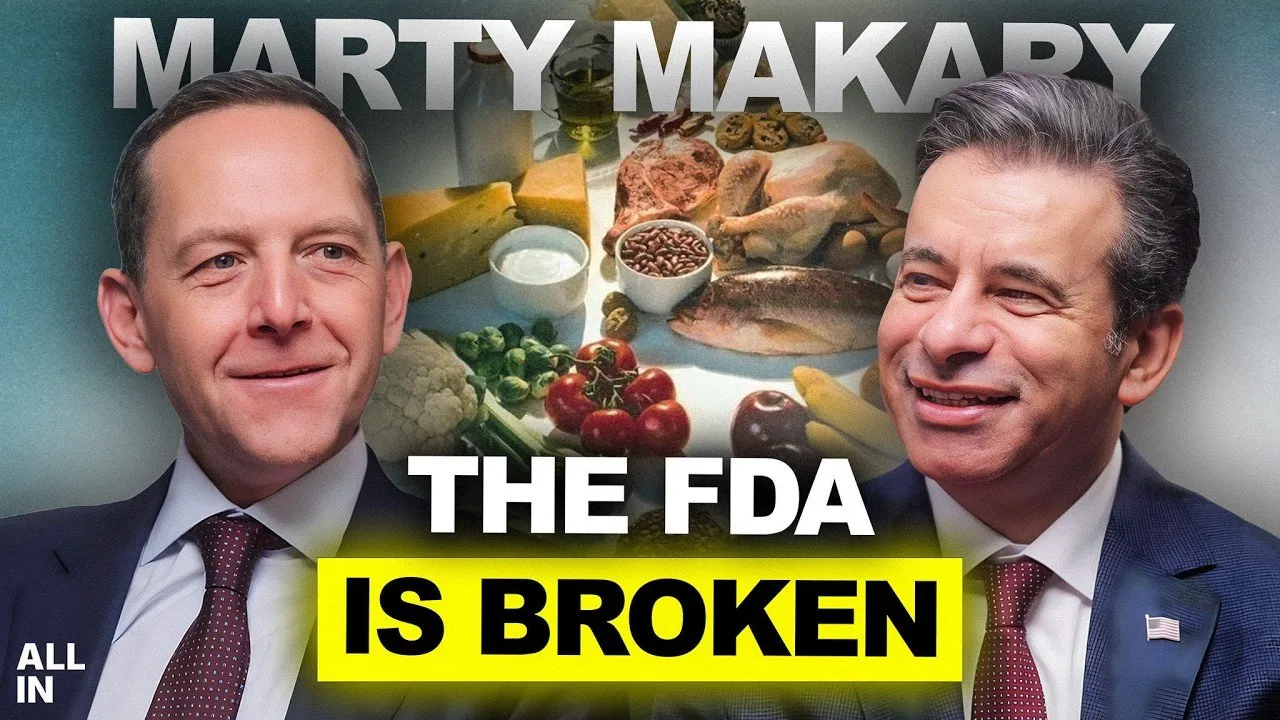
At the JPMorgan Healthcare Conference in San Francisco—the nexus of the global biotech industry—FDA Commissioner Dr. Marty Makary outlined a radical departure from the status quo. For decades, the Food and Drug Administration has been viewed by many industry insiders as a slow-moving bureaucratic giant. However, under new leadership, the agency is pivoting toward a model of aggressive modernization, transparency, and efficiency.
The conversation revealed a comprehensive overhaul of agency operations, from how clinical trials are conducted to how the government defines healthy food. Makary’s mandate is clear: the era of 12-year drug approval timelines and "medical dogma" is over. By leveraging data, challenging legacy assumptions, and prioritizing patient outcomes over process, the "New FDA" aims to secure American competitiveness in biotechnology while restoring public trust.
Key Takeaways
- Acceleration of Approvals: The FDA is moving from two required pivotal trials to one and eliminating mandatory animal testing where computational models suffice, aiming to drastically cut the 10–12 year drug development timeline.
- Overhauling Nutrition Science: The agency is flipping the food pyramid to prioritize protein and whole foods while removing artificial petroleum-based dyes, challenging decades of low-fat/high-carb guidance.
- Regulatory Competitiveness: To compete with China and Australia, the FDA is streamlining the Investigational New Drug (IND) process and centralizing Institutional Review Boards (IRBs).
- Price Transparency & Access: Strategies to lower costs include "Most Favored Nation" pricing, fast-tracking biosimilars, and moving safe prescription drugs to Over-the-Counter (OTC) status.
- Restoring Trust: The administration is revising vaccine schedules to focus on "core essential" doses and investigating root environmental causes of chronic diseases like autism.
Modernizing the Machine: Speed, Safety, and Global Competitiveness
One of the central themes of Makary’s tenure is the urgent need to modernize the FDA’s internal machinery. Upon taking office, the administration identified significant bureaucratic inefficiencies, including fragmented internal communication and outdated staffing priorities. By restructuring HR and IT and centralizing services, the agency reports hitting 100% of its user fee target dates in the past year.
The Race Against China
The modernization effort is driven by geopolitical reality. The U.S. faces stiff competition from China, which has rapidly accelerated its biotech capabilities. Makary noted that while the U.S. once dominated scientific publishing and licensing, the gap is closing—or in some cases, inverting.
"We were getting clocked by China, by Australia, and other countries that were doing things more efficiently with less red tape... We’ve got to modernize the agency and be more competitive. If we don’t, then we’re also putting our industry at risk."
To retain leadership, the FDA is overhauling the Phase 1 and IND processes. Current hurdles, such as decentralized hospital contracting and slow Institutional Review Boards (IRBs), have pushed early-stage research overseas. The goal is to centralize these reviews and digitize applications to reduce approval times from months to days.
Revolutionizing Clinical Trials
Perhaps the most significant regulatory shift is the move away from rigid, legacy trial requirements. The FDA announced a default requirement of one pivotal trial rather than two, provided the study is well-designed with strong statistical power. This change alone could save companies hundreds of millions of dollars and years of development time.
Furthermore, the agency is embracing Bayesian statistics and continuous trials. Instead of pausing for periodic committee reviews, data can be analyzed in real-time using AI to identify safety signals or efficacy earlier. Additionally, the FDA is phasing out mandates for animal testing—specifically chimpanzee and beagle studies—where modern organ-on-a-chip technology and computational modeling provide more accurate human safety data.
Disrupting Dogma: Nutrition and the Food Supply
Makary has taken a firm stance against what he terms "medical dogma," particularly regarding nutrition. The administration recently announced profound changes to dietary guidelines, effectively flipping the food pyramid to emphasize protein and natural fats while demonizing refined carbohydrates and ultra-processed foods.
The FDA argues that previous guidelines contributed to the nation's metabolic health crisis, citing that 38% of American children now face prediabetes or diabetes. The agency is also moving aggressively to remove artificial ingredients, having already taken action to ban nine petroleum-based food dyes.
"Nutrition science may be one of the most corrupted fields in all of science... We have drug our nation's kids at scale. It's wrong. It needs to stop. We have to re-examine the root causes."
The GLP-1 Context
While acknowledging the efficacy of GLP-1 drugs (like Ozempic) in combating obesity and reducing inflammation, the administration views their ubiquity as a symptom of a failed food system. The focus is shifting toward "real food" and soil health, treating the root cause of metabolic dysfunction rather than relying solely on pharmaceutical intervention.
Crushing Costs: Pricing and Accessibility
Healthcare costs, currently devouring roughly 15% of U.S. GDP, are a primary target for the new administration. The strategy to lower drug prices relies on increasing competition and cutting regulatory red tape rather than price setting alone.
Most Favored Nation & Biosimilars
The administration is implementing Most Favored Nation Status Pricing, ensuring the U.S. government—the world's largest drug purchaser—does not pay more than other developed nations. Additionally, the FDA is streamlining the approval path for biosimilars (generic versions of biologic drugs). By treating them more like small-molecule generics, the agency aims to reduce development costs by over $100 million per drug, fostering competition for expensive blockbusters like Humira.
The Shift to Over-the-Counter (OTC)
A major initiative for 2026 is moving safe, common prescription medications to OTC status. The FDA argues that "paternalism" has kept safe drugs behind pharmacy counters, inflating costs through doctor visits and Pharmacy Benefit Manager (PBM) fees.
By placing drugs on shelves with visible price tags, the agency hopes to bypass the opaque PBM system and unleash consumer market forces to drive down prices. Criteria for OTC transitions will be strict but logical: drugs must have no abuse potential, be safe for self-administration, and require no lab monitoring.
Rebuilding Trust: Vaccines and Chronic Disease
Addressing the decline in public trust following the COVID-19 pandemic is a stated priority. Makary criticized the "absolutism" of past public health messaging, advocating instead for humility and transparency.
A New Vaccine Schedule
The FDA has reviewed international standards to address the U.S. vaccine schedule, which is an outlier with 72 recommended doses. The administration is introducing a list of "Core Essential Vaccines"—roughly 38 doses—aligning closer to other developed nations. The intent is not to ban vaccines but to prioritize essential immunizations and reduce vaccine hesitancy by meeting parents "where they are at."
Investigating Root Causes
The administration is also redirecting research funding toward the environmental and biological root causes of chronic diseases, such as autism and autoimmune disorders. Makary highlighted the potential role of the microbiome and environmental exposures, areas he argues were previously underfunded in favor of genetic research.
Future Frontiers: AI and Cures
Looking forward, the FDA is preparing for a future defined by Artificial Intelligence and gene therapies. The agency is deregulating consumer wearables and AI tools to foster innovation, only stepping in when claims of "medical grade" accuracy are made.
The ultimate goal of these sweeping reforms is to unleash cures. The administration has issued priority vouchers for breakthrough therapies in congenital deafness and multiple myeloma, signaling a willingness to move at the speed of science. With high hopes for cures in Type 1 Diabetes, ALS, and PTSD, the FDA is positioning itself not just as a regulator, but as a catalyst for human health.
"We have got to move at the speed that my patients demanded, not at government speed. So we are streamlining and modernizing the FDA, and we are not wasting time."
Conclusion
The "New FDA" represents a philosophical shift from risk aversion to calculated innovation. By challenging established norms in clinical trials, nutrition, and drug pricing, Dr. Marty Makary aims to transform the agency into a streamlined engine for public health. While these reforms face the friction of overturning decades of institutional inertia, the message to the industry is clear: the FDA is open for business, provided that business delivers meaningful, affordable, and safe results for the American patient.