Table of Contents
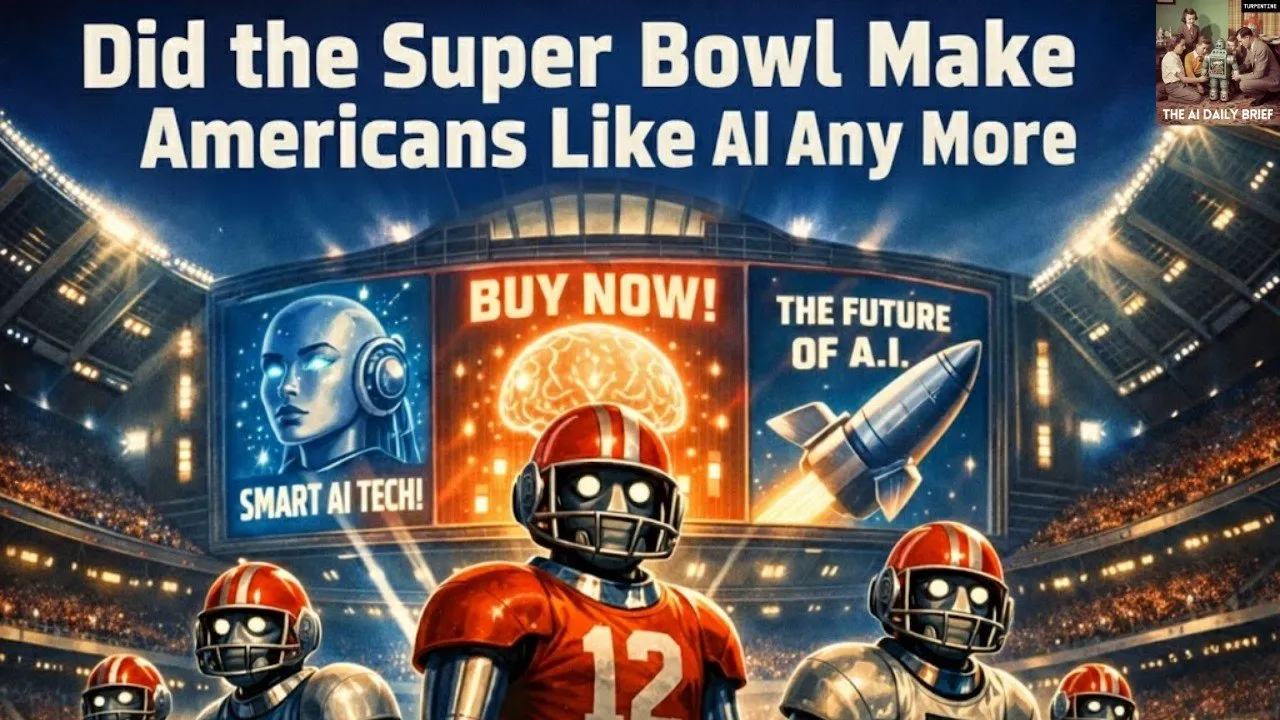
A significant portion of this year’s Super Bowl commercial breaks was dominated by artificial intelligence companies, marking a high-stakes attempt by the tech sector to rehabilitate its public image through one of the world's most-watched events. With nearly a quarter of all advertisements featuring AI technology, the industry sought to pivot the narrative from fears of job displacement to themes of empowerment and creativity, though audience reception suggests the effort yielded mixed results.
Key Points
- Significant Presence: According to AdWeek, 23% of Super Bowl commercials were for AI companies or highlighted AI usage in production.
- Public Skepticism: The ads aired against a backdrop of low consumer trust, with only 32% of Americans trusting AI and 73% fearing it will cause net job losses.
- Divergent Strategies: Companies like Google and OpenAI focused on human empowerment, while others like Amazon leaned into humor regarding AI fears.
- Mixed Reception: While Google’s Gemini ad received acclaim for emotional resonance, Anthropic’s spot ranked in the bottom 3% for likability due to confusing messaging.
The Context: Battling Deep-Seated Skepticism
The influx of AI advertising comes at a critical juncture for the technology sector. Public sentiment regarding artificial intelligence is currently overwhelmingly negative. Recent data from an Edelman study indicates that only 32% of Americans trust AI technology. Furthermore, a Pew Research Center study found that 52% of Americans are more concerned than excited about AI, compared to only 10% who feel the opposite.
The primary driver of this anxiety appears to be economic stability. Gallup reports that 73% of Americans expect AI to cause net job losses, while Search Light found that 51% believe the technology will replace rather than supplement human work. Consequently, the Super Bowl ads were tasked not just with selling products, but with addressing the broader economic anxiety of the "middle voice"—average consumers trying to understand how these tools fit into their lives.
Strategic Approaches: Empowerment and Utility
The most successful advertisements attempted to reframe AI as a tool for personal agency rather than replacement. Google’s spot for Gemini was widely regarded as a standout success. By depicting a parent and child using AI to visualize renovations for a new home, Google bypassed technical jargon to focus on emotional utility.
"Google really killed it with their Super Bowl ad. Clear, concise, human, and it instantly showed you the value of their product and why you need it with a real-world example." — Artificial Nightmares
Similarly, OpenAI debuted a commercial with the tagline "You can just build things," emphasizing the democratization of creation. The ad featured vignettes of individuals using ChatGPT for tasks ranging from coding to painting, reinforcing the company’s positioning of AI as an extension of human capability. OpenAI CMO Kate Rouch described the campaign as a reflection of a material change in the industry.
"We’re living through a time when people can build things that were previously out of reach... Now AI is not only answering your questions, but is going to do things on your behalf." — Kate Rouch, CMO of OpenAI
Wix’s integration of its Vibe Coding platform also leaned into this theme, using humor to show office workers delighted by their new ability to build apps, effectively landing the message that AI can unlock new skills rather than simply automate existing ones.
Missed Marks and Mixed Messages
Not all campaigns successfully navigated the public’s apprehension. Anthropic’s advertisement for Claude, which positioned the chatbot as an ad-free alternative to competitors, struggled to connect. According to an iSpot survey, the ad’s likability score fell into the bottom 3% of Super Bowl ads from the past five years. Viewers largely found the premise—people turning to AI for help only to be sold products—confusing without the specific context of competitors’ business models.
Furthermore, GenSpark faced backlash for its ad featuring Matthew Broderick. While intended to highlight time-saving benefits, the narrative of AI "giving everyone the day off" inadvertently tapped into the very fears of workforce replacement that the industry is trying to quell. Social media reactions interpreted the message not as liberation from drudgery, but as a signal that employers no longer need human staff.
On the more bizarre end of the spectrum, Svedka’s "Shake your bots off" campaign, featuring robotic figures in a rave setting, was widely panned for its uncanny, horror-movie aesthetic, failing to generate positive brand association.
Market Bubbles and Viral Hoaxes
The frenzy surrounding AI advertising also highlighted symptoms of a potential market bubble. A newcomer, AI.com, aired a spot encouraging users to claim handles for a new AI assistant. The company, which reportedly purchased its domain for $70 million, saw its website crash immediately following the ad. Critics noted that the product appeared to be a thin "wrapper" for existing open-source technology, raising questions about the sustainability of such high-spend marketing strategies for unproven products.
Additionally, the chaotic nature of the current AI landscape was underscored by a sophisticated hoax. Following OpenAI’s actual commercial, a fake ad featuring actor Alexander Skarsgård circulated online, purportedly showing a new OpenAI device. The high production value of the fake convinced many analysts and sparked confusion, demonstrating the volatility and intense scrutiny currently surrounding major AI players.
What's Next for AI Marketing
The 2024 Super Bowl served as a massive focus group for the AI industry. The clear divide in reception suggests that messaging focused on specific, human-centric utility—like Google’s Gemini—resonates far better than abstract tech optimism or defensive posturing.
As the initial hype cycle settles, companies will likely pivot toward demonstrating tangible value propositions that address the "middle voice" of America—those who are neither techno-optimists nor Luddites, but simply workers looking for tools to navigate an uncertain economic future.