Table of Contents
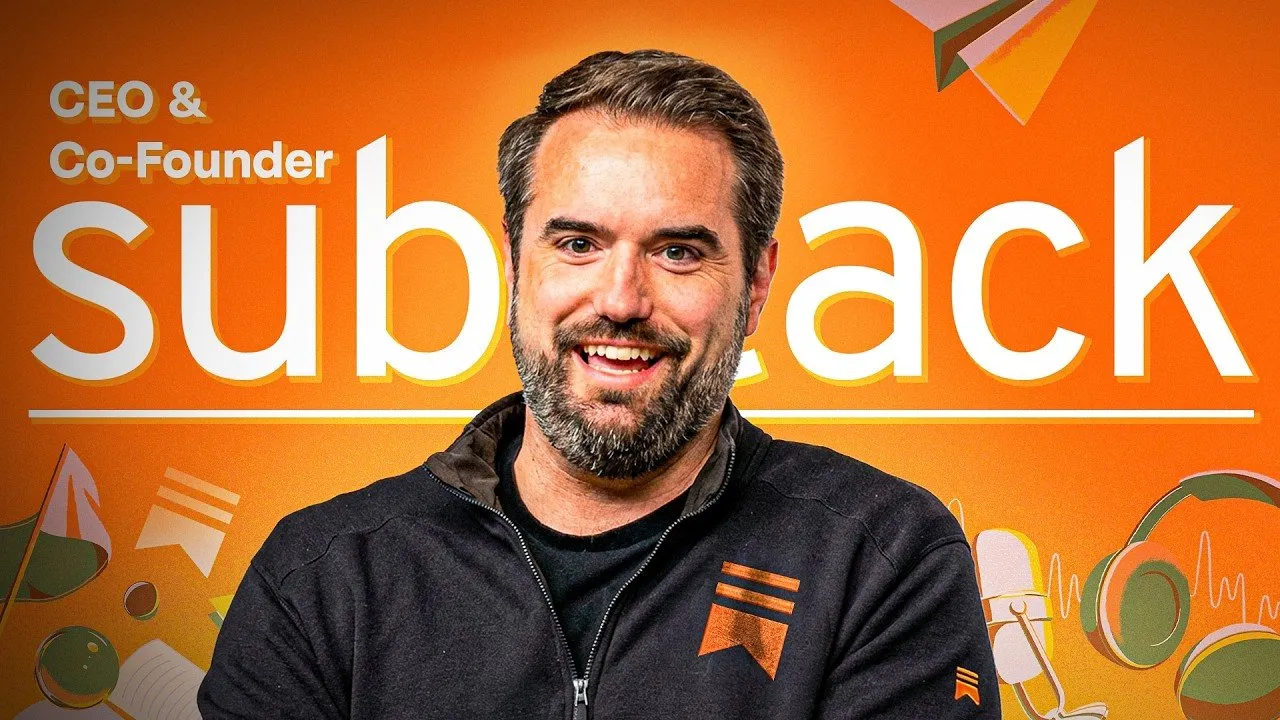
In the high-stakes world of Silicon Valley, the conventional wisdom often leans toward rapid scaling and swift exits. However, Chris Best, CEO and co-founder of Substack, argues that the most enduring companies are built on something far more substantial than the pursuit of quick profits. They are built on conviction, controversy, and a willingness to be misunderstood.
During a candid fireside chat, Best detailed the philosophy that propelled Substack from a simple newsletter tool to a cultural economic engine. His insights bridge the gap between hard engineering and soft culture, offering a roadmap for founders who want to build products that matter.
The following analysis explores how Substack navigates the intersection of technology, free speech, and the creator economy, proving that strong values are often the ultimate competitive advantage.
Key Takeaways
- Missionaries outperform mercenaries: Founders driven by a desire to solve a specific problem often outlast and outperform those simply looking for a quick financial exit.
- Polarization is a hiring filter: Strong company values should repel the wrong people just as intensely as they attract the right ones.
- The "Sci-Fi Vision" strategy: Successful startups balance a grand, long-term vision with a concrete, immediate utility (like a simple paid newsletter).
- AI requires taste: While AI lowers the barrier to entry for creation, human taste and curation remain the differentiating factors between "slop" and art.
- Platform independence is vital: Building a direct relationship with an audience is the only hedge against the whims of algorithmic giants like Facebook and Twitter.
- Principled controversy is necessary: You cannot build a meaningful platform without upsetting someone; changing your principles to appease critics is a fast track to irrelevance.
The Missionary Advantage: Why Intent Matters
There is a distinct difference between starting a company to make money and starting a company because you are frustrated with the status quo. Referencing a philosophy often attributed to Jeff Bezos, Best categorizes founders into two camps: mercenaries and missionaries.
Mercenaries are focused on the "flip"—making money in the fastest way possible. Missionaries, conversely, are obsessed with their product and their customers. Counterintuitively, it is the missionaries who often achieve the greatest financial success because they possess the stamina to navigate the inevitable troughs of the startup journey.
"The ranks of the very most successful things are composed of people who come at it with some greater motivation than, 'Hey, I want to make some money the fastest way I can.' The idea to start a company came from the idea to do something that mattered."
Substack did not begin as a business plan; it began as a reaction to a broken media ecosystem. The founders saw a world driving everyone crazy—specifically through the ad-supported incentives of platforms like Twitter—and asked a simple question: What if the incentives were different?
Using Values as a Hiring Filter
Maintaining a "missionary" culture requires rigorous gatekeeping during the hiring process. For Substack, this means being loud and apologetic about their values, particularly regarding free speech and independent publishing.
Best argues that a strong culture acts as a polarizing filter. When a company is clear about its stance, it naturally repels those who would be a poor fit while acting as a magnet for those who share the vision. In the early days, before a startup is "cool" or famous, this shared belief is the only leverage a founder has to recruit top-tier talent.
Bridging the Gap Between Tech and Culture
One of Substack’s defining characteristics is its ability to straddle two often opposing worlds: the rigid logic of software engineering and the nuanced fluidity of media culture. According to Best, most tech companies approach media in an "autistic" way—treating content purely as data to be optimized by algorithms. Conversely, traditional media companies often approach technology cluelessly, failing to understand the underlying mechanics of the internet.
Substack’s DNA is a deliberate union of art and science. By having co-founders who represent both sides—a writer and a CTO—the platform can build economic engines that respect the sanctity of the writing itself.
The "Sci-Fi Vision" and the Concrete Step
A major trap for founders is getting stuck in the "middle ground" of planning. Best advocates for a dual approach: having a massive, "sci-fi" vision for the future, combined with an incredibly simple, concrete immediate step.
- The Sci-Fi Vision: A new economic engine for culture that facilitates a renaissance in writing and thinking.
- The Concrete Step: Make it dead simple to start a paid email newsletter.
This duality allows a company to make tangible progress immediately (getting the first customer, Bill Bishop, to launch and make money) while steering the ship toward a much larger destination. If a startup focuses only on the short-term, they walk a random path. If they focus only on the long-term, they never launch.
Navigating the AI Revolution and "Slop"
As a platform centered on human creativity, Substack occupies a unique position in the current AI boom. There is a prevailing fear among creatives that Generative AI will replace them, flooding the internet with low-quality content, often referred to as "slop."
Best acknowledges that much of the current output from AI tools lacks soul—citing high-production but nonsensical AI videos as examples of technical prowess without artistic merit. However, he rejects the notion that AI is the enemy of creativity. Instead, he views it as a tool that will eventually amplify human capability.
"People actually hate stuff that sucks. And a lot of stuff that gets made with AI right now sucks... It's not going to substitute for taste."
The differentiating factor in an AI-saturated world will be taste. Just as digital cameras didn't ruin photography but rather changed who could participate, AI will change the mechanics of creation. The technical barrier to entry will drop, meaning the value of a distinct human perspective and curation will skyrocket.
The Evolution of Engineering
This shift extends to software development itself. Best notes that while AI can now write lines of code, the role of the engineer is shifting from "typist of syntax" to "architect of systems." The ability to dream up a system and organize the details to make it real remains a uniquely human, generalizable skill.
The Strategic Pivot: From Tool to Network
Substack’s evolution highlights the importance of adapting product strategy to serve the mission. Initially, Substack was a tool for writers to function independently. However, the founders realized that if writers were dependent on Twitter or Facebook for distribution, they were still beholden to the "toxic sludge factory" of ad-based engagement algorithms.
To truly solve the problem, Substack had to evolve from a utility into a destination. This necessitated a massive investment in a mobile app and a network that drove internal growth.
This shift was defensive as well as offensive. By building their own network, Substack insulated its writers from platform risk—the danger that a third-party CEO (like Mark Zuckerberg or Elon Musk) could destroy a writer’s business overnight by changing an algorithm or banning links.
The Cost of Conviction: Handling Controversy
Perhaps the most contentious aspect of Substack’s growth has been its absolute stance on freedom of the press. In an era where content moderation is the norm, Substack has steadfastly refused to censor writers based on their opinions, provided they do not break the law.
This stance has caused waves of backlash, with critics demanding the removal of specific authors. For Best, giving in to these demands would have been fatal. He argues that you cannot hand over the moral authority of your platform to the loudest critics.
"If we had bent from our principles, it actually would have killed us... The only way to make a company where nobody ever gets mad at you is to not succeed."
Success, in Best’s view, inevitably involves being disliked by some. The goal isn't to please everyone; the goal is to build a system that allows for a diverse range of thought, even if that includes ideas that sit outside the current Overton window.
Conclusion: The Optimism of the Valley
Reflecting on his journey from Canada to Silicon Valley, Best noted a crucial cultural difference: the relentless optimism of the Bay Area. While it is easy to be cynical about "tech bros" and hype cycles, the underlying belief that the future can be built and improved is a self-fulfilling prophecy.
For founders starting today, the advice is clear: Recognize the unique leverage of the current moment. With AI lowering the cost of creation and building, the constraints are no longer technical—they are imaginative. By maintaining strong values, ignoring the pressure to conform, and focusing on products that matter, the next generation of "missionaries" will define the future of the internet.