Table of Contents
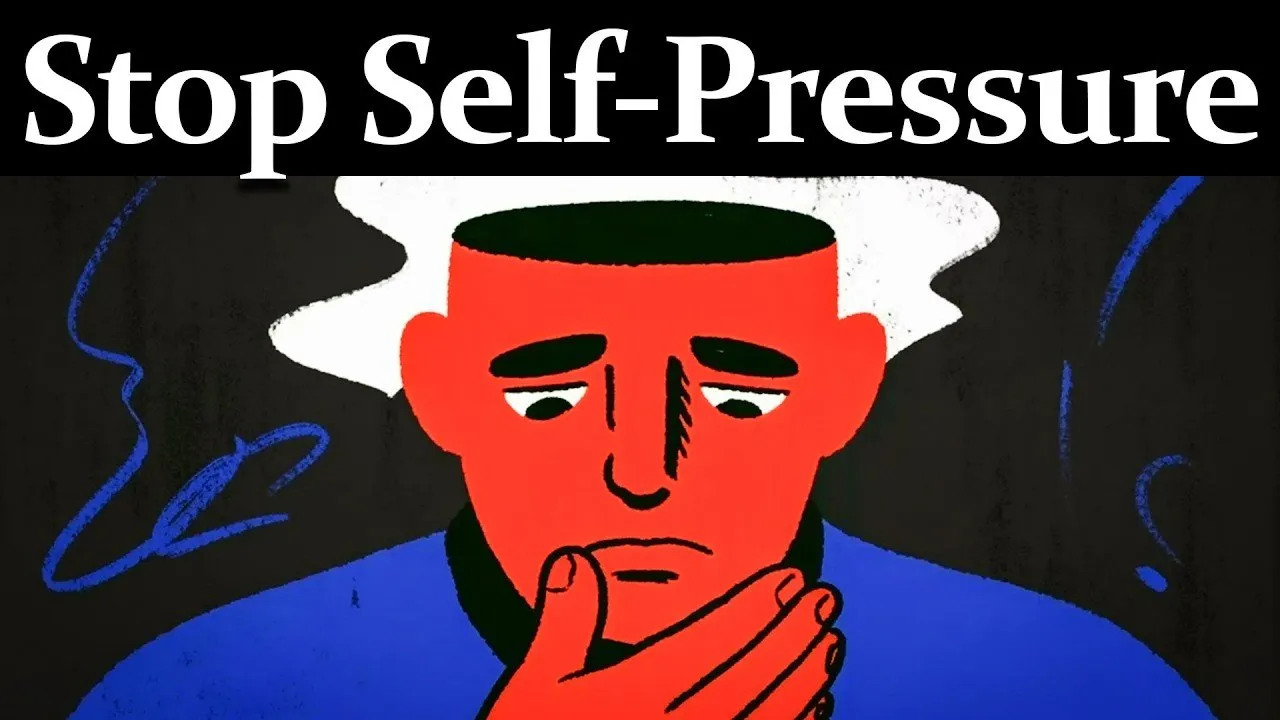
Let’s be brutally honest about how you speak to yourself when you fail. Not when you are winning or when life is easy, but when you fall short of the high standards you set. For many, that inner voice transforms into a ruthless critic. You call yourself names, replay mistakes on an endless loop, and punish yourself under the mistaken belief that this cruelty keeps you sharp. You have been conditioned to believe that if you aren't hard on yourself, you will become lazy, weak, or mediocre. But the reality is that this internal warfare is not a tool for success; it is a trap that destroys your potential from the inside out.
Key Takeaways
- Self-criticism triggers the threat response: Harsh internal dialogue floods your system with cortisol, shutting down creativity and logic while activating fight-or-flight mechanisms.
- Compassion builds resilience, not complacency: Research shows that treating yourself with the same kindness you offer a friend leads to higher accountability and faster recovery from failure.
- Guilt vs. Shame: Understanding the difference between "I did something wrong" (guilt) and "I am wrong" (shame) is critical for psychological health.
- Rewiring is possible: specific practices like the "Compassionate Friend" exercise and "Self-Compassion Break" can physically alter your nervous system’s response to stress.
The Hidden Cost of Internal Warfare
We often wear our self-criticism like a badge of honor, confusing discipline with cruelty. You might believe that your inner bully is the only thing standing between you and total failure. However, psychological research paints a starkly different picture. When you are at war with yourself, you are not building discipline; you are cultivating exhaustion.
Consider the neurological impact of self-criticism. Dr. Kristin Neff, a pioneer in the field of self-compassion research, highlights that harsh self-judgment activates the brain's threat defense system. This is the exact same biological response triggered by a physical attack. When you berate yourself:
- Your body floods with cortisol and adrenaline.
- Your heart rate spikes and muscles tense.
- Your "fight, flight, or freeze" mode engages.
- The centers of the brain responsible for creativity, logic, and long-term planning shut down.
In this state, you cannot perform at your peak. You do not get smarter or more focused; you just panic harder. Over time, this chronic activation leads to anxiety, burnout, and a profound fear of failure. You begin to procrastinate not because you are lazy, but because your subconscious is terrified of the internal punishment that awaits you if you make a mistake.
This isn't self-improvement. This is self-destruction masquerading as ambition.
The Science of Self-Compassion
If self-criticism is the poison, self-compassion is the antidote—but it is frequently misunderstood. It is not self-pity, it is not making excuses, and it is certainly not "soft." Self-compassion is a scientifically grounded approach to motivation that activates the body's care system rather than the threat system.
When you treat yourself with kindness, your nervous system releases oxytocin and reduces cortisol levels. You feel safe. And when you feel safe, you are free to take risks, admit mistakes, and try again without the paralyzing fear of self-hatred. Neff identifies three core components that make this possible:
- Self-Kindness: Replacing brutal judgment with warmth and understanding.
- Common Humanity: Recognizing that suffering and imperfection are part of the shared human experience, not proof that you are broken.
- Mindfulness: Observing your negative emotions without being consumed by them or over-identifying with them.
People who practice this don't become complacent. On the contrary, they become unstoppable. Because they aren't wasting energy fighting an internal battle, they have more resources available to learn, grow, and achieve their goals.
Practical Tools to Rewire Your Brain
You cannot simply decide to stop hating yourself overnight; you must retrain your brain through practice. Here are actionable protocols to shift your default setting from criticism to compassion.
The Compassionate Friend Exercise
The next time you spiral into self-attack, pause and write down exactly what your inner voice is saying. Be honest—capture the cruelty word for word. Then, imagine a dear friend came to you with the exact same problem. What would you say to them? You wouldn't call them pathetic; you would offer perspective and support. Take those words of support and say them to yourself. This isn't just a comfort tactic; it is cognitive restructuring.
The Self-Compassion Break
In moments of acute stress or failure, use this three-step ritual to reset your nervous system:
- Mindfulness: Acknowledge the pain. Say, "This is a moment of suffering" or "I am feeling stressed."
- Common Humanity: Remind yourself, "Suffering is a part of life. I am not alone in this."
- Self-Kindness: Place a hand on your heart to trigger a physiological safety response and ask, "May I be kind to myself in this moment?"
Reframing the Critic
You can maintain high standards without abuse. Translate your inner critic's screaming into a coaching voice. Change "You are lazy and useless" to "You are tired, but you want to move forward. What is one small step we can take right now?" This shifts the focus from shame to actionable progress.
Navigating Failure: Guilt vs. Shame
The most critical moment in your growth journey is how you respond immediately after a failure. This is where the distinction between guilt and shame becomes vital.
Guilt is a focus on behavior: "I did something wrong." It is constructive and leads to reparation and learning. Shame is a focus on identity: "I am something wrong." Shame is paralyzing. It causes you to withdraw, hide, and give up.
To move from shame to growth, you must validate the emotion without letting it define you. Acknowledge the facts—you made a mistake. Validate the feeling—it hurts because you care. But then, reconnect to common humanity. Remind yourself that every person you admire has failed, struggled, and fallen short. You are not uniquely flawed; you are simply human.
Guilt says, 'I did something wrong.' Shame says, 'I am something wrong.' Guilt is productive. Shame is paralyzing.
Conclusion: The Power of Letting Go
Ultimately, this journey is about forgiveness. Many of us carry the weight of past mistakes like a debt we are trying to pay off through self-punishment. But you cannot support your growth while resenting the ground it grows from. You must forgive your past self—the version of you that was just trying to survive with the tools they had at the time.
When you stop being your own enemy, you don't lose your drive. You lose the friction that has been slowing you down. You stop getting in your own way. Realizing that you are worthy of your own kindness isn't the end of your ambition; it is the beginning of your true potential.