Table of Contents
The modern space race is defined by a singular pursuit: reusability. While the industry has celebrated the ability to land and reuse rocket boosters, a massive inefficiency remains. Today, even the most advanced commercial rockets discard their second stage—the capsule that actually reaches orbit—after a single use. These multi-million dollar machines are effectively disposable packaging, burning up in the atmosphere or crashing into the ocean after delivering their payload.
Stoke Space, a startup based in Kent, Washington, is attempting to solve this "holy grail" of rocket science. Founded by former Blue Origin engineers, the company is developing a fully and rapidly reusable rocket designed to operate with the frequency and reliability of an aircraft. If successful, their technology could trigger an "iPhone app store moment" for the space economy, lowering barriers to entry and enabling applications that are currently cost-prohibitive.
Key Takeaways
- Full Reusability is the Goal: Unlike current industry leaders that only reuse the first stage, Stoke Space is designing the entire vehicle—including the upper stage—to survive re-entry and land precisely.
- Innovative Heat Shielding: The company has developed a novel active cooling system using liquid hydrogen to protect the second stage from extreme atmospheric heat, replacing traditional ablative shields.
- Vertical Integration: To maintain rapid iteration speeds, Stoke manufactures nearly every component in-house, supported by proprietary software called "Bolt Line."
- Historic Infrastructure: The company is revitalizing Launch Complex 14 at Cape Canaveral, the historic site of John Glenn’s orbital flight, for their future operations.
The Engineering Challenge: Saving the Second Stage
The current launch market is constrained by availability. With only around 150 commercial launches annually—many of which are consumed by Starlink missions—access to orbit remains a bottleneck. The primary driver of this scarcity is the disposal of hardware. In the current paradigm, the first stage punches through the atmosphere and returns, but the second stage continues to orbit, traveling at approximately 17,000 mph.
Overcoming the Heat Barrier
The physics of returning a second stage to Earth are brutal. As the capsule drops out of orbit, it encounters temperatures exceeding 2,700°F. Traditional rockets treat this stage as expendable because surviving these conditions typically requires heavy, single-use heat shields that degrade upon re-entry.
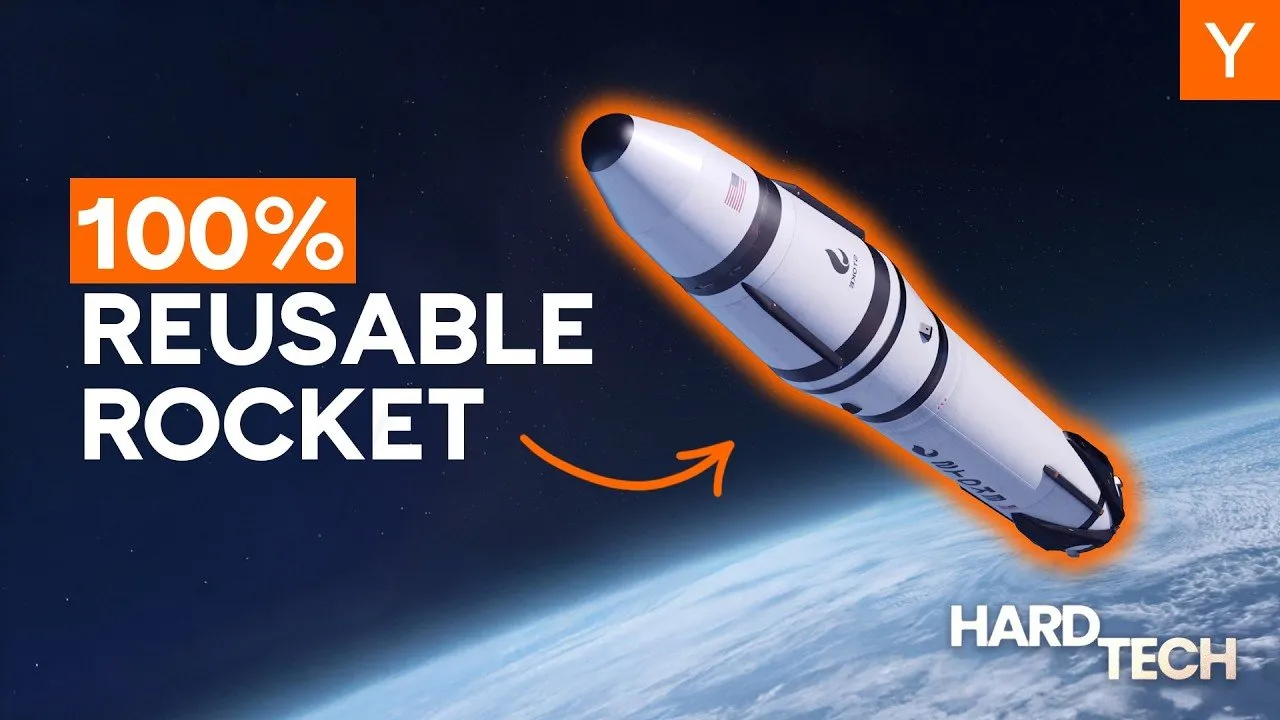
Stoke Space’s vehicle, comprised of the "Nova" first stage and the "Andromeda" second stage, utilizes a radically different architecture. The Andromeda capsule features a metallic heat shield cooled by liquid hydrogen flowing through a heat exchanger. This regenerative cooling allows the vehicle to absorb the extreme heat of re-entry without sustaining damage.
"The second stage is still thrown away on every single mission. That's in large part because the stage 2 capsule is traveling at 17,000 mph as it drops out of orbit. Because of that high speed, it eventually breaks down as it heats up... This could open the door to all kinds of new opportunities in space."
Once through the atmosphere, the vehicle employs 24 small thrusters to execute a precision vertical landing. This capability is central to Stoke’s economic model: scaling flight frequency without proportionally scaling manufacturing infrastructure.
From Backyard Testing to Orbit
The origins of Stoke Space are humble, contrasting sharply with the clean rooms and massive hangars they occupy today. Founders Andy Lapsa and Tom Feldman left stable careers at Blue Origin in 2019 to pursue an idea that many considered too risky. With a small team and limited initial capital, they began validating their propulsion concepts in a modified shipping container in a backyard.
The Risk of Iteration
Starting a hardware company requires a different mindset than software. The founders operated under a strict six-month deadline to prove traction or abandon the project. This pressure cooker environment forced them to prioritize "rubber meets road" engineering over endless theoretical analysis. They built a pressure-fed gaseous hydrogen/liquid oxygen thruster within two months, proving they could bend metal and generate thrust on a shoestring budget.
"It felt wildly irresponsible to be honest. Easily the hardest decision that I've ever made personally. I had a 3-month-old at home and I had a really good paying job that I was quitting."
Navigating the Venture Landscape
Fundraising for deep tech hardware presents unique challenges compared to the SaaS-dominated venture capital world. The founders joined Y Combinator (YC) to bridge the gap, learning how to translate complex engineering milestones into a narrative that investors could back. Their resilience paid off, with the company raising approximately $100 million to date to fuel their expansion from a garage operation to a 168,000-square-foot factory.
Vertical Integration and Software-Defined Manufacturing
Speed is the defining characteristic of Stoke Space’s operational philosophy. In the aerospace industry, relying on external suppliers can turn a one-month iteration cycle into a six-month delay. To combat this, Stoke has brought manufacturing in-house, building everything from avionics and electronics to the rocket structures themselves.
The "Bolt Line" Advantage
Managing the complexity of a reusable rocket factory requires robust digital infrastructure. Stoke developed its own software platform, "Bolt Line," to bridge the gap between design, manufacturing, and flight operations. This system tracks parts from creation through their operational lifecycle, logging maintenance data and flight history.
This data-first approach is critical for reusability. Unlike traditional rockets that fly once, Stoke’s vehicles will require ongoing maintenance schedules similar to commercial airliners. Bolt Line automates the tracking of flight readiness, allowing the company to turn rockets around for their next mission rapidly.
"What we want to build is a vehicle that's going to go to orbit, fly around, and come back again. And we want to turn that thing around as fast as possible and go again and again and again."
Conclusion
Stoke Space is now moving toward its next critical milestones: completing structural qualification at their Moses Lake facility and preparing for their first orbital launch from the historic Complex 14 at Cape Canaveral. The transition from backyard shipping containers to the launchpad that hosted John Glenn signifies the rapid maturity of the commercial space sector.
If Stoke Space succeeds in delivering a fully reusable launch vehicle, the impact will extend far beyond cheaper satellite launches. By turning rockets into true transport vehicles rather than expendable ammunition, they aim to make daily spaceflight a reality, fundamentally changing how humanity accesses and utilizes space.