Table of Contents
In a world defined by rapid social change, political turmoil, and personal stress, the search for a coherent philosophy of life has never been more relevant. While many turn to quick-fix self-help solutions, others are rediscovering an ancient Greco-Roman tradition that offers something far more substantial: Stoicism. Far from the grim, emotionless stereotype often portrayed in pop culture, true Stoicism is a vibrant philosophy focused on social connection, rational decision-making, and emotional resilience.
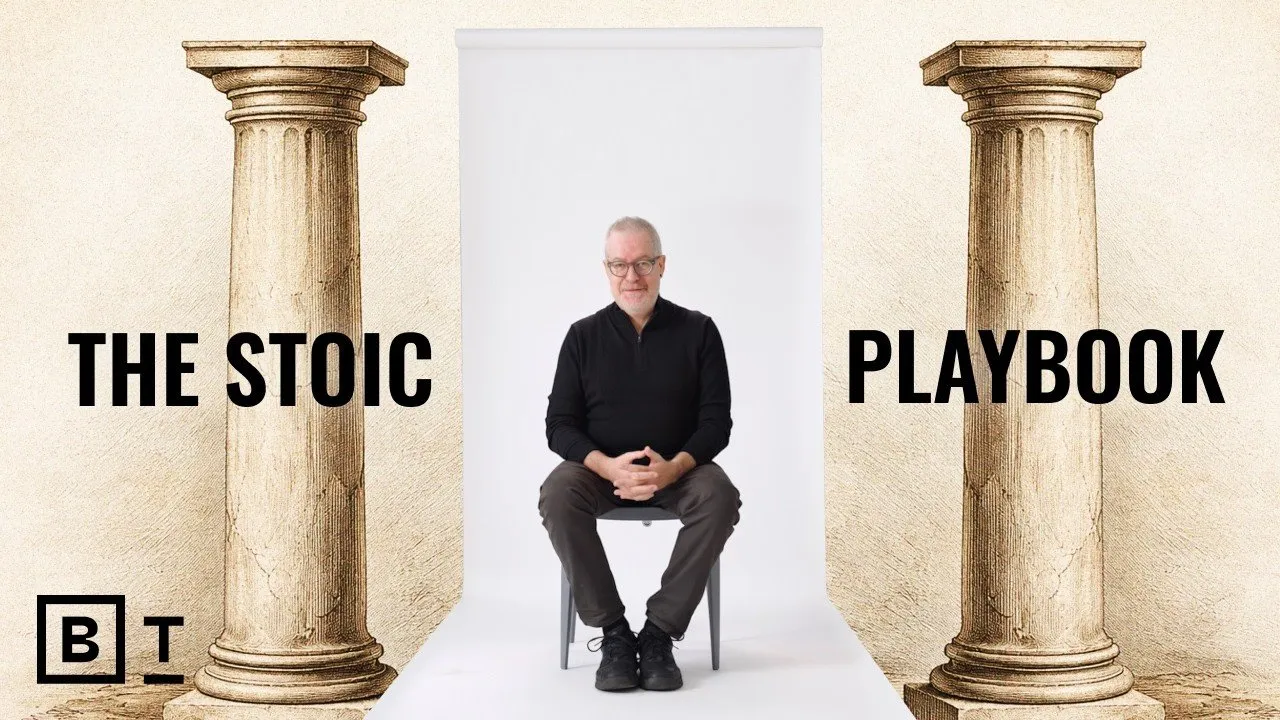
Massimo Pigliucci, an evolutionary biologist turned philosopher, argues that Stoicism is not just a historical curiosity but a highly effective operating system for modern life. By understanding our nature as social, rational beings, we can learn to navigate adversity, conserve our energy for what truly matters, and cultivate a character that remains steady regardless of external circumstances.
Key Takeaways
- Focus on Agency: The core of Stoic practice is distinguishing between what is up to us (our judgments and actions) and what is not (outcomes and external events).
- Stoicism is Pro-Social: Contrary to the "lone wolf" myth, Stoicism emphasizes our role as members of a human cosmopolis, urging us to treat all people as kin.
- Emotions and Reason are Linked: You cannot suppress emotions without damaging yourself; instead, Stoicism teaches us to modulate emotions by refining the thoughts that fuel them.
- Philosophy Requires Practice: Like going to the gym, understanding Stoic concepts is easy, but building the "muscle" of character requires daily repetition and journaling.
- Adaptability is Key: Modern Stoicism evolves with science, discarding outdated metaphysics (like a conscious universe) while retaining valid ethical insights.
What is Stoicism? A Philosophy of Realism
At its heart, Stoicism is a philosophy of life that asks a fundamental question: What kind of organism is a human being? The Stoic answer is that we are fundamentally social and capable of reason. Therefore, a good human life—a eudaemonic life—is one where we use reason to solve problems and behave cooperatively.
The Stoics were realists. They understood that human energy, both physical and emotional, is finite. If we waste this energy pursuing things outside our control, or if we isolate ourselves from the society we rely on, we make ourselves miserable. The goal is to live efficiently and harmoniously, accepting reality as it is rather than how we wish it to be.
Role Ethics and Energy Conservation
One of the most practical aspects of Epictetus’s brand of Stoicism is the concept of role ethics. We do not exist in a vacuum; we simultaneously play multiple roles—parent, partner, colleague, citizen, and friend. Balancing these requires a deliberate conservation of energy.
If you allow yourself to be consumed by global events you cannot influence, you deplete the emotional reserves needed to be a good father or a supportive friend. By setting priorities based on what is actionable, you ensure that you can fulfill your specific roles with excellence.
The Three Disciplines of Epictetus
To move from theory to practice, Epictetus outlined three disciplines that form the curriculum of a Stoic life. These are not abstract academic subjects but practical frameworks for daily living.
- The Discipline of Desire: This does not mean suppressing what you want, but critically reevaluating your values. It teaches us to orient our desires toward things that are genuinely good (character and virtue) and away from things that are ultimately indifferent (wealth or fame).
- The Discipline of Action: This governs how we interact with others. Since we are social animals, our actions must be directed toward the common good. It is about how we behave in the "human city."
- The Discipline of Assent: This involves refining our judgment. It requires us to think carefully before agreeing (giving assent) to our initial impressions of the world, ensuring our reactions are based on logic rather than knee-jerk impulses.
These disciplines are supported by the three theoretical fields of Stoic study: Physics (understanding how the natural world works), Ethics (understanding how to live), and Logic (understanding good thinking and cognitive biases).
The Stoic Toolkit: Techniques for Resilience
One of the reasons Stoicism has seen a resurgence is that it works. It was the historical inspiration for Cognitive Behavioral Therapy (CBT), and modern psychology confirms that many Stoic techniques are empirically effective.
The Dichotomy of Control
The most famous Stoic concept is the distinction between what is up to us and what is not. Pigliucci suggests a practical exercise: before a high-stakes event, like a job interview, create a two-column list.
- Up to Me: Preparing the resume, researching the company, trying to sleep well, intending to arrive on time.
- Not Up to Me: The interviewer’s mood, the strength of the competition, traffic delays, or actually getting the job.
By focusing your mental energy solely on the first column, you maximize your efficacy. By accepting the second column with equanimity, you protect your peace of mind. As Epictetus taught, we must realize that while our intentions are ours, the outcomes belong to the world.
Cognitive Reframing
Stoicism teaches that it is not events that disturb us, but our judgments about them. Take insults, for example. An insult is merely sound waves traveling through the air. It only causes pain if you interpret it as harmful.
"If that person is saying something about me that is insulting... either that person is right... in which case it's a good thing for me to accept that counsel... Or the person in question is wrong, in which case, that's his problem, not mine."
By reframing the situation rationally, you de-escalate the emotional response. You realize that the offender is the one embarrassing themselves, and you maintain your composure.
Philosophical Journaling
Unlike a standard diary, a Stoic journal is an analytical tool for self-improvement. Modeled after Marcus Aurelius’s Meditations, this practice involves reviewing your day objectively, perhaps writing in the second person to maintain emotional distance. Pigliucci recommends asking three questions about specific events in your day:
- What did I do wrong? (To learn, not to wallow in regret).
- What did I do right? (To reinforce good habits).
- What could I do differently next time?
Since human behavior tends to be repetitive, analyzing today's mistakes prepares you to handle similar situations better tomorrow.
Debunking "Bro-icism" and Misconceptions
As Stoicism has grown in popularity, it has also been distorted. A phenomenon sometimes called "Bro-icism" presents the philosophy as a hyper-masculine tool for dominance, wealth accumulation, and emotional suppression. This is a fundamental misunderstanding of the source material.
Virtue is Not "Manliness"
While the Latin word for virtue (virtus) is related to the word for man, the original Stoic term was the Greek arete, which simply means excellence. The ancient Stoics were unique in their time for explicitly stating that women were just as capable of reason and philosophy as men. Stoicism is gender-neutral and deeply egalitarian.
The Myth of the Stiff Upper Lip
Stoicism is often confused with being a "doormat" or suppressing all feelings. However, the Stoics did not seek to eliminate emotions—which would require a lobotomy—but to align them with reason. The goal is not the absence of emotion, but the absence of destructive emotions like blinding anger or paralyzing fear.
Furthermore, Stoicism is not a quietist philosophy. History is full of Stoics who "spoke truth to power," from the "Stoic Opposition" against the Emperor Nero to Cato the Younger, who took up arms to defend the Roman Republic against Julius Caesar. A Stoic fights for justice and liberty, not because they are guaranteed to win, but because it is the right thing to do.
Updating Stoicism for the 21st Century
One of the most robust features of Stoicism is its adaptability. Seneca himself wrote that his predecessors were "teachers, not masters," implying that the philosophy should evolve as knowledge grows.
The ancient Stoics were Pantheists who believed the universe was a living, conscious organism (God) and that everything happened for a reason (Providence). This allowed them to embrace even tragedy as part of a divine plan. For a modern practitioner grounded in evolutionary biology and physics, this view is often untenable. We know through Darwin and Hume that the universe is likely not a designed, benevolent entity.
Does this break the philosophy? Pigliucci argues it does not. We can strip away the ancient metaphysics of "Providence" and replace it with a modern scientific understanding. We can accept death not because it is "God's will," but because biology dictates that for new life to thrive, the old must pass away.
"We accept the world the way it actually is, not the way you would want it to be... You do not expect miracles to happen because unfortunately that's not the way the world works."
Conclusion: The Gym of Life
Ultimately, Stoicism is a practice, not just a theory. The concepts—dichotomy of control, cosmopolitanism, role ethics—are intellectually simple but difficult to execute consistently. The Stoics compared philosophy to athletics: a trainer can show you the correct motion for lifting a weight, but you only build muscle by lifting it yourself, day after day.
Whether you are dealing with a midlife crisis, a difficult colleague, or the existential dread of global climate change, Stoicism offers a framework. It teaches us to focus on our own agency, treat our fellow humans with dignity, and view the world with a clear, rational eye. It is a path to becoming a better human being, one decision at a time.