
Table of Contents
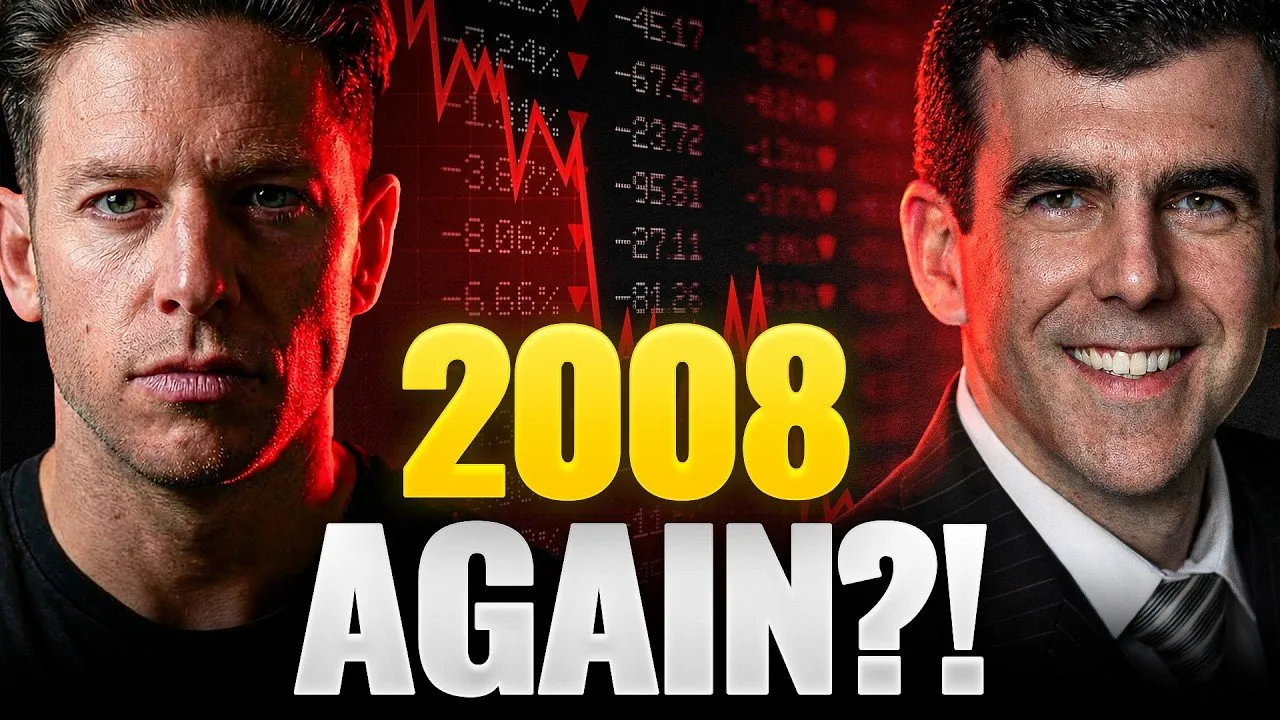
Financial analyst Steven Van Metre warns that the United States is currently navigating a precarious credit environment with underlying fractures mirroring the lead-up to the 2008 Great Financial Crisis. Despite a record-breaking stock market, data concerning corporate insider selling, private credit liquidity, and record-high consumer delinquency rates suggest a significant disconnect between equity valuations and economic reality. Van Metre highlights that for every one corporate insider buying shares today, five are selling, signaling a potential peak in the current market cycle.
Key Points
- Private credit markets are experiencing severe liquidity constraints, with major players like Blue Owl Capital gating funds after redemption requests far exceeded quarterly limits.
- Auto loan delinquency rates have officially surpassed 2008 levels, indicating that the American consumer is increasingly "tapped out" amid stagnant wages and persistent inflation.
- The 5:1 ratio of corporate insider selling to buying suggests that executives are unloading shares at a rapid pace before potential cuts to corporate buyback programs.
- Economic stability is currently reliant on the top 10% of earners, who account for approximately 50% of all U.S. retail sales, creating a fragile foundation for the broader economy.
- U.S. personal savings rates have hit their lowest levels since 2022, leaving households with little buffer to withstand a potential downturn in the labor market.
The Crisis in "Shadow Banking" and Private Credit
Following the 2008 financial crisis, traditional banks retreated from high-risk lending, leading to the explosive growth of the shadow banking system. Private credit firms stepped in to provide capital to businesses for inventory and short-term needs, often at significantly higher interest rates. However, this sector is now facing a reckoning as investors seek to pull their capital out of illiquid funds.
According to Van Metre, Blue Owl Capital recently faced a surge in redemption requests that bypassed their 5% quarterly limits. Specifically, their software fund, which comprises roughly 46% of their portfolio, saw redemptions exceed 15%. This forced the firm to "gate" the fund, preventing investors from accessing their money to avoid a forced liquidation of assets at distressed prices.
"The market is saying look, I want my money out because even though nothing right now is saying we are on a massive financial crisis... investors are looking back to the financial crisis. They are saying, look, I have seen this before and maybe it doesn’t happen, but if it does, I can't get my money out of this stuff."
The risk is that these private loans are currently estimated to be worth only 80 cents on the dollar. If firms are forced to dump these assets to meet redemptions, it could trigger a downward spiral in credit markets that mirrors the 2008 subprime mortgage collapse, albeit in the corporate lending space.
Consumer Exhaustion and the 2008 Parallel
While the 2008 crisis was centered on the housing market, Van Metre points to consumer credit as the primary red flag in 2024. Delinquency rates on auto loans and credit cards are trending sharply upward. In many cases, these metrics have already eclipsed the peaks seen during the last major recession. This suggests that the "soft landing" narrative may be overlooking a fundamental lack of purchasing power among the bottom 90% of the population.
The Retail Disconnect
Data from major retailers like Walmart and General Mills suggests a shift in consumer behavior. Consumers are increasingly unable to keep up with price increases, leading to stagnant inventory and declining margins for companies. Van Metre notes that 50% of all retail sales are currently driven by the wealthiest 10% of Americans, a demographic that is sensitive to fluctuations in the stock market.
Stagnant Wages vs. Inflation
Despite recent reports of a resilient labor market, Van Metre argues that hours worked are stagnating and inflation continues to outpace income growth. The recent Q4 GDP print of 1.4% fell well below expectations of 3%, with much of the growth concentrated in staples and healthcare rather than discretionary spending. When consumers are forced to choose between debt service and consumption, the broader economy suffers.
"When [consumers] cut their spending, it’s game over. Inflation’s gone up, their wages have been stagnant, relatively speaking, and they’ve been draining down their savings... it's really as a consumer at this point when they have tapped out and they say we're done, it's game over."
The Buyback Engine and Insider Selling
A major driver of the stock market's recent "wall of worry" climb has been corporate share buybacks. Last year, the S&P 500 saw nearly $1 trillion in buyback activity. However, as the Magnificent 7 and other tech giants shift their cash flow toward massive capital expenditure (CAPEX) for artificial intelligence, the funds available for buybacks are shrinking.
Van Metre highlights a staggering trend among corporate executives: for every one insider buying their company's stock, five are selling. This suggests that those with the most intimate knowledge of corporate health are taking profits while retail and institutional investors remain "all in."
Market Liquidity Risks
Institutional money managers are currently holding cash levels as low as 1.1% to 3.2%, according to reports from Bank of America and other analysts. This leaves the market with very little "dry powder" to absorb a sell-off. If corporate buybacks drop by even 10-15%, the primary buyer in the market disappears, potentially leading to a rapid revaluation of equities.
Strategic Outlook: Bonds and Safe Havens
In response to these systemic risks, Van Metre suggests that the most crowded trades—shorting bonds and going long on equities—may be the most dangerous. He argues that long-term interest rates are a function of growth and inflation expectations, both of which appear to be trending downward despite the Federal Reserve's current "higher for longer" stance.
- The Bond Market: Van Metre observes that large banks have been buying long-term Treasuries (TLT) "by the droves," anticipating that the Fed will eventually be forced to cut rates aggressively as the labor market weakens.
- Gold and Silver: While central banks have been buying gold at record rates since 2022, Van Metre warns that these assets often see an initial drop during a liquidity crisis as individuals sell their most liquid non-qualified assets to pay bills and service debt.
- Passive Flows: The dominance of passive investing has propped up the NASDAQ and S&P 500, but these flows are dependent on a healthy labor market. If layoffs accelerate, the automatic bid for equities will vanish.
As the Federal Reserve monitors higher frequency data, the focus remains on the "front end" of the yield curve. If three-month T-bill rates begin to drop sharply, it will signal that financial conditions have tightened beyond the breaking point, likely forcing a pivot in monetary policy to stave off a systemic collapse. Investors should watch for further gating of private credit funds and a continued rise in consumer delinquency as the ultimate harbingers of the next economic shift.



)