Table of Contents
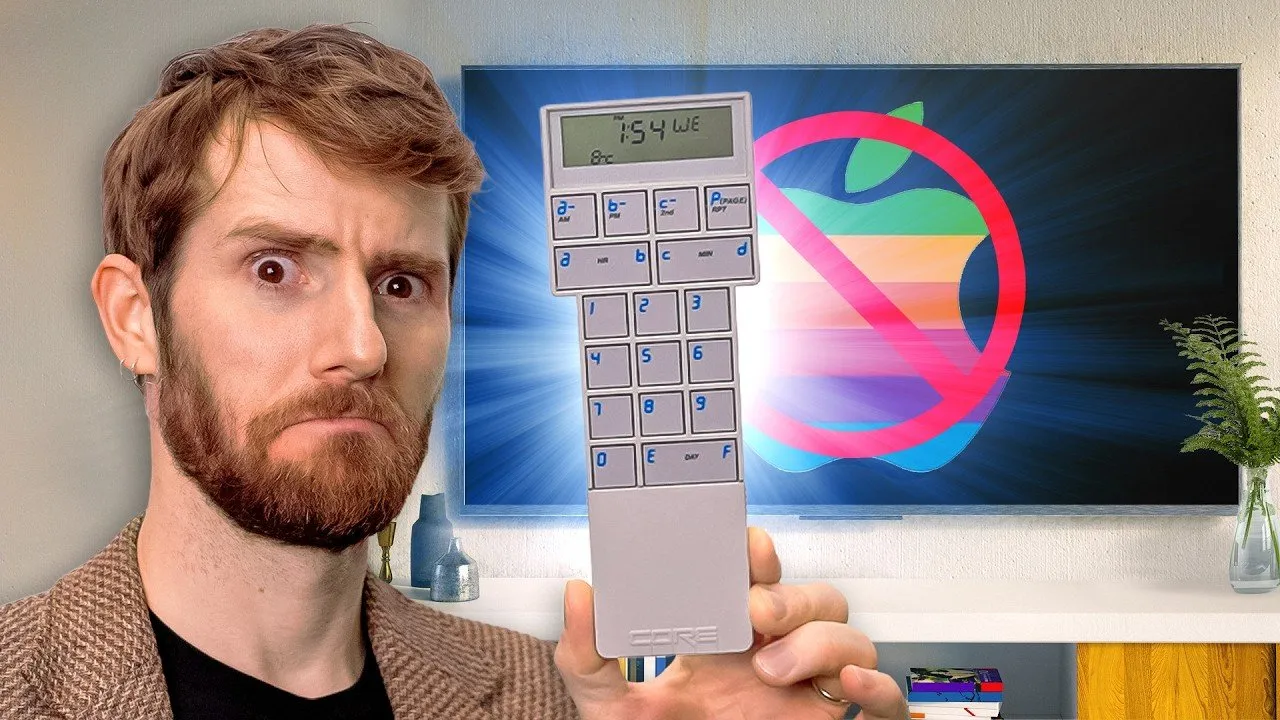
Decades before the modern "smart home" ecosystem, Apple co-founder Steve Wozniak launched a venture that sought to revolutionize home entertainment control. His company, CL9, introduced the Core Master in 1987—a programmable universal remote control that offered macro capabilities and modular architecture years ahead of its time. Despite its sophisticated design and impressive functionality, the device remains a niche footnote in tech history, serving as a masterclass in the risks of over-engineering for a mass-market audience.
Key Points
- Advanced Logic: The Core Master featured a dual-microcontroller architecture and 36 kilobytes of memory, allowing for complex command sequences and macro programming.
- Ahead of Its Time: Launched in 1987, the device offered features like conditional programming and loop functions long before they became common in consumer electronics.
- Commercial Failure: High costs—retailing for approximately $200 in 1987—combined with a steep learning curve and a lack of non-volatile memory led to the eventual dissolution of CL9.
- Surprising Legacy: The underlying technology found a second life in medical environments, with iterations of the remote used in X-ray equipment for over two decades.
The Genesis of CL9 and the Core Master
Following his final departure from Apple in 1985, Steve Wozniak turned his attention toward the cluttered living rooms of the 1980s. At the time, consumers were navigating an influx of disparate wireless remotes for televisions, VCRs, and audio equipment. The mission of his new firm, CL9, was to unify these controllers into a single, cohesive interface.
The Core Master was the result of that vision. While wireless remotes were not new to the 1980s, the Core Master differed significantly from the standard consumer hardware of the day. It featured 16 pages of command storage, custom hexadecimal button mapping, and the ability to record complex sequences—such as powering on multiple devices and adjusting settings in a specific order with a single press.
"It feels like exactly the sort of solution that a genius multimillionaire might devise for a problem that only he had at the time. There's no shortage of passion in this device. Woz even said that he programmed the Apple II assembly language into this thing so that you could program it just like your Apple computer."
Engineering Brilliance vs. Market Reality
The Core Master was essentially a computer in the palm of a hand. Wozniak designed the interface to be flexible enough to handle complex automation, but this complexity proved to be its primary barrier to entry. Programming the device required a 100-page manual and a level of technical literacy that most consumers did not possess. Furthermore, the reliance on volatile memory—which erased firmware and user programming if the batteries went flat—created a significant usability hurdle.
By the time the industry caught up to the need for universal remote solutions, the market had shifted toward cheaper, more user-friendly models that utilized pre-programmed infrared codes. CL9 could not compete with the simplicity of these mass-market devices, and the company eventually ceased operations. The Core Master stands as a prime example of a product that succeeded in engineering brilliance but failed to align with the practical requirements of the average consumer.
A Second Life in Specialized Fields
While it failed to capture the average living room, the Core Master’s modular design and reliable command-capture technology allowed it to evolve. The hardware was adapted by Celadon, a custom remote control manufacturer, and rebranded as the PIC 100 and PIC 200. These units became staples in medical settings, specifically for controlling X-ray equipment.
The durability and programmable nature of the device allowed these units to remain in service well into the late 2000s, nearly 20 years after the original Core Master launch. Today, the device is considered a collector’s item among enthusiasts. While modern HDMI-CEC standards have largely solved the problem of device interoperability that CL9 originally aimed to fix, the Core Master serves as a reminder of an era when individual innovation attempted to dictate the future of home automation.
For those looking to restore these legacy devices today, specialized communities have stepped in to provide firmware images and the necessary serial interface tools to bypass the original, cumbersome programming limitations. The Core Master may have missed its target in 1987, but its impact on the development of programmable controllers remains undisputed.