Table of Contents
The political landscape of the United Kingdom is currently undergoing a rapid and volatile transformation. Prime Minister Keir Starmer, grappling with historically low approval ratings, faces intensifying internal pressure while the traditional opposition fractures. The recent maneuvering to block Andy Burnham from returning to Parliament signals not just internal party strife, but a deeper existential anxiety within the Labour government. As the machinery of the state attempts to hold the line, the established political order appears to be crumbling, raising serious questions about governance, economic stability, and the future of the British party system.
Key Takeaways
- Starmer’s Internal blockade: The Labour leadership utilized party machinery to prevent Manchester Mayor Andy Burnham from standing for Parliament, fearing a leadership challenge from the more popular figure.
- The "Reform" Excuse: Labour justified blocking the Manchester by-election by claiming fear of a Reform UK victory, a logic that implies the ruling party is on the brink of collapse even in its heartlands.
- Conservative Migration: The Conservative Party is seeing significant defections to Reform UK, posing a strategic dilemma for Nigel Farage as his anti-establishment party risks absorbing the "discredited" establishment.
- A Leadership Vacuum: Despite the volatility, observers note a distinct lack of viable solutions or "navigator" figures capable of steering the UK through its deepening economic and social crises.
The Burnham Blockade: A Sign of Weakness
The recent controversy surrounding Andy Burnham, the Mayor of Manchester, serves as a litmus test for Keir Starmer’s security in office. Burnham, often viewed as a successful figure within the Labour movement, represents a distinctive brand of politics rooted in the industrial northwest. Unlike the current parliamentary front bench, Burnham enjoys a level of relative popularity that makes him a credible threat to Starmer’s leadership.
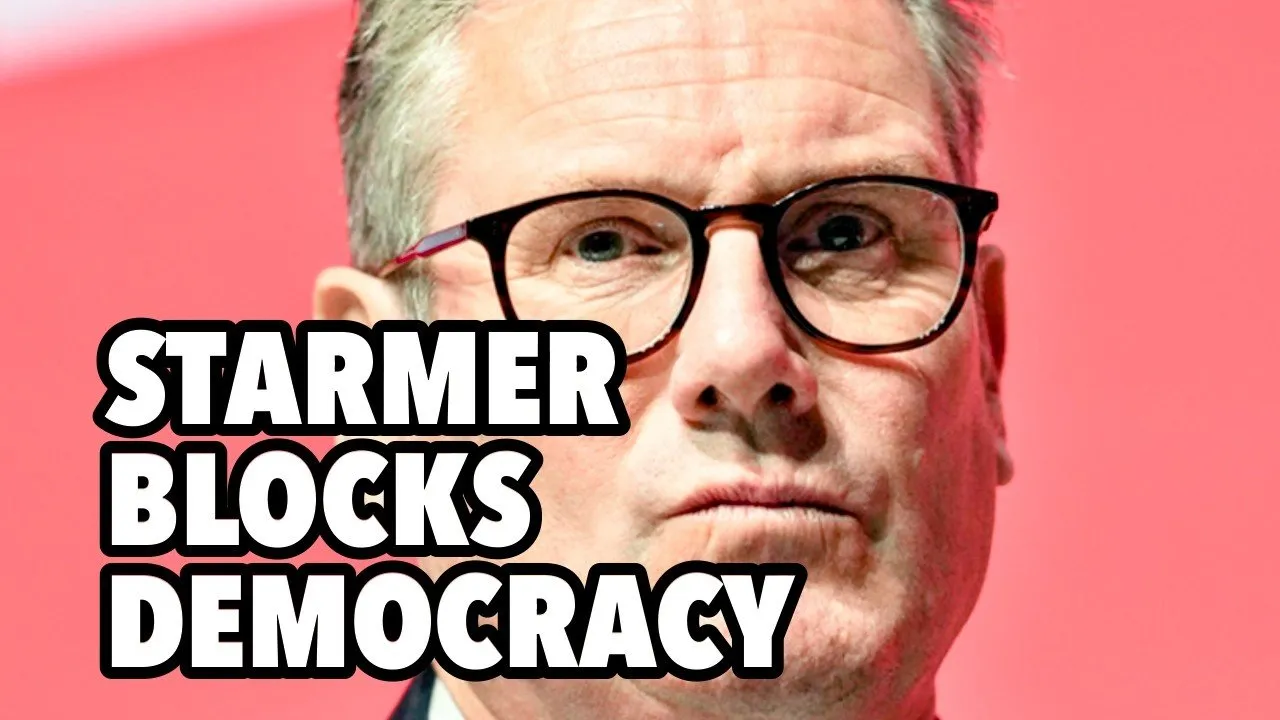
When a parliamentary seat in Manchester recently became vacant, Burnham signaled his intent to stand—a necessary step to challenge for party leadership, as the Prime Minister must sit in the House of Commons. The reaction from Downing Street was swift and revealing. Rather than allowing a democratic selection process, Starmer’s officials utilized the internal machinery of the Labour Party to block Burnham’s candidacy.
The "Reform" Justification
The official rationale provided by Labour officials was that a by-election would risk ceding the seat to Nigel Farage’s Reform UK. However, political analysts argue this reasoning exposes a catastrophic lack of confidence.
In the 2024 general election, Labour secured approximately 64% of the vote in Manchester, while Reform garnered only 7.5%. Manchester is widely considered a fortress for the left. If the Labour leadership genuinely believes they could lose such a stronghold to a right-wing challenger mere months after taking power, it suggests the party believes it is facing an existential crisis.
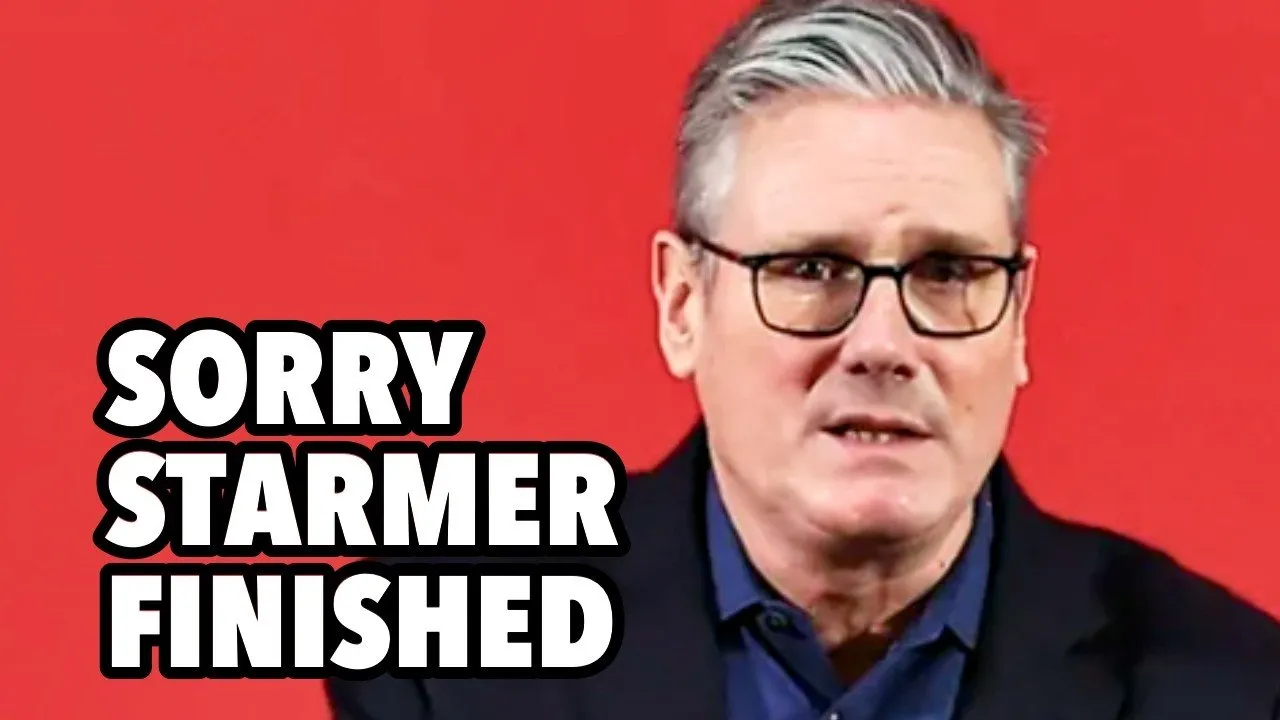
If things are really so bad with Labor that there is a real risk that in a by-election Reform could win Manchester... they're finished. They're finished, not just as a government, but as a political party.
Critics argue that this was a frantic move to protect an unpopular Prime Minister rather than a strategic decision based on electoral reality. It has sparked uproar within the party, with accusations that the leadership is using bureaucratic "wire-pulling" to suppress internal democracy.
The Decomposition of Starmer’s Authority
Keir Starmer’s hold on power appears to be reliant almost entirely on bureaucratic control rather than public or parliamentary support. His approval ratings have plummeted to levels comparable to former Prime Minister Liz Truss during her brief and chaotic tenure. Support from the media has waned, and the cabinet is reportedly growing restless.
The prevailing view is that Starmer remains in place only because the Labour Party in Parliament is a "desert" of talent. There is no clear successor who commands confidence, leading to a paralysis where the party fears that any replacement might struggle just as profoundly. However, this stasis cannot hold indefinitely.
The May Timeline
Political observers predict that the local elections in May could serve as the breaking point. Starmer has reportedly attempted to delay or prevent elections where possible, but the local ballots will likely crystallize the extent of Labour's decline. Following these elections, a cabinet rebellion seems increasingly probable, where ministers may force a resignation to save the government from total collapse.
Adding to Starmer's isolation is the deterioration of his perceived diplomatic assets. A key selling point of his premiership was his alleged ability to work constructively with Donald Trump. Recent diplomatic rows, escalating from disputes over Greenland to broader policy disagreements, have shattered the illusion that Starmer is the "Trump whisperer" of Europe.
The Conservative Exodus to Reform UK
While Labour struggles with internal suppression, the Conservative Party faces its own dissolution. Following a catastrophic defeat in 2024, the Tories experienced a brief "dead cat bounce" in the polls—rising slightly not due to their own merits, but due to the sheer unpopularity of the Labour government. That temporary stabilization is now eroding.
We are witnessing a migration of prominent right-wing figures from the Conservatives to Reform UK. Former heavyweights such as Suella Braverman and Robert Jenrick are shifting allegiances, driven by the realization that the Conservative brand may be irretrievably damaged.
The Danger of Absorption
This influx of experienced politicians presents a double-edged sword for Nigel Farage. While it brings legitimacy and government experience to a devastatingly effective opposition movement, it risks diluting Reform’s brand. If Reform absorbs the very people the electorate voted out in 2024, it risks becoming the "Conservative Party 2.0."
The danger is that these defectors will demand senior positions based on their resume, potentially transforming an anti-establishment vehicle into a refuge for the discredited political class.
A Systemic Crisis Without a Navigator
The broader implication of these shifts is the breakdown of the traditional British party system that has existed for over a century. The Liberal-Labour-Conservative dynamic is fracturing, yet no clear successor system has emerged to address the country's intractable problems.
While Nigel Farage is credited as a brilliant opposition politician—an "icebreaker" capable of shattering the status quo—there is skepticism regarding his ability to govern. The skillset required to dismantle a political consensus is distinct from the administrative capability needed to navigate a sinking economy.
You could call him the icebreaker who is breaking the ice, but he's not the person who can navigate the ship through it.
Economic Realities
The UK faces severe economic headwinds, with the London property market showing signs of distress and the broader economy stagnating. Yet, the political class appears devoid of new ideas. The debate oscillates between cutting welfare to lower taxes or increasing state intervention, neither of which addresses the fundamental structural issues facing the nation.
The situation draws unfavorable comparisons to the pre-Thatcher era of the 1970s. While that period was marked by dysfunction, the current institutional decay is viewed by many seasoned observers as significantly worse, with a political class that has systematically purged talent from both the left and the right, leaving a vacuum of leadership at a critical historical juncture.
Conclusion
The United Kingdom finds itself in a political limbo. A deeply unpopular government clings to power through bureaucratic maneuvering, while the opposition undergoes a chaotic realignment. Whether it is the blocking of Andy Burnham or the defection of senior Tories, the maneuvers of the political class appear to be symptoms of a dying system rather than strategies for renewal. As the economy continues to tread water, the country waits for a leader with the imagination and authority to chart a new course—a figure that, for the moment, remains absent from the stage.