Table of Contents
Starlink has successfully transitioned from a beta curiosity to a critical infrastructure utility for rural residents and digital nomads, delivering consistent broadband speeds that rival terrestrial options in underserved areas. Real-world testing by IT professionals demonstrates that while fiber and 5G remain superior in urban density, SpaceX’s low-earth orbit (LEO) network provides stable, low-latency connectivity capable of supporting enterprise-grade remote work, even in challenging geographic conditions.
Key Points
- Performance benchmarks: Fixed residential users report consistent download speeds between 150–200 Mbps with latency around 20ms, while roaming users experience variable speeds of 50–150 Mbps depending on network congestion.
- Roaming vs. Fixed priority: Users on the "Roam" plan ($165/month) are deprioritized behind fixed residential users ($120/month) during peak usage hours or in saturated cells.
- Hardware evolution: The introduction of the Starlink Mini and DC power options has increased viability for mobile users, allowing for compact, energy-efficient deployments off the grid.
- Hybrid network strategies: Remote workers are increasingly pairing Starlink with 5G Home Internet to mitigate backhaul congestion issues inherent to cellular networks in rural tourist hubs.
Real-World Performance: Fixed vs. Roaming
For rural residents long underserved by DSL and legacy fixed wireless solutions, Starlink represents a generational leap in connectivity. Tim Sinclair-Lee, an engineering manager based in rural Alabama, reports that the service has stabilized significantly since its early "best effort" days. Replacing a history of dial-up and unstable fixed wireless connections, Sinclair-Lee’s current setup delivers enterprise-level stability.
According to live diagnostics ran during the test, the fixed Starlink connection maintained a 20-millisecond latency and approximately 150 Mbps download speeds. This performance metric is critical for real-time applications, such as video conferencing and VPN tunneling, which historically failed over high-latency geostationary satellite connections.
"It’s a solid 160 Mbps through their app... and very respectable low pings. I have zero complaints. As they’ve increased subscribers, they’ve also been launching more satellites and it’s just got better and better."
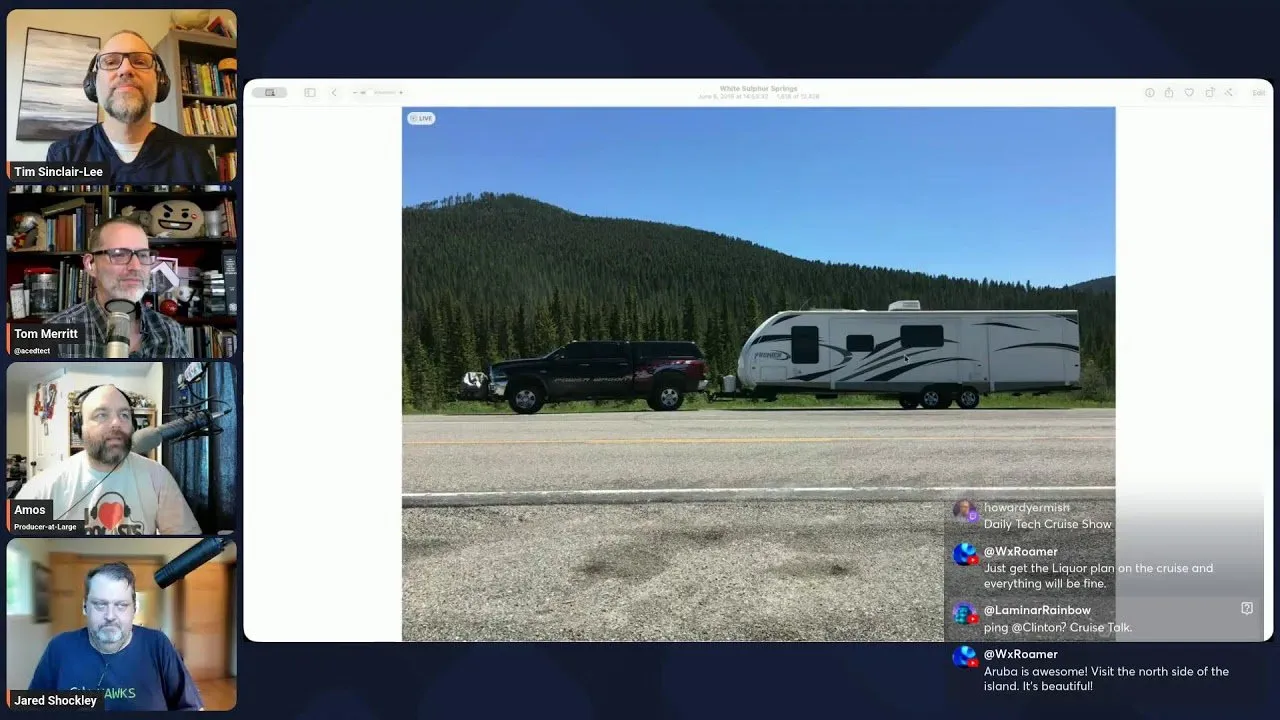
However, the experience differs for users on the "Roam" plan. Jared Shockley, a platform engineer who operates from a recreational vehicle (RV), notes that roaming users are subject to deprioritization. In areas with high user density, such as the border towns of Washington state, speeds can drop to 50 Mbps. Despite this, the service remains usable for bandwidth-intensive tasks, including uploading photography backups and hosting webinars.
Hardware Evolution and Mobility
The hardware ecosystem surrounding Starlink has matured, offering users more flexibility in how they deploy terminals. The introduction of the Starlink Mini has been particularly impactful for mobile users. Shockley utilizes the Mini as a backup node, praising its compact form factor and lower power consumption—drawing approximately 34 watts compared to higher draws from previous generations.
The Mini’s design supports direct DC power integration, allowing RVers and field workers to run the system off 12-volt battery banks without inefficient inverter conversion. This capability is essential for "dry camping" or operating in remote locations like national parks where grid power is unavailable.
Reliability in adverse weather—a common weakness of Ku and Ka-band satellite systems—has proven robust. Both test cases reported that the hardware’s automated heating elements successfully mitigate snow accumulation. While torrential downpours can cause signal attenuation, the LEO constellation's density generally prevents total outages during standard weather events.
Strategic Connectivity: 5G vs. Satellite
For mobile workforces, the debate is no longer Starlink versus 5G, but rather how to integrate both. Shockley utilizes T-Mobile 5G Home Internet as his primary connection due to its uncapped data and higher theoretical speeds near towers. However, cellular backhaul limitations often cripple 5G performance in rural tourist destinations.
In West Yellowstone, for example, Shockley reported strong cellular signal strength (four bars) but unusable throughput (12 Kbps download) due to tower saturation. In these scenarios, Starlink serves as a critical failover, bypassing the congested local terrestrial infrastructure to connect directly to the satellite backbone.
"The backhaul from West Yellowstone was tremendously oversaturated with people. I actually put out my Starlink and was getting 100 down, 80 up. It was perfect for what I needed."
This hybrid approach allows users to leverage the low cost and high speed of 5G when available, while maintaining a high-bandwidth satellite link as an insurance policy against terrestrial network congestion.
Implications for Remote Work and Infrastructure
The reliability of LEO satellite internet is reshaping the geography of the workforce. IT professionals and creatives are no longer tethered to urban fiber footprints. While Public Utility Districts (PUDs) in states like Washington are aggressively expanding fiber-to-the-home (FTTH) networks, gaps remain. Starlink effectively bridges these gaps, allowing for seamless remote work from locations previously considered off-grid.
Cost remains the primary barrier to entry compared to terrestrial options. With fixed plans at $120 per month and roaming plans at $165, Starlink commands a premium over the $50–$80 price point of 5G home internet or municipal fiber. However, for users requiring guaranteed access outside of fiber zones, the utility exceeds the cost.
Looking ahead, the market expects further hardware miniaturization and reduced power consumption. As SpaceX continues to launch satellites, capacity in saturated cells is expected to improve, potentially narrowing the performance gap between fixed and roaming users. For now, the "pause" feature on roaming plans—allowing users to keep accounts active for a nominal fee ($5/month)—offers a flexible, cost-effective backup solution for enterprise users demanding 100% uptime.