Table of Contents
For years, the prevailing narrative in macroeconomic circles has been the imminent death of the US dollar. Critics point to ballooning national debt, fraying geopolitical alliances, and the rise of the BRICS nations as clear signals that the era of American financial hegemony is ending. However, the "Dollar Milkshake Theory," popularized by Brent Johnson of Santiago Capital, suggests the exact opposite is happening. Rather than fading into obscurity, the dollar is poised to squeeze global liquidity, strengthening against other fiat currencies even as it loses purchasing power against hard assets.
In a landscape where central banks are navigating the highest interest rates in decades and geopolitical tensions are mounting, the structure of the global monetary system creates a paradox: the more the system cracks, the more the world runs to the dollar. With the emergence of stablecoins and new legislative frameworks like the "Genius Act," the United States may have stumbled upon a mechanism to not only maintain its dominance but aggressively expand it—a process known as re-dollarization.
This analysis explores how the mechanics of the Eurodollar system, the inevitability of a sovereign debt crisis, and the weaponization of digital currency are converging to reshape the global financial order.
Key Takeaways
- The Dollar Milkshake Theory remains valid: Despite short-term fluctuations, the dollar is likely to rise against other fiat currencies as global liquidity tightens and capital flees weaker jurisdictions for the safety and depth of US markets.
- De-dollarization is a narrative, not a reality: While nations have the desire to leave the dollar system, they lack the ability. The Eurodollar network is the largest in history, and private markets continue to prefer the dollar for trade efficiency.
- Stablecoins are the new "straw": The proliferation of US dollar-pegged stablecoins acts as a new mechanism for re-dollarization, allowing the US to export its currency directly to individuals in developing nations, bypassing local capital controls.
- Sovereign debt crisis is mathematically guaranteed: Our debt-based monetary system mandates perpetual growth. When growth stalls, central banks must intervene. Eventually, this exponential debt curve will force a reset, likely triggering a currency crisis.
- Gold and the Dollar can rise together: In a crisis, the dollar serves as the "cleanest dirty shirt" among fiat currencies, while gold serves as the ultimate store of value. Central banks are increasingly buying gold while avoiding long-term sovereign bonds.
The Persistence of the Dollar Milkshake Theory
The core premise of the Dollar Milkshake Theory is that in a world awash with debt, a sovereign debt crisis is inevitable. As interest rates rise after decades of decline, the cost of servicing dollar-denominated debt globally becomes unbearable. This dynamic creates a vacuum that sucks capital from the rest of the world into the United States.
Why the Crisis Hasn't Happened Yet
Critics of the theory argue that despite aggressive rate hikes, the predicted catastrophic crisis hasn't materialized. The explanation lies in the competence—and power—of central banks. While often mocked, central bankers are not incompetent; their primary mandate is the preservation of the state. They have successfully "kicked the can down the road" by managing liquidity injections and manipulating yield curves to prevent immediate implosions.
However, delaying the crisis does not eliminate it. The system is designed to require constant expansion. If money stops circulating, credit contracts, and the economy collapses. Therefore, central banks must intervene to force growth, leading to an eventual mathematical breaking point.
It is a mathematical certainty that we will have a crisis. The reason is because of the design of our monetary system is one in which money is loaned into existence.
The Separation of Narrative and Math
Since the theory gained prominence, the Dollar Index (DXY) has risen significantly, outperforming almost all other major currencies. Yet, the narrative of the dollar's demise persists. It is crucial to distinguish between two different types of value loss:
- Purchasing Power: The dollar is losing value against real goods (food, energy, housing) and hard assets (gold, Bitcoin). This is inflation.
- Relative Strength: The dollar is gaining strength against other fiat currencies (Euro, Yen, Yuan). This is the "Milkshake" effect.
Investors often conflate these two concepts. A rising DXY can coincide with high inflation, creating a scenario where the dollar is the best house in a bad neighborhood.
The Myth of De-dollarization
Headlines regarding the BRICS alliance (Brazil, Russia, India, China, South Africa) often suggest a coordinated effort to abandon the dollar. While the political will exists, the economic reality is far more complex. The global economy runs on the Eurodollar network—a massive, decentralized system of dollar-denominated deposits and loans outside the United States.
Desire vs. Ability
There is no question that countries resent the "exorbitant privilege" the US enjoys as the issuer of the global reserve currency. This status allows the US to print money to fund its deficits and use the currency as a geopolitical weapon via sanctions. However, replacing this system is an enormous logistical undertaking.
The private sector, not governments, largely dictates currency usage in trade. A supplier in Vietnam trading with a buyer in Turkey uses dollars not because they love the US government, but because it is the fastest, deepest, and most liquid medium of exchange. Until a viable alternative offers better efficiency, the dollar remains entrenched.
Having the global reserve currency bestows so much power to that jurisdiction that it's really hard to imagine a politician... saying, 'I don't want that.'
The Gold Pivot
While nations are not abandoning the dollar for trade, they are altering their reserve compositions. Following the sanctions on Russia, where foreign reserves were frozen, central banks realized that US Treasuries are not risk-free. Consequently, countries like China are actively buying gold.
This does not signal a switch to the Yuan or the Euro; rather, it signifies a rejection of sovereign debt as a store of value. The world is moving toward a bifurcated system: using dollars for transactional utility while hoarding gold for sovereign security.
Stablecoins: The Engine of Re-dollarization
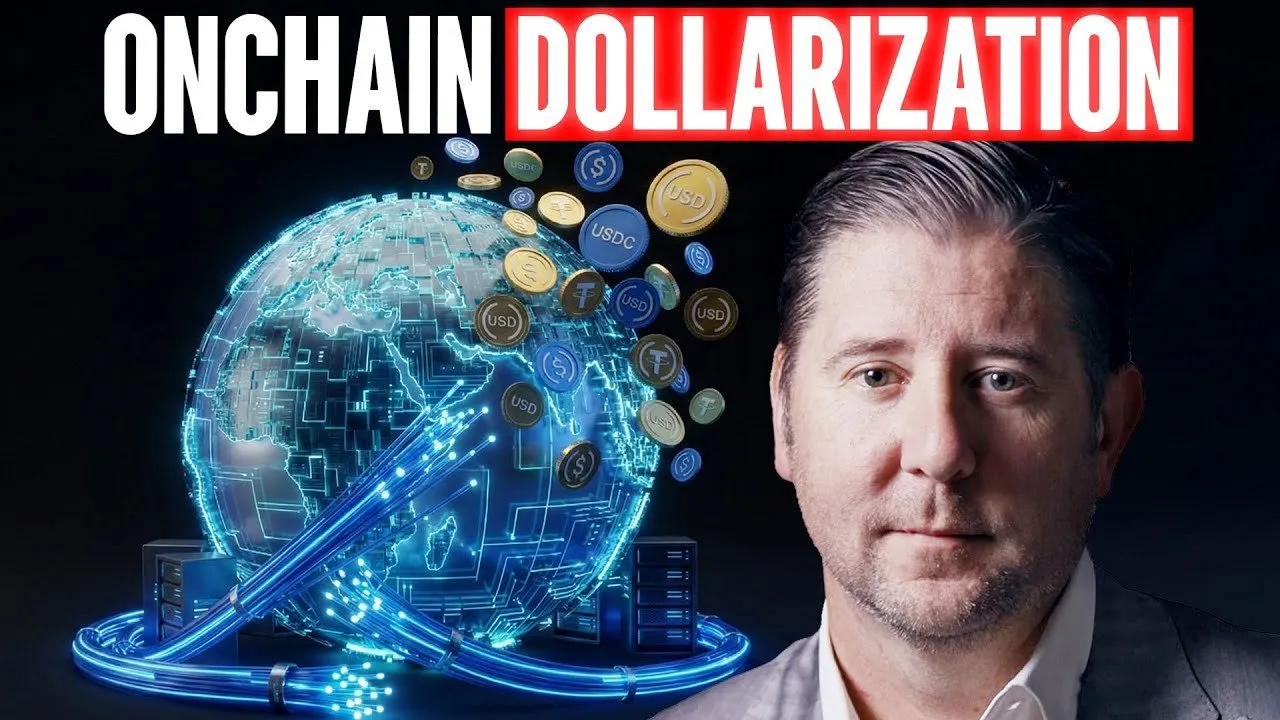
Perhaps the most significant evolution in the Dollar Milkshake Theory is the rise of stablecoins. Initially viewed with skepticism by regulators, stablecoins are now being recognized as a tool to extend US monetary hegemony. By tokenizing the dollar, the US can leverage blockchain rails to export its currency faster and more efficiently than the traditional banking system ever could.
The "Genius" of Co-opting Crypto
The "Genius Act" and similar legislative moves signal a strategic shift in Washington. Instead of fighting crypto, the state is co-opting private sector innovation to strengthen the dollar's network effects. Stablecoins allow the dollar to penetrate deep into the "nooks and crannies" of developing economies, often bypassing local banking infrastructure entirely.
- Speed of Adoption: Dollarization that once took decades can now happen in weeks via mobile wallets.
- Market Demand: Citizens in high-inflation nations (e.g., Argentina, Turkey, Nigeria) have an insatiable demand for dollars to protect their wealth. Stablecoins provide this access globally.
- Eurodollar 2.0: Estimates suggest the stablecoin market could grow from hundreds of billions to trillions rapidly, effectively creating a modernized, digital Eurodollar market.
It is really a way for the United States to extend the dollar network throughout the world on a much faster, cleaner, more efficient basis.
Weaponizing Monetary Sovereignty
This technology also serves as a potent geopolitical weapon. The concept of "money as a weapons system" is established military doctrine. Stablecoins elevate this by allowing the US to potentially undermine hostile regimes by "airdropping" dollars directly to their citizens.
If a local currency collapses and the population has digital access to US dollars, the local government loses control over its monetary policy and, by extension, its political power. This creates a scenario where the US can exert pressure without firing a kinetic weapon, destabilizing adversaries by financially empowering their populations.
Geopolitics and the Global Divorce
The relationship between the United States and China is deteriorating into a "global divorce." Both superpowers are preparing for a future where their financial and technological stacks are decoupled. This separation will likely result in two distinct spheres of influence.
China is attempting to build its own stack using the digital Yuan and gold backing, strictly controlling capital flows to prevent capital flight. Conversely, the US stack relies on open capital markets, the supremacy of the dollar, and now, the ubiquity of stablecoins. While China’s economy struggles with debt deflation and demographic collapse, the US continues to benefit from the deepest capital markets in the world.
In this environment, the "Milkshake" dynamic intensifies. As Europe and Asia face structural economic issues, capital will continue to flow toward the US, supporting asset prices and the currency, even as domestic political dysfunction persists.
Investment Implications
Navigating this environment requires looking beyond the "death of the dollar" fear-mongering and focusing on capital flows. The theory suggests a specific set of outcomes for asset prices.
Recommended Positioning
- US Equities: Despite high valuations, US markets remain the preferred destination for global capital. If the global economy grows, the US leads; if it contracts, capital flees to the US for safety.
- Gold: Essential as insurance against monetary debasement. As central banks lose control or as the debt burden necessitates inflation, gold remains the ultimate store of value.
- Cash and Bonds: Holding US dollar cash or short-term bonds on the sidelines allows investors to deploy capital during liquidity crunches. The dollar is the "best of the worst" fiat currencies.
- Avoid International Risk: Chasing yield in emerging markets or Europe carries currency risk that often outweighs the potential returns. The structural advantages of the US market remain intact.
Conclusion
The Dollar Milkshake Theory is not merely a prediction of a rising currency; it is a framework for understanding how a sovereign debt crisis reshapes the global order. While the desire to de-dollarize is real, the structural mechanics of the global financial system continue to reinforce the dollar's dominance.
With the integration of stablecoins, the US has found a new "straw" to drink the global milkshake, extending its reach into the digital age. For investors, the path forward involves acknowledging the mathematical certainty of a future crisis while recognizing that, until the system breaks, the dollar remains the fulcrum upon which the global economy turns.