Table of Contents
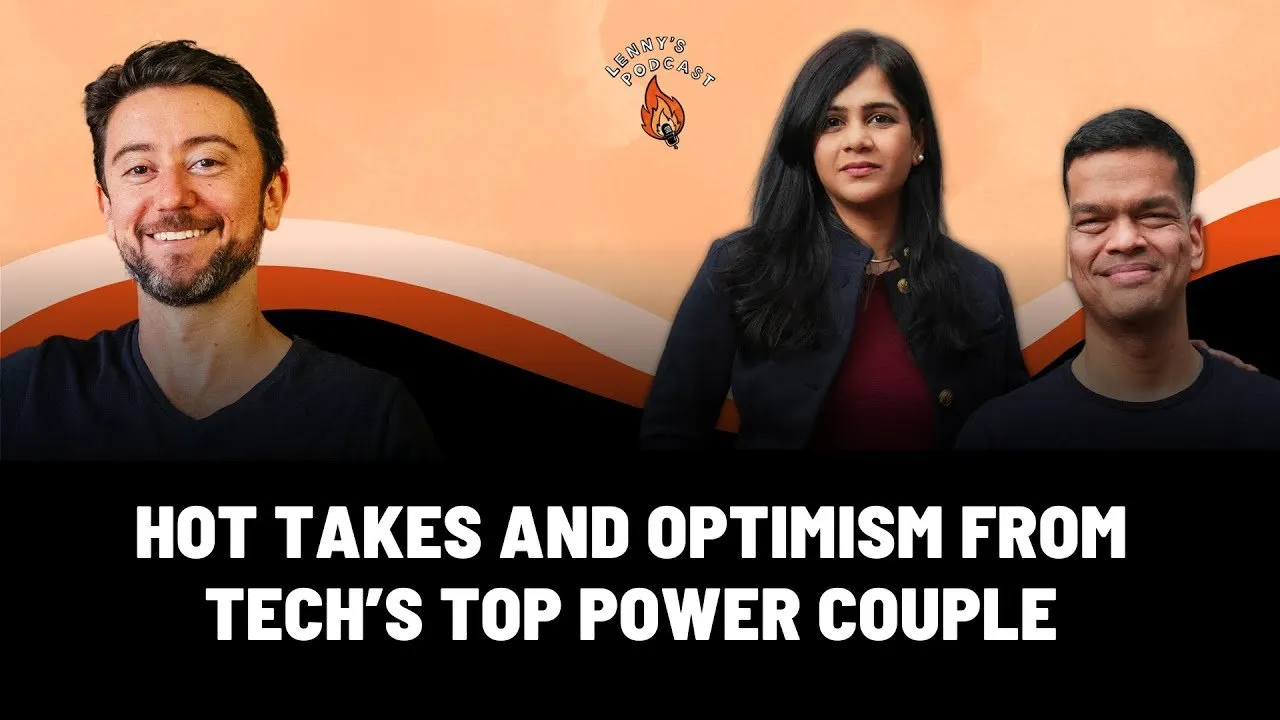
Sriram Krishnan and Aarthi Ramamurthy are arguably tech’s most dynamic power couple. Between them, they have held leadership roles at nearly every major consumer tech giant, including Meta, Netflix, Twitter, and Microsoft. Today, Sriram is a general partner at Andreessen Horowitz (a16z), and together they host "The Good Time Show," a podcast that famously catalyzed the explosive growth of Clubhouse by hosting Elon Musk.
Their journey from writing code in India to becoming central figures in Silicon Valley offers a masterclass in navigating the tech industry. In this wide-ranging conversation, they dismantle traditional product frameworks, offer a refreshing defense of techno-optimism, and provide tactical playbooks for building networks and personal brands from scratch.
Key Takeaways
- Techno-optimism is rooted in access: Technology is the great equalizer. The wealthiest person in the world uses the same smartphone and search engine as a student in a developing nation.
- Network by being interesting, not transactional: The most effective networking happens when you create value and seek authentic relationships rather than asking for favors.
- Community building is like hosting a dinner party: Successful communities require active curation, specific "vibes," and consistent rituals to thrive.
- Consistency cures "cringe": Building a personal brand requires pushing past the fear of judgment. Posting content daily builds the muscle necessary for success.
- System thinking trumps "Jobs to be Done": Sriram argues that popular frameworks like Jobs to be Done (JTBD) fail because they ignore the complex trade-offs and incentives inherent in multi-sided ecosystems.
The Case for Unapologetic Techno-Optimism
In a media landscape that often highlights the downsides of the technology industry, Sriram and Aarthi offer a fiercely optimistic alternative. Their perspective is not born from abstract theory, but from personal experience. Growing up in middle-class families in India, access to computers and the internet was the catalyst that allowed them to transcend their geography and economic status.
This "techno-optimism" is the belief that while technology is uneven, it is responsible for the vast majority of human progress over the last two centuries. It levels the playing field in unprecedented ways.
If we just go back 100 years, the piece of hardware that the king or royalty would use... would be so different from what a peasant would use. But... the phone that you and I have is probably the same phone that Elon Musk uses. Google.com doesn't know your net worth; it gives you the same results.
For builders and product leaders, this mindset is essential. It shifts the focus from cynicism to opportunity, reminding creators that the tools they build have the potential to democratize access and information on a global scale.
The Art of Networking and Community Building
Many professionals view "networking" as a dirty word, associating it with transactional interactions and shallow conversations. Sriram and Aarthi reframe networking as simply having authentic relationships with human beings. Their approach relies on two pillars: cold outreach and community curation.
The Power of the Cold Email
Sriram attributes much of his career success to a simple habit: writing cold emails and DMs. The strategy is straightforward but rarely executed with consistency. Whether it is reaching out to a peer, a manager, or an industry titan like Elon Musk, the goal is to offer value or express genuine curiosity without expecting an immediate return.
When joining a new company, the playbook involves:
- Meeting every peer and asking for their life story.
- Sending cold notes to leadership expressing a desire to learn.
- Asking one critical question: "Who else should I talk to?"
- Following up consistently to maintain the connection.
Community as a Dinner Party
Building a digital community requires the same social intelligence as hosting a physical event. Aarthi suggests that many founders fail because they attempt to build "the world's largest community" immediately, rather than starting with a niche group of passionate users.
Sriram extends this by comparing community management to hosting a dinner party. You cannot simply open the doors; you must curate the guest list to ensure a mix of energies—the boisterous connector, the thoughtful quiet type, and the industry veteran. Furthermore, the host must set the "vibe." Is this a rowdy sports bar or a Michelin-star dining experience? Without clear signaling from the host, the community will fracture.
Personal Branding and Removing the Fear of "Cringe"
The advice to "keep your head down and let the work speak for itself" is outdated. In today's tech ecosystem, you must advocate for your own narrative. However, many qualified professionals hesitate to create content because they fear looking "cringe" or suffering from imposter syndrome.
The reality is that everyone, from junior PMs to famous creators, feels like an imposter. The solution is not to wait for confidence, but to build competence through repetition. Sriram advises treating content creation like exercise: do it every day to build the muscle.
Lean Into Mastery
When imposter syndrome strikes—especially when stepping into executive roles—the most effective defense is to retreat to a place of mastery. Instead of trying to project a persona of a "perfect executive," focus on the specific data, customer insights, or technical details you have worked on. Presenting from a place of deep knowledge commands respect and quiets internal doubt.
Nobody I know has ever become successful by trying to fix their weaknesses... You have to lean into your strengths.
Executive Leadership and Decision Making
Transitioning from an individual contributor to an executive requires a shift in how one handles information and decisions. Sriram recalls lessons learned from Mark Zuckerberg regarding the "rules of engagement" for meetings. Effective leaders clarify their stance on a topic before the debate begins.
Zuckerberg would often categorize his level of involvement on a spectrum:
- Indifference: "I don’t know why you are telling me this; handle it."
- Opinionated but flexible: "I have a view, but I am willing to be overruled if you feel strongly."
- Directive: "I am the CEO, and this is the decision."
This clarity prevents teams from guessing the leader's intent. Additionally, leaders must avoid "hero meetings"—high-stakes, infrequent reviews that cause massive stress. Instead, establish a regular cadence of check-ins to normalize feedback and course correction.
Why "Jobs to be Done" is a Flawed Framework
In a controversial take, Sriram argues against the popular "Jobs to be Done" (JTBD) framework. While JTBD is often cited as the gold standard for understanding customer motivation (e.g., "hiring" a milkshake for a morning commute), Sriram believes it is too idealistic for building modern, large-scale products.
I hate Jobs to be Done... I think no successful company has ever been built on top of [it], and if you pick [it], you're probably doomed.
The critique centers on the fact that JTBD ignores the complex trade-offs inherent in ecosystem-based products. For example, Facebook's "People You May Know" feature often made the experience slightly worse for an existing user to drastically improve the experience for a new user who needed friends. A singular "job" focus cannot account for multi-sided network effects, competitive pressure, or supply chain logistics.
The Alternative: Systems Thinking
Instead of searching for a singular customer "job," product leaders should adopt systems thinking. This involves mapping out every player in the ecosystem—users, advertisers, competitors, partners—and understanding their individual incentives and how they interact. This holistic view allows for rational discussions about trade-offs that a narrow customer-centric framework might miss.
Conclusion
Sriram and Aarthi represent the quintessential "outsider to insider" story. Their advice culminates in a simple but powerful directive: put yourself out there. Whether it is sending a cold email, publishing a blog post despite the fear of judgment, or moving across the world to pursue a career in tech, action is the primary driver of success.
By rejecting passive career growth and embracing agency—over their networks, their brands, and their product philosophies—builders can transition from observing the tech industry to shaping it.