Table of Contents
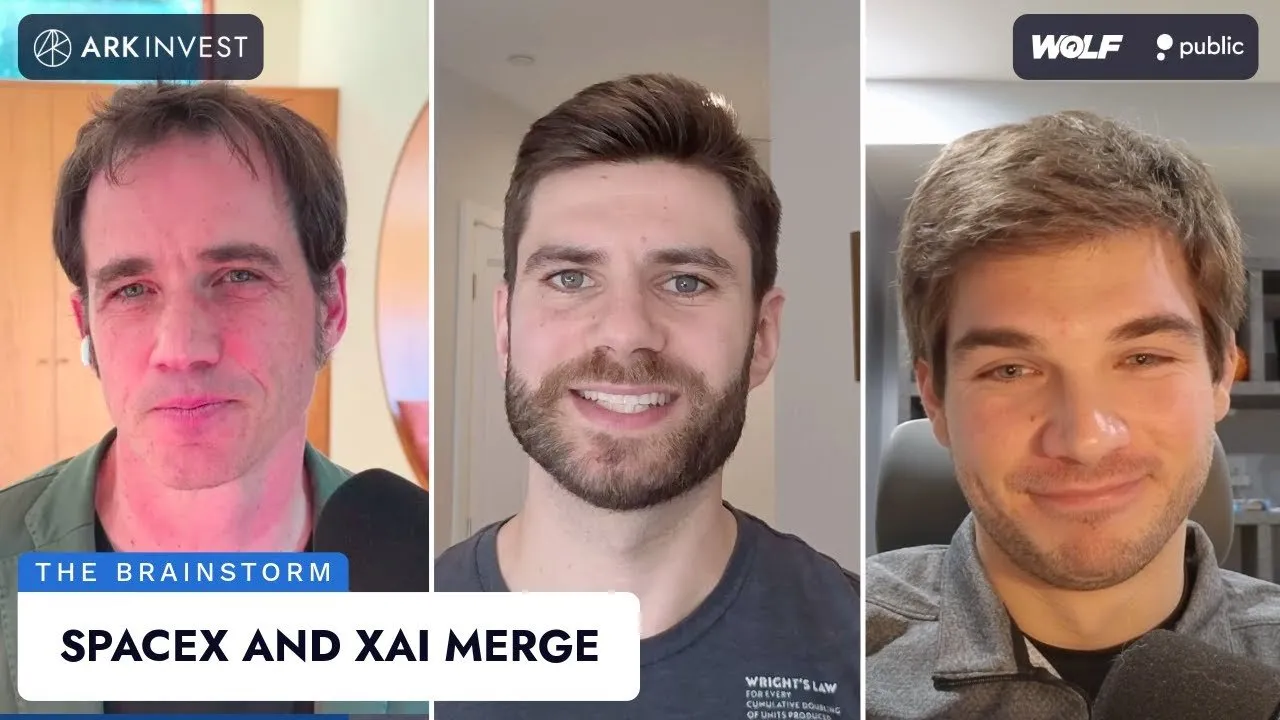
The boundaries between aerospace, artificial intelligence, and automotive industries are rapidly dissolving. As the race for computational power intensifies, the leading players are looking beyond traditional data centers—and even beyond Earth—to secure their infrastructure. Recent discussions among industry analysts have highlighted a potential consolidation of Elon Musk’s empire, specifically a merger between SpaceX and xAI, alongside significant breakthroughs in genomic AI from Google and the shifting landscape of social media monetization.
From launching data centers into orbit to decoding the non-coding regions of human DNA, the next phase of technological evolution is defined by vertical integration and massive scale. Below, we explore the strategic implications of these developments and what they mean for the future of compute, biology, and digital interaction.
Key Takeaways
- Vertical Integration in Orbit: A merger between SpaceX and xAI is viewed as a logical step to align launch capabilities with the massive energy and compute demands of future AI models.
- The Rise of Space-Based Compute: Regulatory hurdles and energy constraints on Earth are driving a thesis for "orbital data centers," potentially requiring a constellation of up to one million satellites.
- Tesla’s Pivot to Autonomy: The potential shutdown of legacy production lines (Model S and X) signals Tesla’s total commitment to robotaxis and humanoid robotics.
- Genomic Breakthroughs: Google’s AlphaGenome is unlocking the value of "junk DNA," potentially reducing drug development costs by 75% and accelerating time-to-market.
- The "Bot Internet" Reality: While Meta sees surging ad revenue from AI integration, the broader internet is transitioning into a space dominated by AI-to-AI interaction, fundamentally changing human digital engagement.
The Strategic Logic of a SpaceX and xAI Merger
Rumors have circulated regarding the IPO of SpaceX, but a more compelling narrative is emerging: a merger between SpaceX and xAI. While some speculation included Tesla in this consolidation, the consensus among analysts points toward a union of launch capabilities and artificial intelligence as the most sensible path forward.
Vertical Integration for the Final Frontier
The core business logic driving this potential merger is vertical integration. Just as Tesla vertically integrated to push the boundaries of the automotive industry, a SpaceX-xAI combination would integrate the necessary components to push the boundaries of the "final frontier."
The foundation model companies—xAI, OpenAI, Anthropic, and Google—are effectively gated by their access to compute. To compete, these entities must accrue massive amounts of processing power. However, building terrestrial data centers is becoming increasingly difficult due to energy shortages, regulatory red tape, and environmental concerns.
"This is pushing the frontier not of an industry, it's pushing the frontier of the final frontier and so this vertical integration is pretty critical."
Financial Synergies
There is also a strong capital allocation argument. SpaceX is currently positioned for a massive public offering, potentially valued at over $1.5 trillion in the coming years. xAI, conversely, faces the capital-intensive "hamster wheel" of raising tens of billions annually to purchase chips. By merging, the combined entity can leverage SpaceX’s financial gravity to fund the requisite compute expansion without the friction of constant external fundraising rounds.
Furthermore, this resolves potential transfer pricing conflicts. If SpaceX’s primary business shifts toward launching AI compute satellites for xAI, merging the entities eliminates the complexity of one Musk company charging another, allowing for optimized margins and streamlined operations.
The Thesis for Orbital Compute
The most radical aspect of this potential merger is the shift from terrestrial to orbital compute. Building data centers on the ground is fraught with complexity—local ordinances, energy grid limitations, and environmental protections often slow deployment. Space offers a vacuum in more ways than one: there are no zoning laws and unlimited solar energy.
Escaping Terrestrial Constraints
Analysts note that while environmental protections are vital on Earth, they do not apply in orbit. This allows for a "copy and paste" approach to deploying infrastructure. If SpaceX can lower launch costs sufficiently—a goal Starship is designed to achieve—deployment of AI inference clusters in space becomes cost-competitive, if not cost-advantaged.
"Putting assets on the ground is just complex... suddenly the people that care about the owls in the forest of Germany are striking against your factory... there are no owls in space."
Scaling the Constellation
Current satellite constellations are vast, but the requirements for space-based AI are orders of magnitude larger. While Starlink was initially modeled for roughly 40,000 satellites, an AI-compute-focused constellation might require upwards of one million satellites. Filings suggest SpaceX is already preparing for this scale.
While latency remains a constraint for real-time training, the majority of AI workloads are shifting toward inference (running the model) and reinforcement learning (simulations). These tasks are less latency-sensitive and highly suitable for orbital deployment. In the long term, specifically the 2030-2031 timeframe, space-based compute could eclipse terrestrial capabilities.
Tesla’s Total Bet on Autonomy
While SpaceX looks to the stars, Tesla appears to be doubling down on its autonomy thesis. Recent reports indicate that Tesla may shut down the Model S and Model X production lines to repurpose that factory space for Optimus robotics and next-generation autonomous vehicle production.
This move is symbolic of a broader shift: the era of the human-driven electric vehicle is closing, and the era of the autonomous robotaxi is beginning. By reallocating resources from their legacy luxury vehicles to mass-market autonomous hardware, Tesla is signaling that its future valuation is entirely dependent on solving full self-driving and generalized robotics.
Google DeepMind and AlphaGenome
Beyond infrastructure, AI is making tangible leaps in biology. Google DeepMind’s introduction of AlphaGenome represents a significant step forward in understanding human genetics. To understand the magnitude of this release, one must distinguish between the "exome" and the "genome."
Decoding "Junk DNA"
Historically, genetic research focused on the exome—the 2% of the genome that codes for proteins. The remaining 98% was often colloquially dismissed as "junk DNA." However, AlphaGenome has demonstrated that these non-coding regions contain critical instructions that regulate how proteins are generated and how the body functions.
By effectively predicting the impact of mutations within these non-coding regions, AlphaGenome opens the door for whole-genome sequencing to become the diagnostic standard, replacing exome-only sequencing. This increases the marginal demand for sequencing significantly.
Impact on Drug Discovery
The commercial implications for the pharmaceutical industry are profound. AI tools like AlphaGenome allow researchers to simulate biological outcomes before entering the wet lab.
- Cost Reduction: AI is projected to reduce the cost of bringing a drug to market by roughly 75%.
- Speed: The timeline for drug development could be shortened by 40%.
Currently, drug development often resembles "throwing darts" in the dark. Tools like AlphaGenome turn the lights on, allowing for predictive modeling that significantly improves the probability of success.
Meta and the Evolution of the Internet
In the digital realm, Meta has emerged as a clear winner in the application of AI to current business models. Their recent earnings report highlights a 24% growth rate, driven largely by AI-integrated advertising products. By utilizing AI agents to facilitate "click-to-chat" ads on WhatsApp and optimizing ad targeting, Meta is proving that AI is not just a future promise but a current revenue driver.
The Dead Internet Theory
However, this efficiency comes with a philosophical cost. The internet is evolving through distinct phases:
- Phase 1: Connecting humans who know each other.
- Phase 2: Connecting humans to content from strangers (the TikTok/Reels era).
- Phase 3: Connecting humans to AI-generated bots and content.
As the internet becomes saturated with AI-generated content, interactions with "bots" may become indistinguishable from interactions with humans. This leads to a potential future where the internet acts as a "giant slot machine" for AI content, potentially driving a wedge between digital engagement and reality.
"I think the internet just becomes a giant slot machine for AI content. I think a good portion of the population will go outside and touch grass more often."
This saturation creates a paradox: as online content becomes infinite and potentially artificial, the value of "in real life" (IRL) experiences and verified human connection may skyrocket. Conversely, recommendation algorithms will become the ultimate gatekeepers of reality, determining whether users see a diverse world or are nudged into increasingly polarized, AI-reinforced bubbles.
Conclusion
We are witnessing a divergence in how technology shapes our world. On one hand, physical constraints are driving infrastructure off-planet, with SpaceX and xAI potentially merging to build the orbital brain of the future. On the other, biological AI is drilling deeper into our own genetic code to rewrite healthcare. Meanwhile, the digital layer connecting us is becoming increasingly synthetic.
Whether it is the vertical integration of rockets and chips, or the seamless blending of human and bot interactions, the successful entities of the next decade will be those that control the full stack—from energy generation and launch capability to the algorithms that curate our perception of reality.