Table of Contents
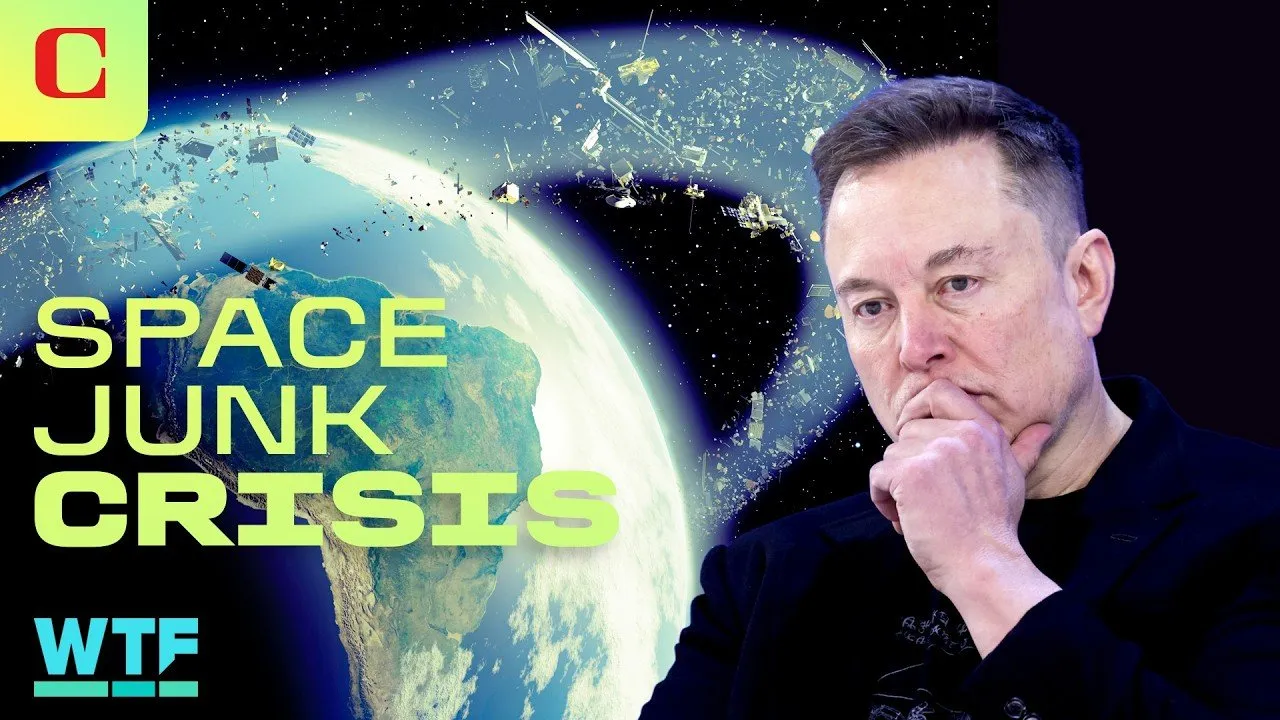
The Federal Communications Commission (FCC) has granted SpaceX approval to nearly double its Starlink constellation, authorizing the deployment of an additional 15,000 satellites at lower altitudes than ever before. This expansion comes as global competitors, including Amazon and the Chinese government, file for hundreds of thousands of their own orbital slots, raising urgent alarms regarding the sustainability of Low Earth Orbit (LEO). As the region becomes increasingly congested, experts warn that the risk of a "runaway" debris scenario—known as Kessler Syndrome—could soon threaten humanity's ability to operate safely in space.
Key Points
- The FCC authorized 15,000 additional Starlink satellites, which will operate at lower altitudes to minimize latency for satellite broadband.
- Over 40,000 objects are currently tracked in orbit, but experts estimate more than 1 million untracked fragments pose a catastrophic risk to infrastructure.
- China has filed for 200,000 satellites, signaling an intensifying geopolitical race for orbital real estate.
- Environmental concerns are rising over the atmospheric impact of satellites designed to burn up upon reentry, potentially affecting the ozone layer.
The Drive for Lower Latency and Global Dominance
The push to move satellites closer to Earth represents a significant shift in how space-based internet is delivered. Traditionally, internet satellites operated in higher orbits, resulting in high latency and slow speeds. By positioning the Starlink fleet in LEO, SpaceX has achieved broadband-competitive speeds, though the lower altitude makes these assets more vulnerable to solar storms and atmospheric drag.
According to Joe Supan, a reporter for CNET who has tracked the industry for years, the scale of this expansion is unprecedented. Only five or six years ago, the total number of satellites in space was approximately 2,000. The new approval significantly escalates those figures.
"Putting their satellites in low Earth orbit was really Starlink's great innovation. By moving them closer to Earth, it really cut out those problems. You could really have modern broadband speeds through satellite internet."
The regulatory win for Elon Musk allows SpaceX to further its goal of providing internet to underserved regions where fiber-optic cables are economically unfeasible. However, this success has triggered a global "land grab" in the sky, with companies and nations viewing LEO as a vital geopolitical tool.
Market Competition and Geopolitical Stakes
The FCC recently granted Amazon approval for 4,500 satellites under its Project Kuiper initiative, while another firm, Logos, secured permission for 4,000. Beyond U.S. borders, the scale of ambition is even larger. China has filed for a staggering 200,000 satellites to establish its own sovereign network. This surge is driven by a desire to avoid reliance on Western infrastructure, particularly following Starlink's high-profile role in providing communications during conflicts in Ukraine and political unrest in Iran.
The Rising Specter of Kessler Syndrome
The primary concern for space agencies like NASA and the European Space Agency (ESA) is the increasing density of material in orbit. Currently, satellites must perform frequent "evasive maneuvers" to avoid collisions with existing debris. Even a fragment the size of a marble, traveling at tens of thousands of miles per hour, can destroy a multi-million dollar satellite and create a cloud of new debris.
This creates the potential for Kessler Syndrome, a theoretical scenario where the density of objects in LEO is high enough that each collision generates a cascade of further impacts. Eventually, certain orbital planes could become so cluttered that they are unusable for generations. While experimental efforts like using nets to capture out-of-control satellites are underway, these technologies are currently only effective for large, trackable objects.
Environmental and Atmospheric Implications
To mitigate the debris problem, Starlink satellites are designed to burn up in the atmosphere at the end of their operational life. While this prevents them from remaining as "junk," the process itself is drawing scrutiny from atmospheric scientists. The incineration of thousands of satellites releases metallic particulates that may contribute to air pollution, global warming, and damage to the ozone layer.
Future Developments and Alternative Technologies
Despite these risks, the expansion of orbital infrastructure shows no signs of slowing. Elon Musk has signaled that SpaceX plans to launch solar-powered AI data centers into space within the next few years, further increasing the complexity of the orbital environment.
As the debate over space junk intensifies, some researchers are looking toward the stratosphere as a safer alternative. High-Altitude Platform Systems (HAPS)—large helium-filled systems that float in the stratosphere—are being developed to beam internet directly to devices from a fixed position. These systems offer similar latency benefits to LEO satellites but can be easily recovered and do not contribute to orbital congestion. As the FCC and international bodies grapple with the "Frogger-like" conditions of the modern sky, the next phase of global connectivity may depend on balancing orbital ambition with the long-term preservation of the space environment.