Table of Contents
The SP80 engineering team has officially announced a strategic relocation to Namibia for its upcoming bid to shatter the World Sailing Speed Record in late 2026. Following extensive trials in southern France where the kite-powered vessel achieved a top speed of 58 knots (approximately 67 mph), the team is pivoting to the high-velocity wind corridors of Namibia to surpass the standing record of 65.45 knots.
Key Takeaways
- Current Status: The SP80 vessel has reached 58 knots, establishing itself as the second-fastest sailboat in history.
- The Target: The team aims to beat the 65.45-knot (75 mph) record set by Paul Larsen’s Vestas Sailrocket 2.
- Operational Shift: Testing has moved from France to Namibia to capitalize on superior speed-sailing conditions.
- Design Innovation: Unlike traditional single-pilot speed craft, SP80 utilizes a dual-pilot cockpit to separate steering from propulsion control.
Strategic Relocation and Performance Benchmarks
Originally scheduled for 2025, the record attempt was postponed due to degrading wind and weather conditions at the team's testing facility in Leucate, France. Despite these environmental challenges, the team successfully pushed the vessel to 58 knots. This achievement places SP80 just behind the current record holder, Paul Larsen, who set the benchmark in Namibia’s Walvis Bay.
The SP80 team plans to ship the vessel to Namibia in July 2026. The unique geography of the Namibian coast offers long stretches of flat water and consistent high-velocity winds, creating the ideal environment for the "drag racing" style of sailing required to break the 65-knot barrier.
Cockpit Innovation: The Dual-Pilot Advantage
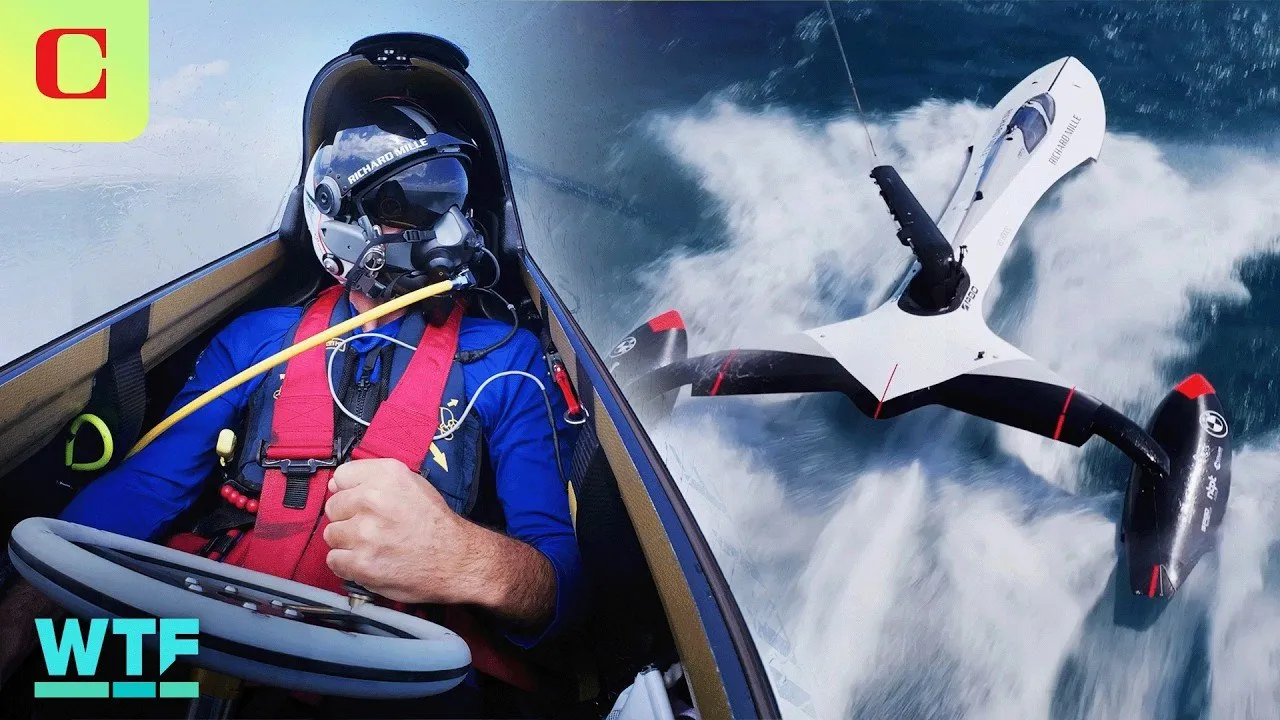
While Paul Larsen’s record-breaking run was a solo effort, the SP80 is engineered for two pilots, splitting the cognitive load between navigation and power management. The vessel functions less like a traditional sailboat and more like a high-speed aircraft, featuring an enclosed cockpit and specialized avionics.
Division of Labor
Pilot Mayule, positioned in the front, manages steering. Due to the hydrodynamic forces at high speeds, the steering wheel offers no haptic feedback, forcing the pilot to rely entirely on instrument telemetry to maintain a straight trajectory along the shoreline. In the rear cockpit, pilot Benoit manages the kite, serving as the vessel's throttle.
"I've got a bulkhead in front of me, so I don't see where we're going... but I've got a canopy on top of me and a really good view of the kite. On my right hand, I've got a lever [to] change the angle of attack of the kite, thus increasing the power. And then I can rotate this handle that is like a motorbike handle to release the power."
Safety Protocols and Risk Management
The SP80's enclosed design introduces risks not found in conventional sailing. In the event of a capsize, the pilots cannot simply jump overboard; they must egress from a submerged cockpit. To prepare for worst-case scenarios, the team has adopted training protocols typically reserved for helicopter pilots, including underwater escape training in inverted simulators.
The vessel is equipped with redundant safety systems, including backup air supplies and integrated communications within the pilots' helmets. Furthermore, the cockpit features two distinct emergency braking systems: a mechanical release that depowers the kite while allowing for a quick reset, and a "hard" release that severs the lines completely in critical emergencies.
Timeline to Launch
The engineering team has dedicated the next nine months to rigorous maintenance and final optimization of the vessel's systems. Following the shipment of the boat to Namibia in July 2026, the team expects to be operational by August, with the official window for record-breaking attempts opening in September 2026.