Table of Contents
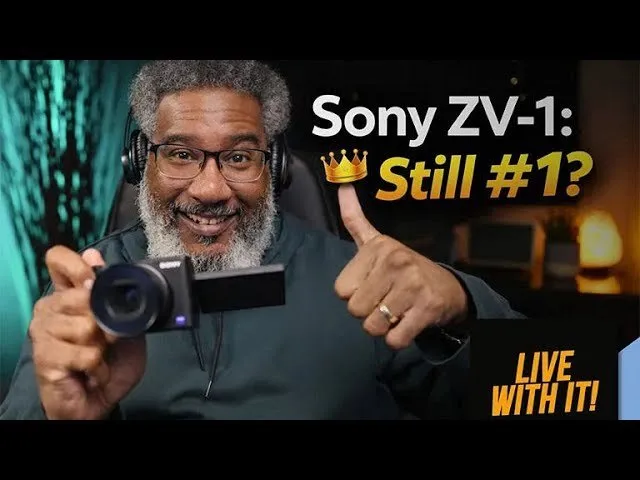
Six years after its release during the height of the 2020 pandemic, the original Sony ZV-1 remains a surprisingly competitive tool for content creators, though its value proposition has shifted significantly in the current market. In a recent detailed review on Live with It, tech analyst Rob Dunwood argued that while the device is no longer cost-effective strictly as a webcam, it serves as a powerful entry point for vloggers and mobile photographers—provided they purchase it on the secondary market.
Key Takeaways
- Enduring Viability: Despite its age, the ZV-1’s 20.1 MP stacked sensor and 4K video capabilities outperform modern webcams and many smartphones.
- Market Pricing: New units remain expensive at approximately $900, but used models offer high value between $450 and $550.
- Critical Flaws: Battery life is severely limited, often lasting less than 30 minutes when shooting 4K video.
- Lens Limitation: The 24mm equivalent lens is often too tight for handheld vlogging, necessitating aftermarket wide-angle attachments.
The "OG" Vlogging Camera in 2026
Released in May 2020, the Sony ZV-1 was designed to bridge the gap between casual smartphone shooting and professional interchangeable lens cameras. According to Dunwood, the camera’s specifications—including a 24-70mm equivalent lens, high frame rate (HFR) modes, and a dedicated microphone jack—have allowed it to age gracefully. While originally purchased by many as a high-end webcam for Zoom calls, its utility has evolved.
Dunwood, who revisited the device for Live with It, emphasized that while dedicated webcams have improved drastically over the last half-decade, the ZV-1’s cinematic quality remains superior. However, using it exclusively for streaming is no longer financially sound.
"If you are getting it to be just a webcam today in 2026, I probably wouldn't get it... webcams have come so far in the last five and a half years... that you can get a really good 4K quality webcam that would cost half of what this costs."
Performance and Hardware Limitations
The device’s primary advantage is its form factor. Smaller than a Samsung Galaxy S22, the ZV-1 fits easily into a pocket, adhering to the adage that the best camera is the one you have with you. However, this compact size necessitates compromises that potential buyers must accept.
Battery and Optics
The most significant drawback identified is battery life. While Sony claims up to an hour of operation, real-world usage paints a different picture. Recording in 4K typically drains the small battery in 25 to 30 minutes, making carrying multiple spare batteries a requirement for field work.
Furthermore, the 24mm starting focal length is often too narrow for "walk-and-talk" style vlogging, as it crops in heavily on the user's face. Dunwood recommends utilizing attachments like Ulanzi wide-angle lenses to convert the focal length to a wider 18mm, making it viable for handheld use.
Market Dynamics: New vs. Used
The economics of the ZV-1 have created a strange disparity. Due to supply constraints and the enduring durability of camera optics, new units still command a premium price of around $900 on Sony’s website. Dunwood advises strongly against purchasing new, noting that the technology, while robust, does not justify a near-$1,000 investment today.
Instead, the used market presents a compelling opportunity. Pre-owned units, often bundled with necessary accessories like grips or extra batteries, are trading in the $450 to $550 range. For this price, creators gain access to a stacked CMOS sensor capable of 24fps burst photography and high-quality video, often surpassing the capabilities of the newer ZV-1 Mark II, which sacrificed optical image stabilization for a wider lens.
"I've learned more about cinematography, learned more about how to frame images on this camera than I have with anything else... It is a great entry-level camera."
For creators looking to move beyond smartphone photography without carrying a full-frame DSLR, the original ZV-1 maintains a strong "buy" rating on the used market. However, those seeking a stationary streaming solution should look toward modern dedicated webcams. Dunwood continues to cover consumer tech developments at The Tech John and through his YouTube channel.