Table of Contents
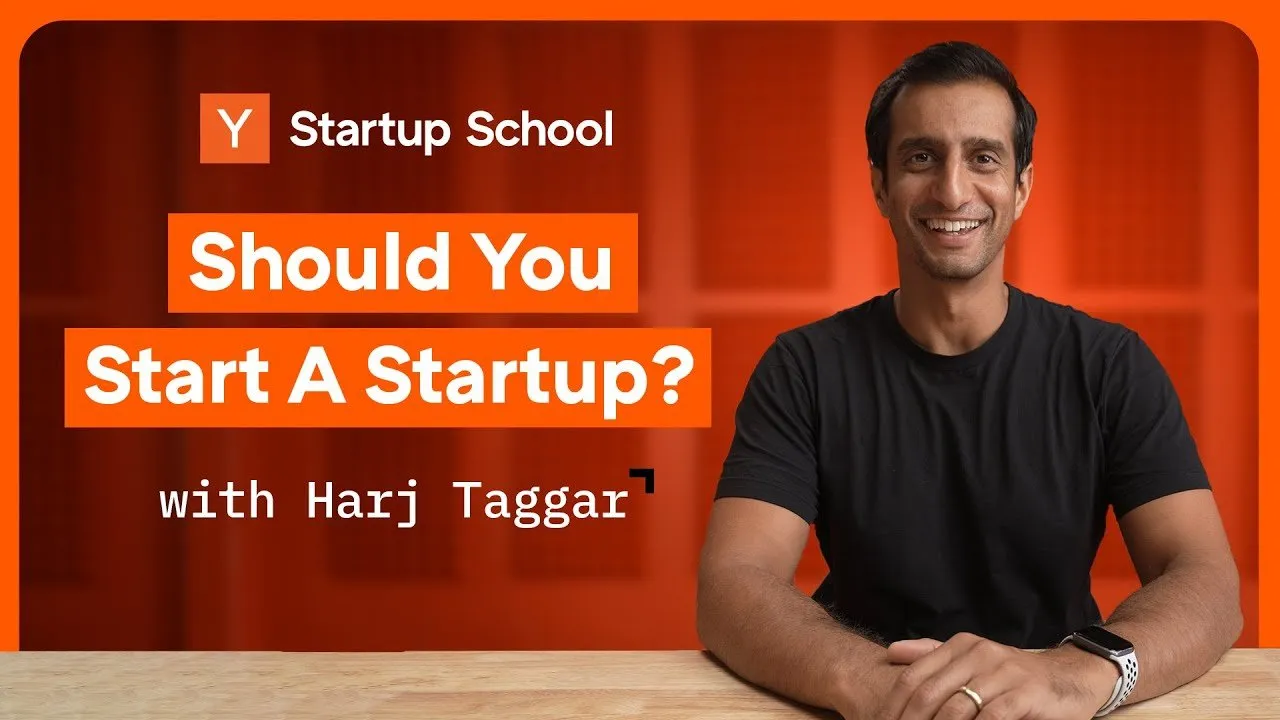
Starting a startup is one of the most challenging yet potentially rewarding career paths you can choose. But how do you know if entrepreneurship is right for you? Hodges Bair, Group Partner at Y Combinator, has worked with nearly a thousand startup founders and shares valuable insights about who should consider starting a company and how to prepare for the journey ahead.
Key Takeaways
- Resilience matters more than confidence, programming skills, or charisma when predicting startup founder success
- Your initial motivations for starting a company can evolve over time, so don't overthink them
- Calculate your worst-case scenario honestly before taking the leap into entrepreneurship
- Find smart people to discuss ideas with and turn those conversations into side projects
- Starting a company provides valuable learning experiences that benefit your career even if the startup fails
The Surprising Truth About Startup Founder Types
Popular culture paints a narrow picture of successful entrepreneurs. Movies and books showcase brilliant programmers like Mark Zuckerberg or charismatic product geniuses like Steve Jobs. These stereotypes create the impression that only certain personality types can succeed as founders.
The reality is far more diverse. After 15 years of investing in startups, even experienced investors get surprised by who becomes a great founder. Academic performance and workplace success don't reliably predict startup achievement. Many different types of people with varying strengths can build successful companies.
Why Traditional Success Metrics Fall Short
Working at a startup requires fundamentally different skills than excelling in school or at an established company. You must convince users to care about your product one person at a time, pushing through constant rejection that feels deeply personal. This environment demands qualities that don't necessarily correlate with traditional markers of success.
Resilience: The Most Important Founder Quality
Among all founder characteristics, resilience stands out as the most crucial predictor of success. Resilient people are naturally suited to startup life because they can weather the inevitable struggles of building something from nothing.
Confidence Doesn't Equal Resilience
Many investors initially mistake confidence for resilience, assuming that founders who speak with conviction and display high energy during interviews will persevere through challenges. Experience reveals this assumption to be wrong. Some confident-appearing founders crumble when facing roadblocks, while quiet, seemingly uncertain founders demonstrate remarkable persistence.
Consider Saji Wickramasekara, founder of Benchling. During his 2012 Y Combinator interview, he and his co-founder appeared as soft-spoken engineers. Investors worried they couldn't handle enterprise sales to biotech and pharmaceutical companies. Benchling struggled to raise seed funding and took over a year to generate any revenue, then another year to achieve meaningful sales.
Looking back I always had confidence that Sagi was a good engineer but I could not have predicted back when we funded him in 2012 that he would have the resilience to overcome that amount of rejection.
Today, Benchling is valued at over six billion dollars with many of the world's top biotech and pharmaceutical companies as customers.
Your Initial Motivations Matter Less Than You Think
Conventional wisdom suggests that certain motivations for starting a company are superior to others. Critics often argue that wanting to make money represents a flimsy foundation for entrepreneurship. This perspective misses the bigger picture.
Money as Motivation Is Perfectly Valid
Starting a company to become wealthy is completely legitimate. Startups represent one of the few paths to life-changing wealth in a relatively short timeframe. If financial motivation gets you started, that's sufficient.
Simple curiosity about the founder experience also provides adequate initial motivation. Actually doing a startup is the only way to know if you'll enjoy entrepreneurship.
Motivation Evolves Over Time
The key insight is that founder motivations change as companies develop. Founders who initially planned to sell within a year sometimes continue working on the same startup for a decade, eventually taking it public. Your starting motivations matter less than what they evolve into.
To sustain yourself through the inevitable dark periods every startup experiences, you need enduring motivations: genuine interest in the problem you're solving and love for the people you're working with.
Practical Framework: Assessing Your Worst-Case Scenario
Rather than endlessly introspecting about founder fit, take a practical approach. Ask yourself: "What do I have to lose?" This isn't rhetorical—calculate the actual worst-case scenario and determine if you can live with it.
Timeline and Opportunity Cost
You'll need at least a year to gather enough data to assess whether your startup shows promise. In the worst case, you'll shut down without earning much salary during that period. Can you handle this financially and emotionally?
The calculation varies dramatically based on your situation. Recent college graduates face minimal opportunity cost—job offers will remain available in a year. However, a senior employee at a major tech company who's in line for a significant promotion faces much higher stakes.
Factor in the Learning Value
When assessing worst-case scenarios, many people underestimate the learning value from starting a company. As a founder, you're responsible for everything, exposing you to sales, product development, and customer support simultaneously. This breadth clarifies what type of work energizes you and where you want to focus your career.
The startup experience can really improve your career opportunities even if the startup doesn't succeed.
Many employers actively seek candidates with startup experience, viewing it as evidence of self-starting ability and leadership potential. Some successful companies, like $10 billion Rippling, specifically hire former founders to run product divisions.
Preparing for Your Future Startup
If you decide you can handle the worst-case scenario but aren't ready to start immediately, focus on preparation. You'll eventually need two things: an idea and a co-founder.
Don't Separate Ideas and Co-founders
Treat finding ideas and co-founders as interconnected tasks. Good ideas rarely emerge in isolation—they develop through conversations with smart people who can help refine vague impulses into concrete concepts.
Start by identifying people you enjoy discussing ideas with. In college, these are often the people you seek out for help with difficult problems or prefer working with on group assignments. At work, they're colleagues who make you most productive and help you do your best work.
Create the Right Environment
If you struggle to identify potential co-founders in your current environment, consider changing it. Working at a startup provides the ideal setting—you'll see how startups operate internally while surrounding yourself with less risk-averse colleagues than typical large company employees.
Turn Conversations into Side Projects
During idea discussions, watch for moments when someone says "it'd be cool if someone built X." That's your cue to explore how you could build X. Start with simple weekend projects and gather user feedback to understand market reactions.
You're not trying to launch the next unicorn immediately—you're developing the skill of turning ideas into reality and experiencing the thrill of launching something tangible.
Knowing When to Take the Leap
How do you know when it's time to quit your job and start a company? While explosive traction from a side project would make the decision easy, you can't rely on that happening.
Look for Deep User Reactions
Early user feedback will always be mixed—some delighted, some appalled, some indifferent. Follow Y Combinator partner Paul Graham's advice: it's better to create a product that few people love intensely than one many people feel indifferent about.
If your side project creates deep reactions where users legitimately change their behavior because of your product, you may have something promising. A single passionate user of a crude weekend prototype means more than a million signups on a waitlist.
Pay Attention to Your Energy Levels
Focus less on how well your projects are performing and more on how much you enjoy the process. Do you find energy to work on side projects during evenings and weekends while your day job drains you? Are you learning new things and feeling energized?
Most importantly, notice how much you enjoy working with your collaborators. If you genuinely enjoy working with someone and you both want to be founders, recognize how rare that combination is—it's a fantastic reason to start a company together.
Taking Action on Your Entrepreneurial Journey
The path to becoming a successful startup founder isn't as mysterious or exclusive as popular culture suggests. Success comes from resilience rather than stereotypical founder traits, and your initial motivations matter less than your ability to persist through challenges.
Start by honestly assessing whether you can handle the worst-case scenario of spending a year building a company that might fail. If you can, begin seeking out smart people to discuss ideas with and turn those conversations into tangible projects. Pay attention to your energy levels and the people who energize you most.
Remember that starting a company provides valuable learning experiences regardless of the outcome. Even if your startup doesn't succeed, the skills you develop and the network you build will enhance your career prospects significantly.
The entrepreneurial journey begins with curiosity and a willingness to experiment. If you're genuinely interested in the founder experience and can handle the inherent risks, you're already better positioned than you might think to join the ranks of successful startup founders.