Table of Contents
Sequoia Capital has led a $50 million combined Seed and Series A funding round for Rosebase, an AI-native platform designed to unify fragmented institutional data for the financial services sector. Announced by Sequoia partner Alfred Lin and Rosebase co-founder Michael, the investment aims to accelerate the development of specialized AI agents capable of navigating complex financial reconciliations to enhance high-stakes decision-making. By integrating directly into proprietary data systems, the startup seeks to transform raw institutional memory into actionable intelligence for global credit originators and investment firms.
Key Points
- Rosebase secured $50 million in a combined Seed and Series A round led by Sequoia Capital to scale its financial AI infrastructure.
- The platform focuses on proprietary data integration, connecting disparate systems—including CRM, accounting, and trade information—to provide a holistic view for decision-makers.
- The technology differentiates itself by moving beyond simple "time-saving" tasks to perform complex reasoning over financial inconsistencies and data conflicts.
- Rosebase expects to triple or quadruple its headcount across San Francisco and New York to address security, infrastructure, and applied AI research challenges.
Unifying Institutional Memory through AI Agents
The core challenge facing modern financial institutions is not a lack of data, but the inability to access and reconcile it across isolated silos. Rosebase addresses this by connecting to a firm's entire data ecosystem, ranging from documents to real-time trade and position information. According to the founders, the goal is to leverage a firm’s institutional memory—the accumulated proprietary data and judgment that typically sits underutilized.
While many generative AI applications currently in the market focus on productivity gains, such as faster slide deck creation or basic modeling, Rosebase is targeting the precision-heavy demands of finance. The platform’s agents are designed to understand the nuances of financial data, such as identifying the correct version of EBITDA or reconciling restatements across multiple reports.
"Our AI agents understand the data, the connections, the inconsistencies, the conflicts so we can reason holistically and rigorously over all of that data. It’s the moment of agents right now... but agents are only as good as the data they operate on."
The Investment Thesis and Human-Centric AI
For Sequoia Capital, the investment in Rosebase aligns with a broader thesis of backing "founder-focused" and "market-driven" solutions. Alfred Lin highlighted the technical pedigree of the founding team—drawing from experience at Stripe and MIT—as a critical factor in tackling the high-stakes environment of financial services where accuracy is non-negotiable.
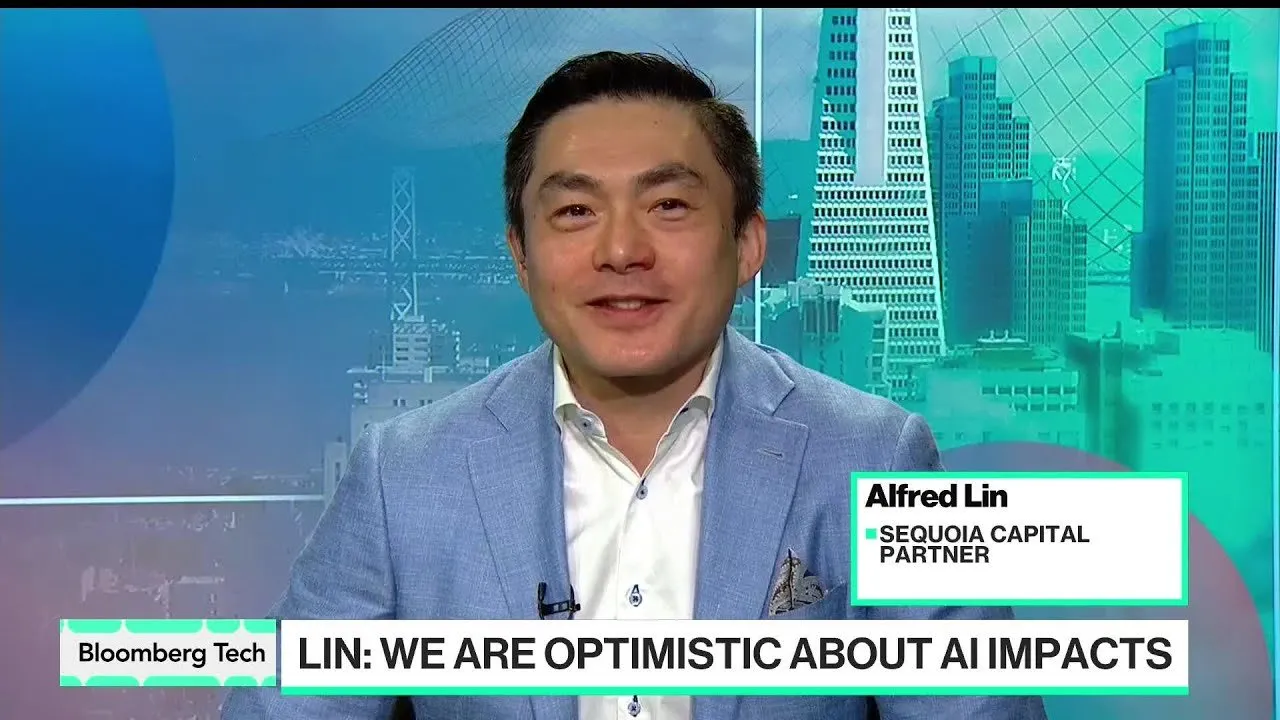
Lin addressed the prevailing concerns regarding generative AI and its impact on the workforce, positioning the technology as a tool for empowerment rather than replacement. He emphasized that the "human-in-the-loop" model remains central to the firm's philosophy, particularly in sectors involving retirement, insurance, and significant capital allocation.
"We are very, very optimistic that the impacts are real. AI impacts are going to allow us to do a lot more than we used to be able to do. It just leaves all of us to be able to do much more strategic work, much more creative work, and much more human work."
Operational Scaling and Security
Deploying AI within the financial sector introduces unique observability and security requirements. Because Rosebase must operate within the secure environments of its customers to protect sensitive data, the company is prioritizing infrastructure and security engineering. This technical demand is driving a massive hiring push, with plans to significantly expand the team's presence in both the San Francisco and New York tech hubs.
Market Transition and Future Outlook
The rise of AI-native companies like Rosebase signals a potential shift for legacy software providers. While established firms like Snowflake and Oracle possess large customer bases, Lin suggests their continued success depends on their ability to transition and integrate generative AI into their core business models. He noted that while legacy software will persist, the "daring" companies are those building with AI at the foundation rather than as an add-on.
Looking ahead, Sequoia remains bullish on the long-term trajectory of its AI portfolio, citing Nvidia as a benchmark for enduring growth. As Rosebase scales its operations this year, the focus will remain on refining the applied AI research necessary to handle arbitrary financial data, ensuring that the next generation of financial decisions is driven by comprehensive, automated reasoning.