
Table of Contents
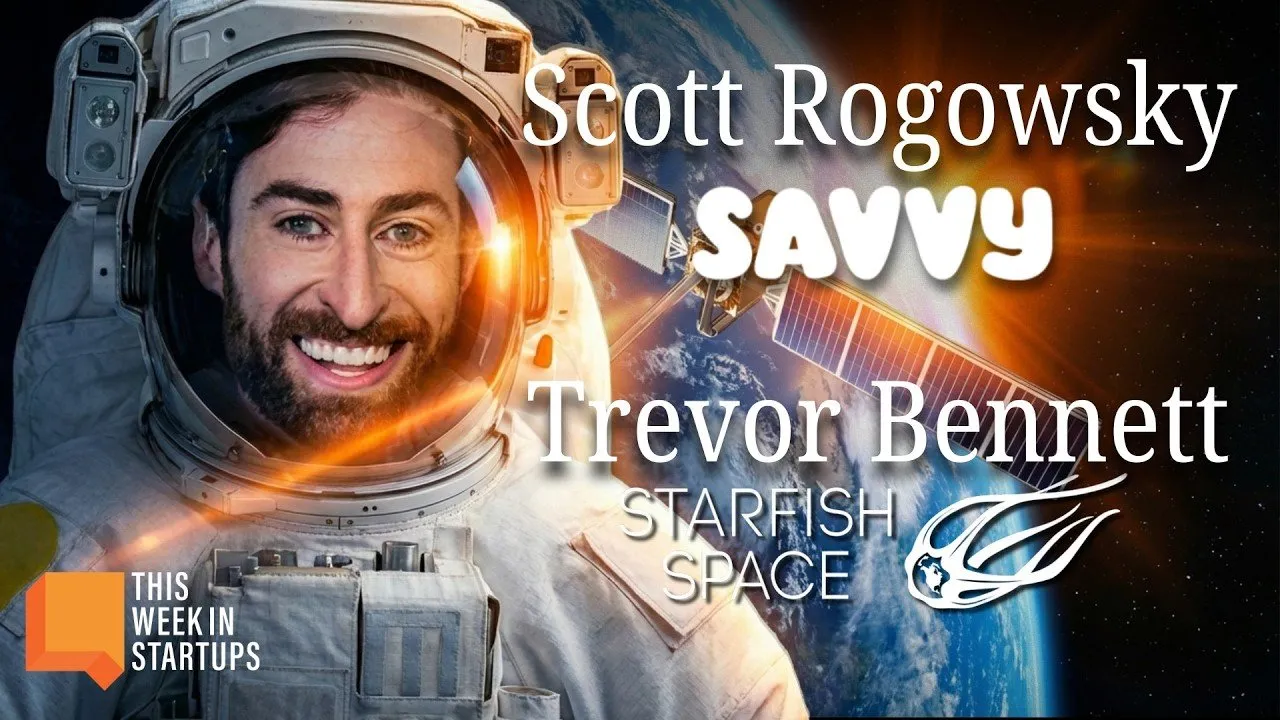
Lightning in a bottle is notoriously difficult to capture once, let alone twice. In the late 2010s, HQ Trivia became a cultural phenomenon, turning mobile gaming into appointment viewing and making host Scott Rogowsky a household name. After the app’s meteoric rise and subsequent collapse, Rogowsky is back with a new venture, Savvy, attempting to merge the thrill of live broadcasting with the stickiness of word puzzles. Meanwhile, far above the atmosphere, Starfish Space is tackling a very different kind of logistical challenge: building the "tow trucks" of low Earth orbit to service, move, and de-orbit satellites using autonomous robotics.
From the gamification of mobile screens to the industrialization of outer space, these two distinct ventures share a common thread of resilience and the drive to iterate on complex problems.
Key Takeaways
- The HQ Trivia Lesson: Viral growth cannot sustain a business without experienced leadership and product iteration; the "Michelin star meal" eventually becomes repetitive without variety.
- Savvy’s Hybrid Model: Scott Rogowsky’s new platform combines the live host energy of HQ with the daily habit-forming mechanics of Wordle, introducing a "host versus audience" dynamic.
- The "Otter" Spacecraft: Starfish Space is building small, scalable satellite servicing vehicles (Otters) capable of docking with and maneuvering other satellites using simplified hardware.
- Software-Defined Space Logistics: By relying on advanced software and standard cameras rather than heavy, expensive sensors, Starfish is lowering the cost of orbital rendezvous.
- Service Over Hardware: The space industry is shifting toward a service-based economy, validated by Starfish’s recent $52.5 million contract with the Space Development Agency for disposal services.
The Rise, Fall, and Lessons of HQ Trivia
For a brief moment in internet history, HQ Trivia dominated the conversation. It was the first interactive game show that successfully utilized live streaming technology to allow millions of people to compete simultaneously. However, as quickly as it scaled, it unraveled.
Scott Rogowsky, the face of the brand, was originally a "hired gun" rather than a founder. Despite being the primary reason users tuned in, his compensation and equity did not reflect his value to the platform—a common point of tension in media startups.
Why the Bubble Burst
According to Rogowsky, the collapse of HQ Trivia was not due to a lack of audience interest, but rather a failure of executive leadership. The founding team, while brilliant at design and initial concepts, lacked the media and management experience required to scale a live entertainment company.
"I have a pretty cynical view after my experience with HQ... VCs and investors dumping piles of cash at the feet of people who are frankly totally unqualified to run businesses... A logo designer does not make a CEO."
Beyond management struggles, the product suffered from stagnation. Rogowsky compares the initial format to a fine dining experience: incredible the first time, but fatiguing if consumed every day for a year. The app failed to iterate, introduce new game mechanics, or evolve beyond its initial novelty, leading to massive user churn by 2019.
Savvy: Gamifying the Dictionary
Rogowsky has returned to the mobile gaming space as a co-founder and CMO of Savvy. The platform aims to correct the mistakes of the past by blending the live interaction of HQ with the enduring popularity of word puzzles. The core mechanic involves the host playing against the audience in real-time, creating a "host-buster" dynamic where speed and vocabulary determine the winner.
The Move to Subscription Models
Unlike HQ, which relied heavily on venture capital to fund prize pools without a clear path to profitability, Savvy is eyeing a more sustainable economic model. While currently focused on user acquisition, the roadmap includes a shift toward subscriptions.
The logic is that subscriptions enforce product purity. If users love the game, they subscribe for perks, skins, and digital badges (similar to the Fortnite model). If the product quality dips, they unsubscribe. This creates a direct feedback loop that forces the product team to consistently provide value, rather than chasing vanity metrics.
Starfish Space and the Industrialization of Orbit
While Rogowsky navigates the mobile economy, Trevor Bennett and the team at Starfish Space are building the infrastructure for the space economy. Starfish designs and builds the "Otter," a spacecraft roughly the size of an oven, designed to dock with other satellites to provide propulsion, life extension, or disposal services.
The "Blue Collar" Space Mission
Historically, satellite docking was reserved for high-stakes government missions like the ISS or Hubble repair, utilizing billion-dollar assets. Starfish aims to make docking mundane—a standard utility for the growing number of commercial satellites.
The Otter represents a shift toward smaller, more capable vehicles. Weighing approximately 300kg, multiple Otters can fit on a single SpaceX Falcon 9 rideshare launch. This scalability is essential for addressing the growing issue of space debris and the need for satellite disposal.
Software-Defined Satellite Rendezvous
The most significant innovation Starfish brings to the industry is its approach to guidance, navigation, and control (GNC). Traditional docking missions rely on "exquisite" hardware—heavy, expensive LIDAR and sensor suites. Starfish has inverted this model, using simple, lightweight cameras (comparable to smartphone sensors) and offloading the complexity to onboard software.
"In the time it takes you to blink your eye, we've traveled a mile... It's almost like traveling that mile after blinking your eye and trying to high-five your friend on the highway."
This approach was validated during their recent "Ramora" mission, where their software successfully executed a rendezvous using a single camera system. By moving the complexity to software, the hardware becomes cheaper and lighter, and the system can be updated and improved while in orbit.
The Importance of "Track Time"
Bennett emphasizes that while digital twinning and simulation are advanced, there is no substitute for real operational data. Conditions in space—specifically how harsh sunlight reflects off materials in a vacuum—cannot be perfectly replicated on Earth. Actual missions allow the team to refine their computer vision algorithms against real-world data, much like a Formula 1 team using track days to validate wind tunnel models.
The Economics of Space Services
The space industry is maturing from an era of experimentation to one of commercial reliability. Starfish Space recently secured a $52.5 million contract with the Space Development Agency (SDA) to provide disposal services. This is a pivotal moment, signaling that government bodies are moving from awarding research grants to signing commercial service contracts.
Starfish’s business model is strictly service-based. They do not sell the Otters; they own and operate the fleet. This allows them to:
- Iterate Faster: By controlling the hardware, they can push software updates across the entire fleet.
- Reduce Customer Friction: Clients (satellite operators) simply pay for the outcome (e.g., "move my satellite to this orbit") without needing to learn how to fly a tug vehicle.
- Scale Operations: A centralized fleet can serve multiple customers, creating a robust logistics network in Low Earth Orbit.
Conclusion
Whether it is re-engineering the live game show format or redefining how we manage assets in zero gravity, the path to success lies in resilience and adaptation. Scott Rogowsky is applying the hard-won lessons of HQ Trivia to build a sustainable business with Savvy, while Starfish Space is proving that complex orbital mechanics can be solved with smart software and commercial-grade hardware. Both ventures highlight a shift away from the "growth at all costs" mentality toward sustainable, value-driven business models—be it through user subscriptions or government service contracts.

%20%7C%20E2245)