Table of Contents
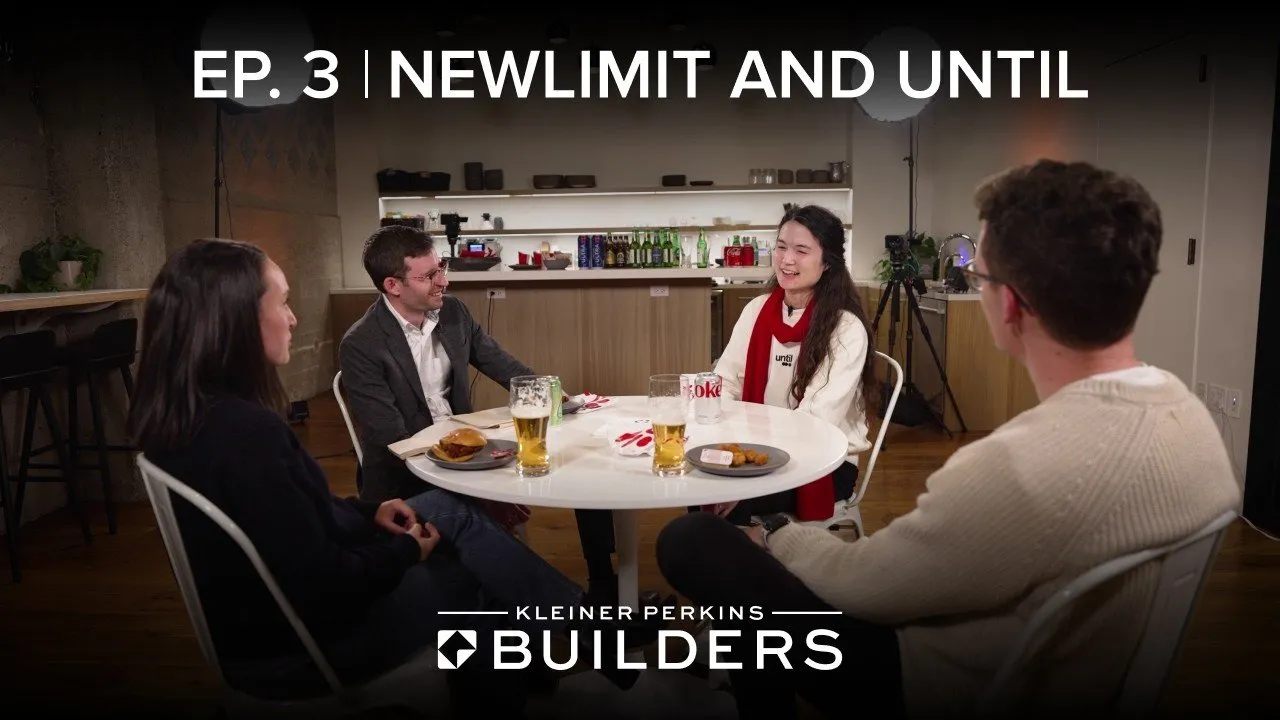
In the pursuit of extending human life, science generally follows two distinct paths: pausing biological time to await future cures, or actively reversing the cellular degradation that causes aging. These strategies—cryopreservation and epigenetic reprogramming—represent the frontier of longevity science. In a recent conversation from the "Builders" series, Laura Deming and Jacob Kimmel, leaders in these respective fields, detailed how engineering, physics, and machine learning are converging to transform these sci-fi concepts into medical realities.
From the logistics of organ transplants to the "software" that controls our genes, the mechanisms of aging are being decoded. This article explores the science behind pausing and reversing the biological clock, the critical role of artificial intelligence in accelerating discovery, and the realistic timelines for when these technologies might reach human patients.
Key Takeaways
- Two complimentary strategies: Longevity research is currently bifurcated into pausing biological time (cryopreservation) and resetting cellular age (epigenetic reprogramming).
- Immediate medical applications: While whole-body life extension is the long-term vision, the immediate goals include extending organ viability for transplants and treating liver diseases.
- The "Orchestra Conductor" theory: Epigenetic reprogramming works by identifying transcription factors that tell cells to ignore age-related degradation and function like younger cells.
- AI as an accelerant: Machine learning is essential for navigating the astronomical number of gene combinations required to find effective therapies, speeding up discovery by an estimated 2x to 5x.
- Realistic timelines: Experts predict that by 2030, average life expectancy may increase by roughly three years due to the adoption of GLP-1 agonists and new therapeutic classes.
The Science of Pausing Time: Reversible Cryopreservation
The concept of cryonics often conjures images of sci-fi hibernation pods, but the immediate utility of this technology solves a critical logistical failure in modern medicine: organ transplantation. Currently, once an organ is removed from a donor, there is a strict viability window of 24 to 36 hours. This limitation forces surgeons to race against the clock, often relying on private jets to transport organs across the country, leading to wasted organs and lost lives when logistics fail.
Laura Deming’s work focuses on reversible cryopreservation—cooling biological matter to temperatures compatible with long-term storage (potentially thousands of years) and then rewarming it with full function. The ultimate goal is to apply this to the whole body.
If you could just pause time like when you had a terminal illness and then turn it back on when the cure was there, that'd be amazing.
From Ice to Glass: The Physics of Vitrification
The primary antagonist in cryopreservation is ice. When water freezes, it crystallizes and expands, which tears apart delicate cellular structures. To bypass this, scientists aim for a state called vitrification—essentially turning the biological material into a glass-like solid without crystal formation.
Achieving this requires navigating a specific temperature window (roughly 0°C to -3°C) where ice formation is most likely. The process involves:
- Chemical preservation: Adding cryoprotectants that inhibit ice nucleation.
- Rapid cooling: Dropping temperatures quickly to bypass the "danger zone" of crystallization.
- Sophisticated rewarming: Using nanoparticles perfused through the vasculature. When exposed to an external electromagnetic field, these particles generate heat uniformly, allowing the organ to thaw without damage.
Recent studies have shown promise, including the successful reversible cryopreservation of a rat kidney in 2023, which restored full function upon transplantation. The current focus is scaling this technology to pig organs, which approximate human scale.
Resetting the Software: Epigenetic Reprogramming
While cryopreservation seeks to pause the clock, epigenetic reprogramming aims to turn it back. Jacob Kimmel of NewLimit describes the human body’s cells as having identical hardware (DNA) but different software instructions. These instructions are the epigenome—chemical marks that tell a cell whether to be a neuron, a skin cell, or a liver cell.
As we age, these marks degrade. The "software" becomes corrupted, leading to the loss of cellular function associated with aging. Epigenetic reprogramming seeks to reset these marks to their youthful state using transcription factors.
We’re trying to reset the epigenome back to what it’s like when you’re young. So, ideally restoring youthful function in old cells, keep you healthy longer, treat diseases that are otherwise totally intractable.
The Orchestra Conductor Analogy
Transcription factors act like orchestra conductors. They do not do the work themselves; rather, they signal other genes to turn on or off. By identifying the correct combination of these factors, scientists can reprogram a cell. This has already been proven possible in the lab—skin cells can be turned into neurons, or effectively "cloned" back into a stem cell state that can generate a whole new organism.
The therapeutic goal is to deliver these factors as medicines (potentially via RNA, similar to mRNA vaccines) to specific organs. The initial targets for this technology include:
- Hepatocytes (Liver Cells): Restoring function in aging livers.
- T-Cells: Rejuvenating the immune system to fight off diseases more effectively.
- Vasculature: Repairing the "pipes" of the body, specifically in the kidneys, which could drastically reduce the need for dialysis.
The AI Revolution in Biology
One of the most significant hurdles in longevity research is the sheer volume of biological possibilities. In epigenetic reprogramming, finding the right combination of transcription factors involves testing astronomical numbers of variables—roughly 1016 combinations.
This is where Artificial Intelligence becomes indispensable. Human intuition is insufficient for navigating this "combinatorial explosion." Modern biotech companies utilize a "lab-in-the-loop" approach:
- Experimentation: Robots run tens of thousands of experiments testing different gene combinations.
- Data Analysis: AI models analyze the results, identifying patterns invisible to the human eye.
- Prediction: The model predicts which untested combinations are most likely to work.
- Iteration: The lab tests the AI's predictions, feeding new data back into the model.
This integration of machine learning has shifted biology from a purely empirical science to a predictive engineering discipline. Founders estimate that AI has accelerated the pace of discovery by at least two to five times, allowing teams to test hypotheses that would have previously taken decades.
Timelines and The Road to Clinical Trials
Despite the futuristic nature of these technologies, the timelines for their arrival are grounded in near-term reality. The industry is moving from theoretical research to pre-clinical candidates—specific molecules chosen for development into human medicines.
The 2030 Outlook
When asked about the progression of human life expectancy, the outlook is cautiously optimistic. By 2030, experts anticipate a modest but meaningful increase in healthy lifespan (healthspan), potentially adding three years to the average life expectancy. This growth is expected to be driven by:
- Widespread adoption of GLP-1 agonists: Drugs like Ozempic and Mounjaro, while designed for diabetes and obesity, show promise in extending healthspan by improving metabolic health.
- Statins and preventative care: Continued optimization of cardiovascular health.
- New therapeutic classes: The potential approval of the first drugs specifically designed to target mechanisms of aging.
The "Jet Lag" Reality Check
While optimism runs high, the complexity of biology remains a humbling factor. As one industry insider noted, we should perhaps temper our expectations of immortality considering we have not yet solved simple biological inconveniences like jet lag. However, the trajectory is clear: medicine is moving from treating symptoms to addressing the fundamental root causes of cellular decay.
Conclusion
The convergence of physics, computing, and biology is creating a unique moment in medical history. We are transitioning from a world where aging is an inevitable decline to one where it is a treatable condition. Whether through pausing time to bridge the gap to future cures, or reprogramming our own biology to restore youthful function, the tools to extend healthy human life are moving from the realm of science fiction into the laboratory.
For the founders building these tools, the ultimate success isn't just about living forever; it's about compressing morbidity—ensuring that the additional years gained are spent in good health, allowing people more time to pursue their craft, build relationships, and contribute to the world.