
Table of Contents
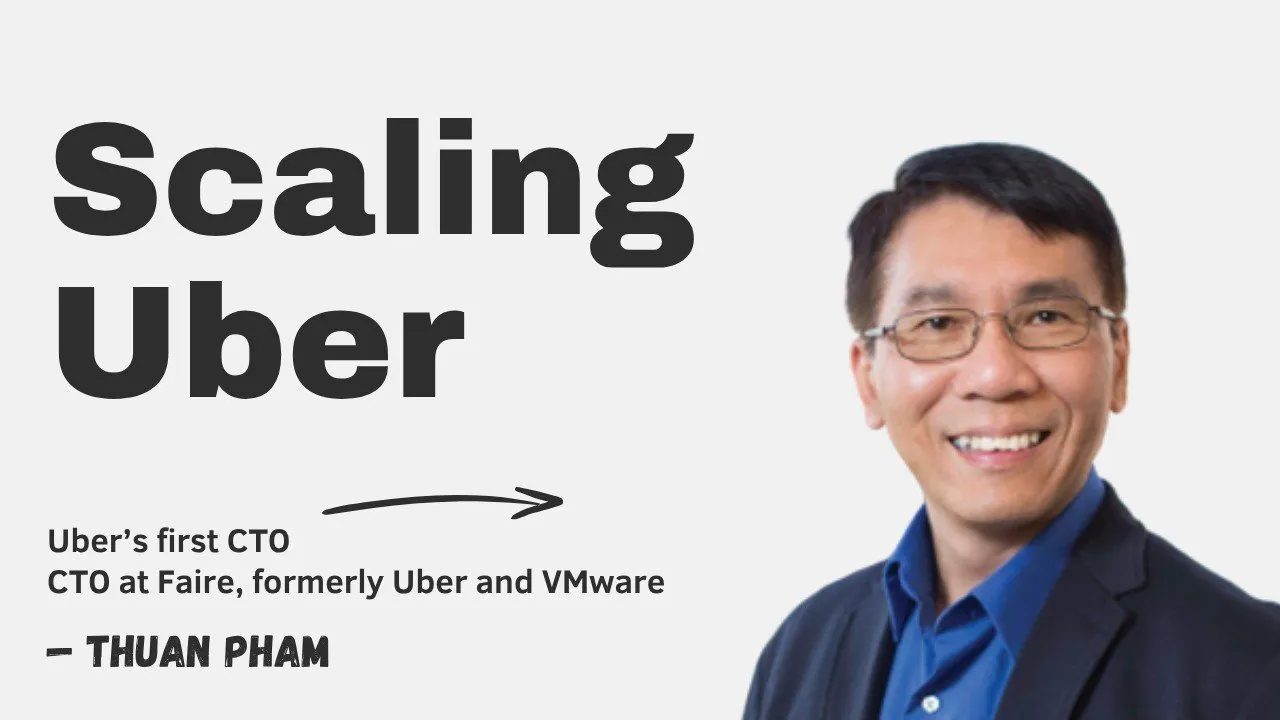
Scaling an engineering organization from a small startup to a global powerhouse is a task few have successfully navigated. Thuan Pham, Uber’s first CTO, joined in 2013 when the company had just 40 engineers and a system that crashed multiple times per week. Over the next seven years, he guided the company through hyper-growth, massive architectural overhauls, and the intense pressure of launching in China. His journey offers a masterclass in technical leadership, the pragmatism of scale, and the enduring value of human connection in the tech industry.
Key Takeaways
- Scale at the cost of complexity: Uber’s massive microservices architecture was not a pre-planned ideal but a survival tactic necessitated by extreme growth.
- Engineering as a business enabler: Technical decisions—like the rewrite of the dispatch system—were made based on "runway" to failure, ensuring the business could survive until the next milestone.
- The power of reputation: Exceptional career opportunities often stem from long-term, genuine professional relationships rather than transactional networking.
- AI is a tool, not a replacement: While AI can double productivity, the traits of a standout engineer—curiosity, fearlessness, and the drive to innovate—remain identical regardless of the tools available.
Scaling Through Chaos: The Reality of Survival
When Thuan Pham arrived at Uber, the system was performing 30,000 rides per day, but it was essentially a house of cards. The dispatch system, built on a single-threaded Node.js architecture, was rapidly approaching a "brick wall."
The Art of Pragmatic Architecture
Thuan’s approach to scaling was driven by a simple, ruthless philosophy: prioritize the most critical threats to the company's survival. Instead of aiming for perfect, infinitely scalable systems from day one, he focused on buying enough runway to fight another day. For the dispatch system, he set two simple constraints: the city must be powered by multiple servers, and each server must be capable of handling multiple cities. By stripping away non-essential feature requests, the team completed the rewrite just in time to prevent a total collapse.
The faster you grow, the shorter your runway to survive given whatever architecture you currently have. It was all about how much time we have to live before we hit the brick wall.
The China Challenge: Doing the Impossible
Perhaps the most grueling project during Thuan’s tenure was the 2014 launch in China. Tasked with launching in just two months, the engineering team faced a massive hurdle: the requirement to keep all data and services physically on Chinese soil. Traditional benchmarking suggested an 18-month timeline. Through sheer determination and a phased rollout strategy—starting with the hardest city, Chengdu—the team managed to pull off what many thought was impossible.
The Value of Hard Starts
Thuan notes that by tackling the most difficult region first, the team built a level of confidence that made subsequent launches feel routine. This "fearless" culture became a hallmark of the engineering organization, proving that when teams are forced to redline their capacity, they often discover they are capable of much more than they previously assumed.
Building a Lasting Engineering Organization
As the company grew, the need for internal tooling and team structure became paramount. Uber eventually developed thousands of internal tools—from the tracing tool Jaeger to the trip data store Schemaless—because existing open-source solutions simply couldn't withstand the load.
Microservices: A Means to an End
The proliferation of microservices at Uber was an unintended consequence of hyper-growth. As the business added new products like UberX, the engineering teams realized that any feature blocked by the monolith hindered growth. The solution was to allow new services to be built outside the monolith, effectively decomposing it piece by piece over two years. Thuan emphasizes that this extreme complexity was a specific response to unique business conditions; it is not a blueprint that every startup needs to replicate.
We were creating an easy internal transfer process. I have a saying that I share: it's not a jail. We can't lock anybody down. If they want to work somewhere else, they should have that ability.
The Enduring Traits of Great Engineers
Looking toward the future of software engineering, Thuan is enthusiastic about AI but remains grounded in the fundamentals. He views AI as a powerful force multiplier, particularly for high-performing engineers who know how to orchestrate "swarms" of agents. However, he warns that while AI can elevate the baseline performance of an average engineer, it does not replace the need for deep technical intuition.
Staying Relevant in an AI Era
For those entering the industry today, Thuan offers a simple piece of advice: complacency is death. The engineers who thrive are those who remain inquisitive and are willing to experiment at the bleeding edge. Whether it’s writing basic code in the 80s or managing AI agent swarms today, the core requirement remains the same: the fearlessness to break new ground and the humility to keep learning.
Conclusion
Thuan Pham’s tenure at Uber serves as a powerful reminder that behind every massive technical achievement are thousands of human decisions driven by necessity, trust, and purpose. His journey—from fleeing Vietnam as a child to leading one of the world's most complex engineering organizations—highlights that success in tech is rarely about luck. It is about doing great work consistently, fostering strong professional relationships, and maintaining the courage to adapt when the systems you've built inevitably begin to strain under the weight of success.




)