
Table of Contents
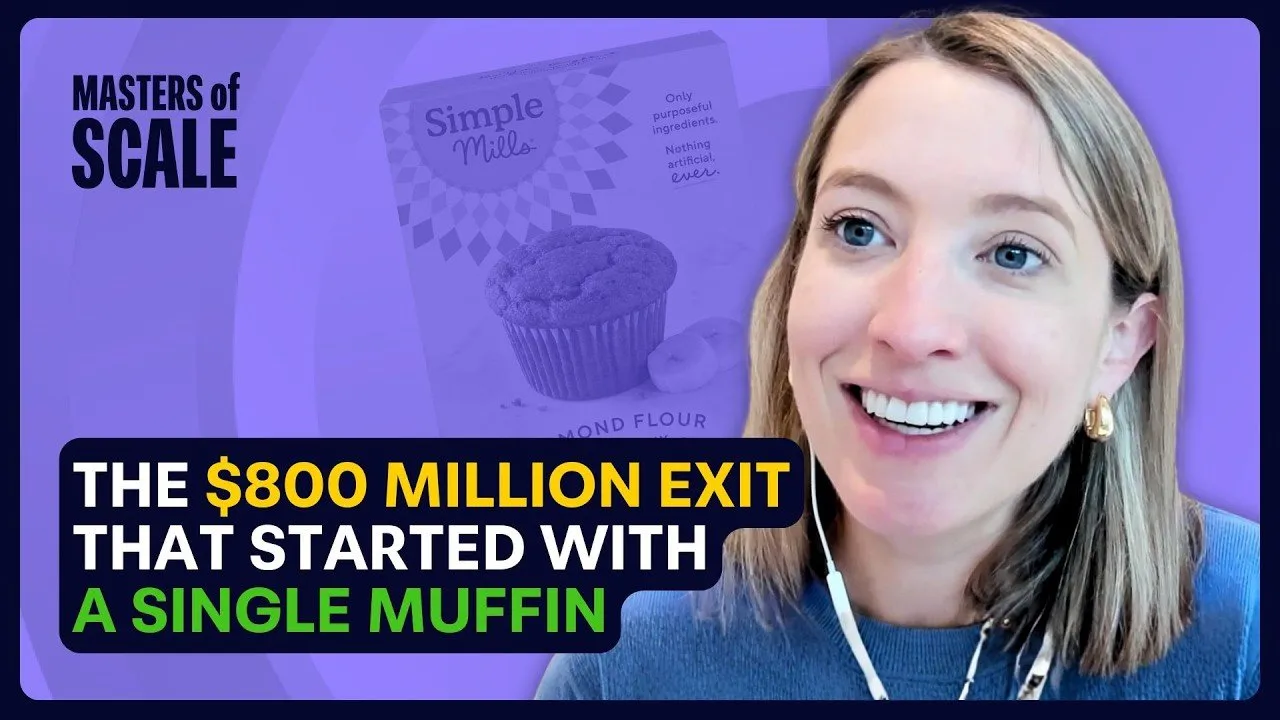
From a messy apartment kitchen in Atlanta to a nearly $800 million acquisition, the journey of Simple Mills is a masterclass in scaling with purpose. Katlin Smith, the founder and CEO behind the clean-food powerhouse, didn’t start with a massive war chest or deep industry connections. She started with a health realization, a hand-rigged printer, and an unshakeable belief that food could be both simple and delicious.
Smith’s story challenges the typical Silicon Valley narrative of overnight "unicorn" status. Instead, it highlights the grit required to build a physical product, the high stakes of family financing, and the operational discipline needed to navigate global supply chain disruptions. Her transition from management consultant to CPG disruptor offers critical lessons for founders navigating crowded marketplaces and the complex world of retail distribution.
Key Takeaways
- The power of bootstrapping: Before raising millions, Smith sold her car, maxed out credit cards, and utilized low-cost tools like 99designs to prove her concept.
- Strategic capital raising: While initially resistant to fundraising, Smith learned that scaling a consumer brand requires significant working capital, leading to a pivotal angel round.
- Product-first positioning: Simple Mills succeeded not just because it was healthy, but because Smith prioritized taste and texture, using unconventional ingredients like almond flour to match traditional favorites.
- Operational resilience: During global supply chain disruptions, the company maintained a 96% fill rate by reframing obstacles as opportunities, significantly outpacing competitors.
- The leader’s toolbox: Smith views entrepreneurship as a "downwardly mobile profession" where founders must constantly learn new skills as their old roles outgrow them.
From Management Consulting to Kitchen Experiments
The origin of Simple Mills lies in a personal health transformation. In her early 20s, Smith was working as a management consultant, a career characterized by frequent travel and poor dietary choices. After a friend suggested she clean up her diet, Smith switched to whole foods and experienced a profound shift in her physical well-being. This personal validation sparked a desire to impact the broader food industry.
Smith began tinkering in her Atlanta apartment kitchen, experimenting with nutrient-dense ingredients that were virtually unknown in the baking aisle at the time. While today almond flour and coconut sugar are staples in health-conscious pantries, Smith was developing recipes when these ingredients were difficult to source and unfamiliar to the average consumer.
The "Hand-to-Mouth" Reality of Early Entrepreneurship
The gap between a kitchen recipe and a shelf-ready product is immense. Smith’s early days were defined by extreme resourcefulness. She researched FDA labeling requirements via Google, crowdsourced her logo on 99designs, and rigged a home printer with industrial ink cartridges to create packaging mockups.
Financial constraints were tight. To fund the working capital required for her first production runs, Smith liquidated her personal assets.
"I ended up selling my car and maxing out all my credit cards and spending all my savings just pretty much on working capital."
This period was precarious. In the consumer packaged goods (CPG) industry, brands often have to pay for manufacturing upfront but wait months to be paid by retailers. This cash flow gap can suffocate even the most promising startups.
High Stakes: Family Money and Fundraising
As the business began to gain traction in local Whole Foods stores, the financial demands escalated. Smith initially underestimated the capital intensity of a CPG brand, believing she could scale with a mere $200,000. When a deal with a family friend fell through, the situation became critical.
In a move that highlights the immense pressure founders often face, Smith’s parents stepped in. Determined to see their daughter succeed, they mortgaged their home to provide the $200,000 necessary to keep the company afloat. The weight of this decision was not lost on Smith.
"It's so stressful having your family's money on the line like that. We ended up raising our first round about 4 months later. And when we raised the first round, I actually asked that half of it get paid back."
Navigating the Venture Landscape
Raising capital in 2012 for a baking mix company was challenging. Investors were hunting for tech unicorns, not almond flour crackers. Smith overcame this by casting a massive net, speaking to nearly eight investors a day. She found success with angel investor groups, who were often more driven by passion and consumer trends than rigid tech-focused mandates.
Her persistence paid off in a serendipitous moment at a Whole Foods in Charlotte, North Carolina. A potential lead investor, while vetting the product in-store, ran into another shopper who happened to be an investor also considering the brand. This validation led to a term sheet and a $2 million seed round, allowing Simple Mills to professionalize its packaging, hire experienced talent, and scale operations.
Scaling Through Product Excellence and Resilience
As the "better-for-you" category became crowded, Simple Mills maintained its edge through rigorous product positioning. Smith understood that health benefits alone were insufficient; the food had to taste incredible. By mastering the use of unconventional ingredients—like watermelon seed flour for cookies or butternut squash for crackers—the brand delivered on both nutrition and flavor.
Turning Crisis into Opportunity
The company’s resilience was tested severely during the COVID-19 pandemic and subsequent supply chain crises. While many competitors faced stockouts, Simple Mills aggressively prioritized inventory reliability. Smith credits this mindset to the philosophy found in the book The Art of Possibility.
Instead of viewing supply chain disruptions as a barrier, the team viewed them as a chance to deepen retailer relationships. By maintaining a 96% fill rate when the industry average hovered around 80%, Simple Mills secured shelf space that competitors couldn't service, accelerating their market share growth during a volatile economic period.
"Michelangelo used to look at a block of marble and think that is a beautiful statue waiting to be carved. If you can look at situations that way, it really opens you up to all these different options that maybe you didn't see before."
The Exit: Partnering for Greater Impact
By late 2024, Simple Mills had grown from a kitchen project into a category leader. Smith made the decision to sell the company to Flowers Foods for nearly $800 million. For Smith, the sale wasn't just a financial exit; it was a strategic lever to amplify the company’s mission.
Partnering with a major player provided the distribution muscle to reach a broader consumer base, moving beyond the niche health-food shopper to the mass market. It also provided the resources to accelerate agricultural innovation, influencing crop growing practices on a larger scale.
The sale also brought a humorous closure to the high-stakes gamble her parents took years prior. When Smith broke the news of the sale, her parents weren't just relieved—they jokingly lamented that Smith had forced them to take half their investment back early, noting it would have been worth double at the time of exit.
Conclusion
Katlin Smith’s journey with Simple Mills illustrates that successful scaling is rarely a straight line. It involves navigating "downward mobility"—the idea that a founder’s job constantly outgrows them, requiring a continuous expansion of their leadership toolbox. From maxing out credit cards to managing nine-figure acquisitions, Smith’s story is a testament to the power of combining a mission-driven product with rigorous financial and operational discipline.




%20%7C%20Masters%20of%20Scale)