Table of Contents
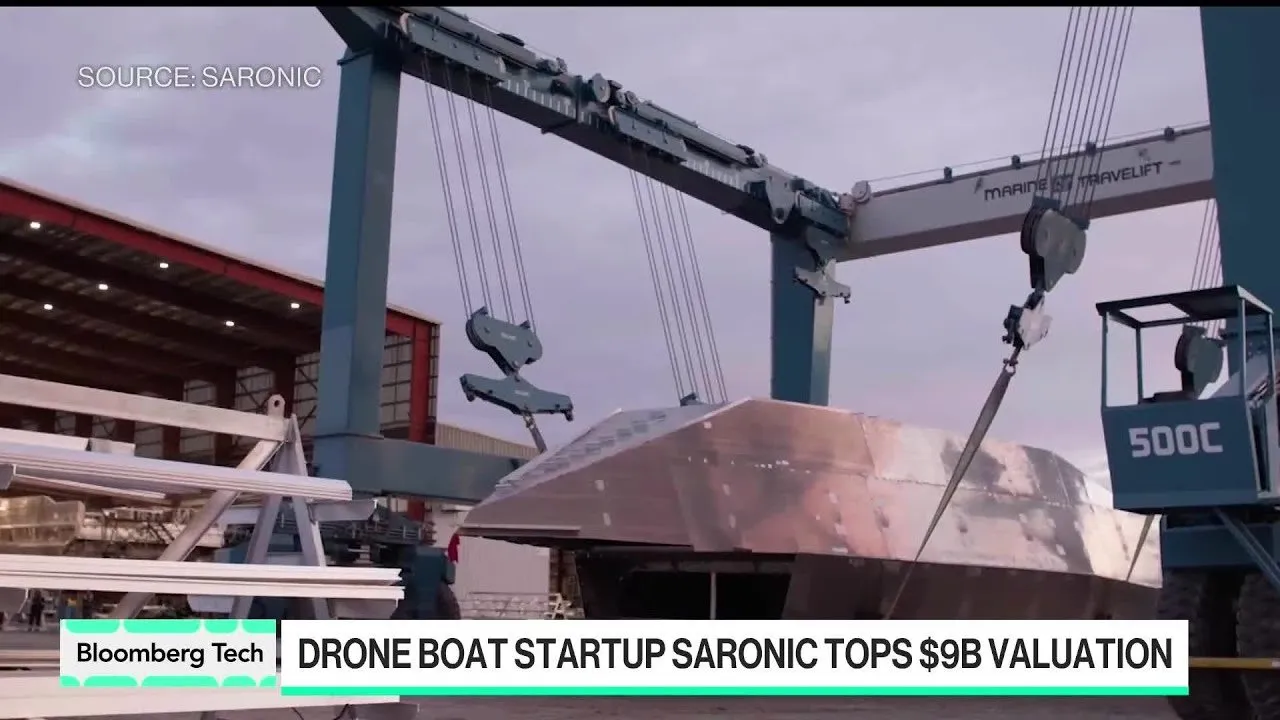
Austin-based defense technology firm Saronic has secured $1.75 billion in new funding, marking a significant milestone in the company’s mission to revitalize the U.S. maritime industrial base through autonomous vessel production. This latest capital injection follows a rapid period of growth for the company, which just last year raised $600 million at a $4 billion valuation to launch its flagship 180-foot autonomous ship, Marauder, and expand the production of its Corsair unmanned surface vessels (USVs).
Key Points
- Saronic aims to deploy the $1.75 billion to scale production capacity, invest in shipbuilding infrastructure, and accelerate the delivery of autonomous vessels to the U.S. military and its allies.
- The company is focused on addressing the crisis in U.S. shipbuilding, which currently accounts for only 0.1% of global commercial shipbuilding capacity.
- By utilizing a "software-first" approach, Saronic intends to deliver unmanned platforms at a scale and price point that traditional manned destroyers—which can cost billions and take years to construct—cannot match.
- The initiative directly supports the White House’s maritime action plan, which seeks to rebuild domestic industrial capabilities to counter international competition, particularly from China.
Revitalizing the Maritime Industrial Base
The U.S. maritime sector faces a severe capacity deficit, with the nation maintaining only a handful of active naval shipyards. Dino Mavrookas, CEO of Saronic, highlighted the stark imbalance in global production, noting that current trends favor international rivals significantly. To bridge this gap, Saronic is adopting a vertically integrated manufacturing model designed for rapid scalability.
The company’s strategy revolves around "designing for manufacturability." By rethinking how ships are built from the ground up, Saronic aims to move away from the traditional, slow-paced construction cycles that characterize modern naval procurement. This approach enables the company to produce smaller, autonomous vessels in the thousands rather than waiting years for a single, multi-billion dollar platform.
The shipbuilding industry is in crisis right now, and you're seeing this as a priority of the administration. When you look at the shipbuilding capacity in this country right now from a commercial perspective, The United States has 0.1% of global shipbuilding capacity. The Chinese can outbuild The United States 230 to one.
Strategic Implications for Naval Operations
The integration of autonomous systems offers naval commanders greater flexibility in highly contested maritime environments, such as the Strait of Hormuz. Unlike manned vessels, which carry significant risk when deployed for hazardous tasks like mine-clearing or surveillance, Saronic's USVs offer a persistent, lower-risk solution.
By leveraging software-defined autonomy, these ships can operate continuously, providing intelligence and operational reach without putting sailors directly in harm's way. This operational shift provides the U.S. Navy with the ability to scale its presence in regions where traditional, large-scale manned vessels may be too costly or vulnerable to deploy effectively.
Scaling for the Future
Looking ahead, Saronic plans to use its newfound capital to create thousands of jobs and unlock production rates unseen in the U.S. since the Second World War. The company intends to continue developing new classes of autonomous ships while further refining its software-heavy approach to naval warfare.
As the U.S. government prioritizes the modernization of the defense industrial base, Saronic positions itself as a critical player in shifting the paradigm from slow, expensive, and manual maritime operations to a fast, scalable, and autonomous future. The firm is currently accelerating the rollout of its Corsair and Marauder lines to meet the increasing demand from defense partners seeking to modernize their fleets against evolving global threats.