Table of Contents
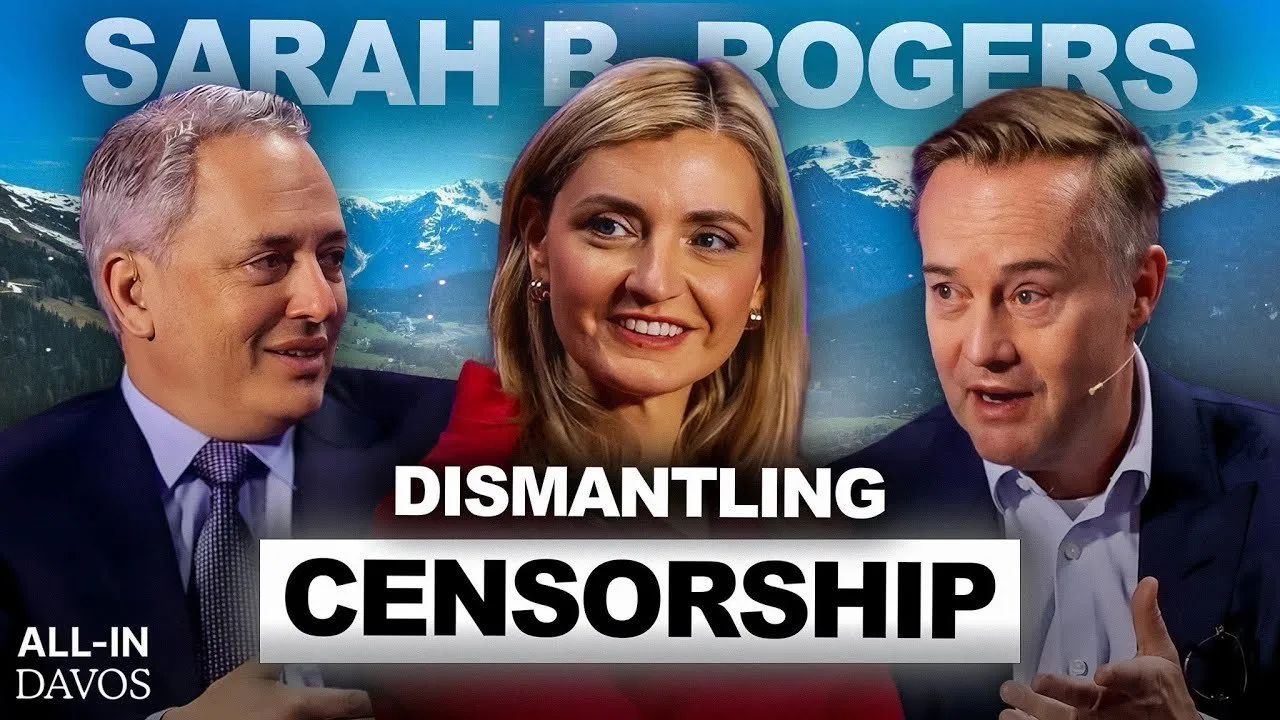
The role of American diplomacy is evolving. Traditionally, diplomacy concerns the relationships between governments—ambassadors shaking hands and negotiating treaties. However, in an increasingly digital and interconnected world, public diplomacy—the relationship between the U.S. government and foreign publics—has taken center stage. This shift is particularly critical as the global conversation around free speech, censorship, and the internet undergoes a fundamental fracture.
Under Secretary of State for Public Diplomacy Sarah B. Rogers recently outlined a significant pivot in U.S. strategy. The focus has moved toward dismantling what critics call the "Censorship Industrial Complex" and challenging foreign regulatory frameworks that threaten American values of free expression. As internet governance becomes a battleground between technocratic control and rugged individualism, the United States is taking a firmer stance on protecting the digital rights of American companies and citizens abroad.
Key Takeaways
- The Transatlantic Divide: A growing ideological rift exists between the U.S. First Amendment tradition and European "technocratic regulation," leading to conflicts over speech laws.
- Regulatory Overreach: The UK’s Online Safety Act and the EU’s Digital Services Act (DSA) are increasingly viewed by U.S. officials as mechanisms to impose censorship and levy "tariffs" on American tech innovation.
- The "Censorship Industrial Complex": Evidence suggests governments have bypassed constitutional limits by using NGOs and financial institutions to pressure platforms into silencing specific narratives.
- AI and Existing Law: Rather than rushing to enact new, restrictive AI-specific regulations, the U.S. advocates for applying existing laws regarding fraud and defamation to emerging technologies.
- Market-Based Solutions: Tools like X’s Community Notes, which rely on "consensus among rivals," are proving more effective and trustworthy than top-down bureaucratic fact-checking.
The Transatlantic Divergence on Free Speech
For decades, the Western alliance was cemented by shared values of democracy and liberty. However, a significant divergence has emerged regarding the fundamental right to free speech. While the United States maintains a robust, near-absolutist approach to speech under the First Amendment, European allies are increasingly favoring restrictive regulatory frameworks.
This tension is no longer theoretical; it is resulting in tangible legal conflicts. American technology platforms, which host global conversations, are finding themselves in the crosshairs of foreign regulators who view speech moderation through a drastically different lens. The U.S. stance is shifting from passive observation to active defense of American digital sovereignty.
In Europe, there is more of a focus on technocratic regulation as an arbiter of what's acceptable than there might be in America, where we have this tradition that really emphasizes rugged individualism and individual conscience.
The UK Online Safety Act
The United Kingdom has implemented the Online Safety Act, a piece of legislation that imposes age-gating obligations and requires platforms to remove content deemed "illegal" under UK law. However, the definition of illegal speech in the UK is far broader than in the U.S., encompassing categories of speech that Americans would consider protected political expression.
The enforcement of these laws has led to a startling number of arrests for speech-related offenses. Statistics indicate that in 2023 alone, over 12,000 individuals in the UK were arrested for speech acts. This aggressive policing of online commentary has created a chilling effect, where citizens—and by extension, the platforms hosting them—face severe penalties for offending prevailing social dogmas.
The EU Digital Services Act (DSA)
Similarly, the European Union’s Digital Services Act (DSA) establishes vague prohibitions against hate speech that lack the precise legal definitions common in American jurisprudence. This vagueness acts as a feature, not a bug, encouraging large, risk-averse corporations to over-censor content to avoid massive fines.
U.S. officials are now characterizing the DSA not merely as a safety regulation, but as a "censorship tariff" targeting American success. The disproportionate targeting of U.S. tech giants suggests these fines function as a de facto tax, redistributing revenue from American innovators to European coffers under the guise of content moderation.
Uncovering the Censorship Industrial Complex
A primary concern for the current State Department is the mechanism by which censorship is enacted. In the United States, the First Amendment prohibits the government from directly silencing dissent. To circumvent this, a network often referred to as the "Censorship Industrial Complex" has emerged. This network relies on outsourcing censorship duties to third-party intermediaries.
The Role of NGOs and "Trusted Flaggers"
Government agencies have increasingly relied on government-funded non-governmental organizations (NGOs) to act as arbiters of truth. Under frameworks like the DSA, these organizations are designated as "trusted flaggers," giving them privileged channels to demand content removal. This creates a loophole where government-funded entities pressure private companies to suppress speech that the government itself is constitutionally barred from restricting.
Leaked communications have revealed coordination between foreign pressure groups and American politicians, aiming to force platforms to adopt European-style censorship standards globally. This "laundered" censorship allows regulators to claim they are not directly involved, while funding the very organizations demanding the suppression of "adverse narratives."
Financial De-platforming and Reputational Risk
The complex extends beyond social media moderation into the financial sector. The concept of "reputational risk" has been weaponized to pressure banks and payment processors into severing ties with disfavored speakers. This practice, known as debanking, forces financial institutions to act as moral police.
The U.S. Supreme Court explicitly addressed this in NRA v. Vullo, ruling that government officials cannot coerce intermediaries to punish protected speech. The strategy is insidious because financial institutions, which are highly regulated and risk-averse, will almost always choose to drop a controversial client rather than face regulatory wrath.
When you have a risk-averse middleman like a financial institution, they don't have skin in the game... They have their in-house counsel telling them that this is going to piss off the financial regulator. So, it's easier to take it down.
AI, Deepfakes, and the Future of Regulation
As Artificial Intelligence reshapes the information landscape, calls for immediate and sweeping regulation have intensified. However, history suggests caution. Every major leap in communication technology—from the printing press to the telegraph—was met with moral panic and demands for control.
Applying Existing Laws vs. Creating New Ones
The prevailing U.S. diplomatic view is that we should resist the urge to "cocoon ourselves in safety" at the expense of innovation. Most malicious uses of AI, such as deepfakes used for fraud or defamation, are already illegal under existing statutes. Wire fraud, cyberstalking, and libel laws provide robust frameworks for prosecuting bad actors without stifling the technology itself.
Over-regulating AI based on hypothetical fears risks handing a strategic advantage to geopolitical rivals like China, who are developing these technologies at an aggressive pace. The goal is to punish the crime, not the tool.
The Path Forward: Vigilance and Optimism
Despite the growing trends of censorship in allied nations, there is a "gong of optimism." Public sentiment in Europe and the UK often diverges from the actions of their regulators. Many citizens are uncomfortable with the idea of neighbors being arrested for social media posts or comedians being silenced.
Furthermore, the market is developing its own solutions to misinformation that do not rely on centralized authorities. X’s "Community Notes" feature represents a paradigm shift. Rather than a panel of experts deciding truth, the system requires a "consensus among rivals"—meaning people with opposing viewpoints must agree on a note for it to be displayed. This adversarial validation process has proven highly effective at adding context without removing content.
If you arrest 12,000 people a year for speech... you might not have a different culture than China for long. And why should the United States be paying to defend your country... if that's basically the values that are being enforced?
Conclusion
The defense of free speech requires constant vigilance. The United States is signaling a refusal to allow its domestic values to be eroded by foreign regulations or indirect bureaucratic pressure. By championing open markets, challenging extraterritorial censorship, and trusting in the resilience of the public to navigate information, American diplomacy is reaffirming that the cornerstone of any free society remains the unrestricted exchange of ideas.