Table of Contents
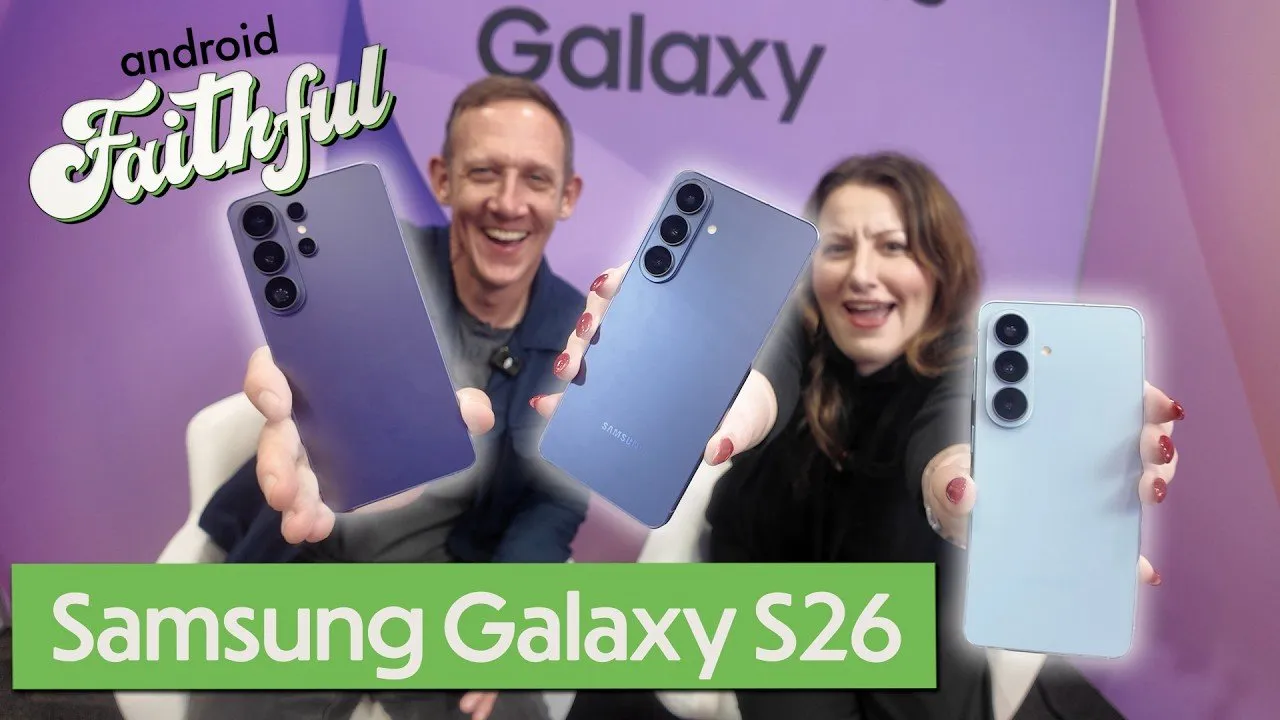
Samsung Electronics has officially launched the Galaxy S26 series, debuting the S26, S26+, and S26 Ultra during its annual Unpacked event in San Francisco. This year’s release marks a strategic pivot toward "agentic" artificial intelligence, with Samsung and Google integrating deeply automated features designed to perform complex tasks on behalf of the user. Beyond the hardware, the event provided a broader look at the 2026 Android roadmap, including the official dates for Google I/O and emerging security threats involving AI-driven malware.
Key Points
- Samsung introduces the Galaxy S26, S26+, and S26 Ultra, with the base model starting at a higher price point of $899.99.
- New "Agentic AI" features allow the devices to autonomously handle tasks such as booking ride-shares and managing shopping through Google Gemini.
- Hardware innovations include a "Private Display" layer that obscures off-axis viewing and a redesigned vapor chamber for improved thermal management.
- Google I/O 2026 is officially scheduled for May 19-20, where Android 17, codenamed "Cinnamon Bun," is expected to headline.
- Security researchers have identified "Prompt Spy," a new family of Android malware that uses the Gemini API to adapt its behavior in real-time.
The Galaxy S26 Series: Hardware Refinement and Price Shifts
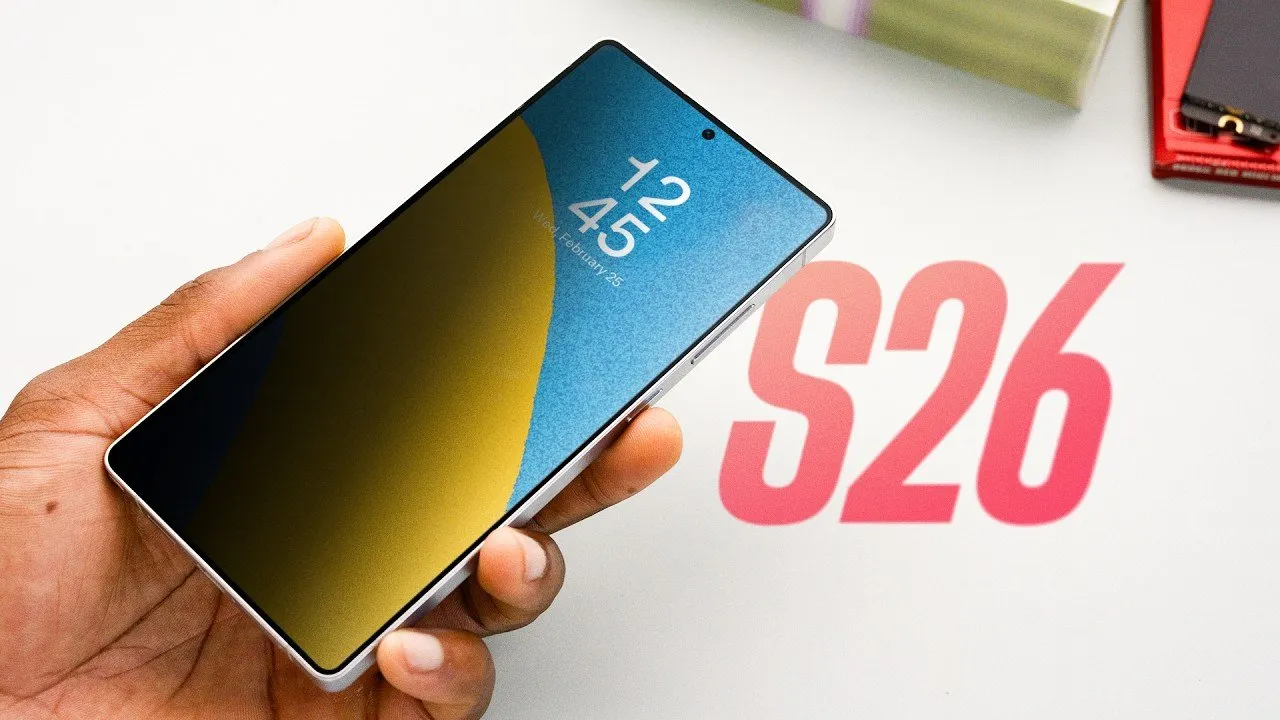
The Galaxy S26 lineup enters the market with subtle but impactful hardware changes. The standard S26 has grown from a 6.2-inch to a 6.3-inch display, a move Samsung uses to justify the new $899.99 entry price—a $100 increase over previous generations. Both the base S26 and the S26+ now feature 12GB of RAM as standard, ensuring the devices can handle the significant processing demands of Samsung’s latest AI suite.
The S26 Ultra remains the flagship of the series, maintaining its integrated S Pen and featuring a 200-megapixel primary sensor alongside a 50-megapixel telephoto lens. Samsung has also improved charging speeds across the board. The series now supports up to 60W tethered charging, while wireless speeds have been bumped to 15W for the S26 and up to 25W for the Ultra.
One notable hardware addition is the Private Display feature. By utilizing two layers of display crystals—one forward-facing and one diagonal—Samsung allows users to toggle a mode that blacks out the screen when viewed from an angle. While initial testing suggests it acts more as a significant dimming agent than a total blackout, it represents a dedicated effort to address privacy in public spaces.
The Era of Agentic AI and Google Collaboration
The primary theme of Unpacked 2026 was the transition from generative AI to "agentic" AI—systems that do not just provide information but execute actions. A flagship feature of this initiative is Now Nudge, integrated into the Samsung Keyboard. The tool analyzes conversation context in real-time; if a user mentions a dinner plan, the system automatically checks the calendar for availability and offers a one-tap button to book the appointment.
"Samsung's whole spiel about this particular phone is that the AI they were going to put into it they wanted to... do the work for you instead of you having to tap through and do all these things," stated Florence Ion, co-host of Android Faithful. "They came up with this AI automation—it is the year of the agent."
Google is further supporting this shift by launching a beta feature for Gemini on the S26 series (and eventually the Pixel 10). This "shopping agent" can navigate third-party apps like DoorDash or Uber to perform errands autonomously. Additionally, Circle to Search has been updated to recognize entire outfits, allowing users to identify and purchase multiple items of clothing simultaneously from a single screen capture.
Google I/O 2026 and the Roadmap for Android 17
Following the Samsung announcement, Google confirmed that its annual developer conference, Google I/O 2026, will take place on May 19-20 at the Shoreline Amphitheatre in Mountain View. The event is expected to focus heavily on Android 17, which has already surfaced in developer circles under the codename "Cinnamon Bun."
Anticipated Developments at I/O
- Android XR: Further details on Google’s smart glasses and mixed-reality partnerships.
- Wear OS 7: New fitness tracking capabilities and improved battery optimization for the Pixel Watch lineup.
- Aluminum OS: Ongoing efforts to scale Android for laptops and desktops via the "Aluminum" Chromebook initiative.
Emerging Security Threats: Prompt Spy Malware
As AI becomes more integrated into the operating system, security researchers are warning of new vulnerabilities. ESET researchers recently identified a malware family dubbed "Prompt Spy." Unlike traditional malware that follows a rigid script, Prompt Spy uses the Gemini API at runtime. It captures screen data and asks the AI for guidance on how to bypass security prompts or where to find sensitive information on a specific device model.
According to reports from Bleeping Computer, this represents a new era of "social engineering for machines," where the malware adapts to the user's interface dynamically. Google has stated that no apps containing this malware have been found on the Google Play Store thus far, and that Google Play Protect has been updated to monitor for these specific API-calling behaviors.
Market Competition: The Moto Watch and Pixel 9a
In the mid-range market, Motorola has launched the Moto Watch for $150. Developing a partnership with Polar, the device focuses on fitness tracking but eschews Wear OS in favor of a proprietary RTOS. This allows for an impressive 10-to-13-day battery life, though it lacks an app ecosystem and NFC payments. Meanwhile, Google’s Pixel 9a has entered pre-orders, sporting a flush camera bar design and the Tensor G4 chip, offering a budget-friendly alternative for users who want Google’s AI features without the flagship price tag.
The Galaxy S26 series is available for pre-order immediately, with general retail availability beginning March 11, 2026. Market analysts expect a high upgrade volume from users currently holding Galaxy S22 and S23 devices, driven by the significant leaps in automated software capabilities.