Table of Contents
The Samsung Galaxy S26 Ultra has arrived with a high-profile hardware innovation: an integrated privacy display that physically limits viewing angles to block onlookers. However, the $1,300 flagship reveals a series of critical engineering compromises that highlight the inherent trade-offs in modern smartphone design. While the device offers incremental performance gains and refined camera optics, the decision to prioritize specific niche features over broader hardware advancements leaves the "Ultra" moniker feeling increasingly aspirational rather than revolutionary.
Key Points
- Privacy Display Innovation: The S26 Ultra features a hardware-based privacy filter that masks the screen from off-axis viewing, though it sacrifices resolution and peak brightness when active.
- Performance Baseline: Equipped with the Snapdragon 8 Elite Gen 5, the device offers standard 20–30% CPU improvements, prioritizing NPU (Neural Processing Unit) efficiency for Galaxy AI features.
- Design Constraints: The shift toward a thinner, rounder chassis has introduced ergonomic issues, including increased device "rocking" on flat surfaces and a directional S Pen slot.
- Missing Features: Despite its premium pricing, the device lacks Qi2 magnetic charging support and advanced silicon-carbon battery technology found in some market competitors.
The Privacy Display Trade-off
The standout feature of the S26 Ultra is its custom OLED panel, which allows users to toggle a privacy mode that obscures the screen from anyone not positioned directly in front of the device. Unlike polarized screen protectors, this system works by utilizing two types of pixels: wide-angle pixels for standard viewing and narrow-angle pixels equipped with focusing lenses for private mode.
The engineering cost of this feature is significant. When the privacy mode is engaged, the phone effectively disables half of its pixels, resulting in a noticeable drop in resolution and fine detail. Furthermore, the reliance on these lenses means the display possesses slightly inferior viewing angles and anti-reflective capabilities at all times compared to previous iterations. According to testing, these concessions represent a deliberate choice by Samsung to differentiate its product through a high-utility, albeit imperfect, hardware solution.
The way they pulled this off is they essentially have two types of pixels on this new display. When you decide to turn on the privacy display, it simply turns off the wide-angle pixels and it leaves only the narrow angle pixels. So you achieve that privacy filter effect, but now that also means you just turned off half the pixels.
Refinements in Design and Optics
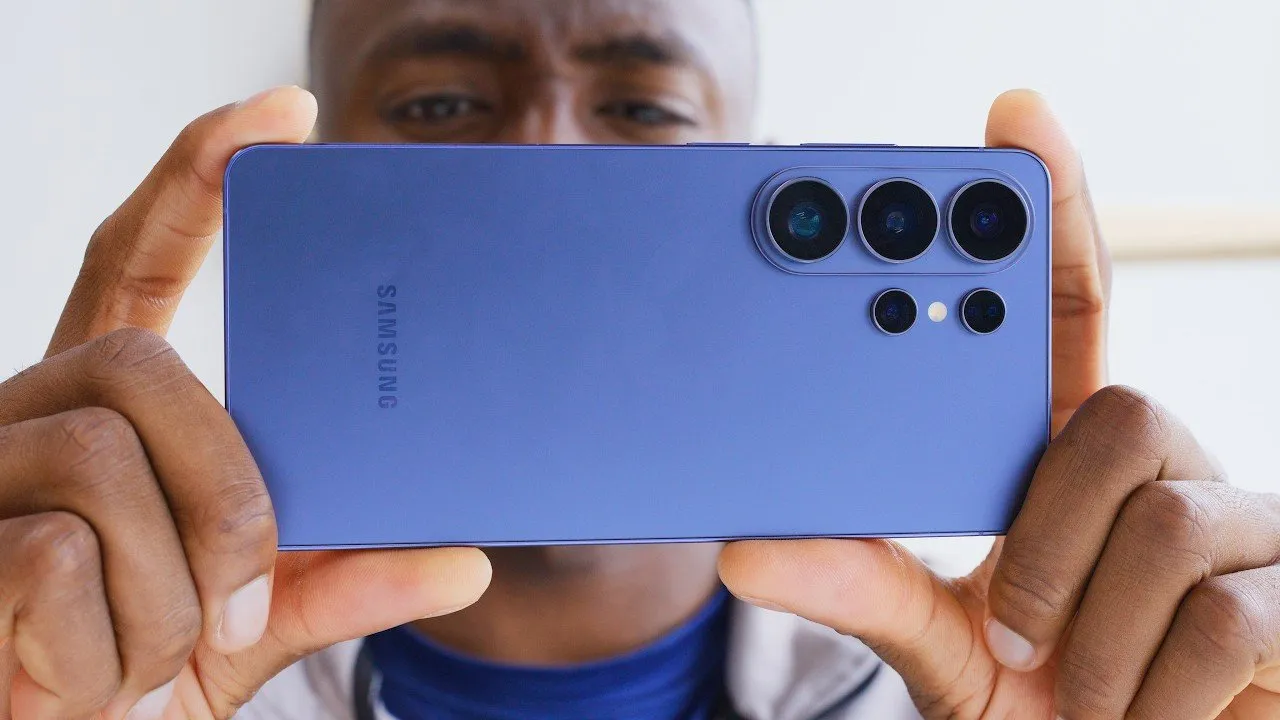
While the camera hardware remains largely similar to the previous generation, Samsung has implemented strategic upgrades to aperture sizes on both the main and 5x telephoto lenses. These adjustments allow for greater light intake and improved bokeh effects. Videography also receives a boost with the introduction of APV log codec support and a robust, software-driven "horizon lock" feature that leverages the 200-megapixel sensor to stabilize footage.
Ergonomics, however, have become a point of contention. The move to a thinner, more rounded frame has compromised the stability of the device when placed on a desk, and the change in corner radius now restricts the S Pen to a single insertion orientation. Additionally, the abandonment of millimeter wave support in the base models and the lack of Qi2 magnets in the Ultra suggest a strategy that favors legacy design choices over industry-standard convenience.
Market Positioning and AI Integration
Samsung continues to push its Galaxy AI suite, offering tools ranging from noise-canceling audio erasers to generative photo editing. While these features provide additional utility, their long-term value remains subject to debate. As Samsung integrates these tools across its product ecosystem, their presence on the S26 Ultra acts more as a standard inclusion than a compelling reason for the high price of entry.
Looking ahead, the market reception of the S26 Ultra will likely depend on how much value consumers place on the unique privacy display compared to the missing hardware features like high-capacity silicon-carbon batteries. As the standard S26 and S26+ models move further into "afterthought" territory with higher entry prices, the Ultra remains the sole focus for those seeking Samsung's most capable hardware, despite the frustration of a ceiling that feels slightly lower than the competition.