Table of Contents
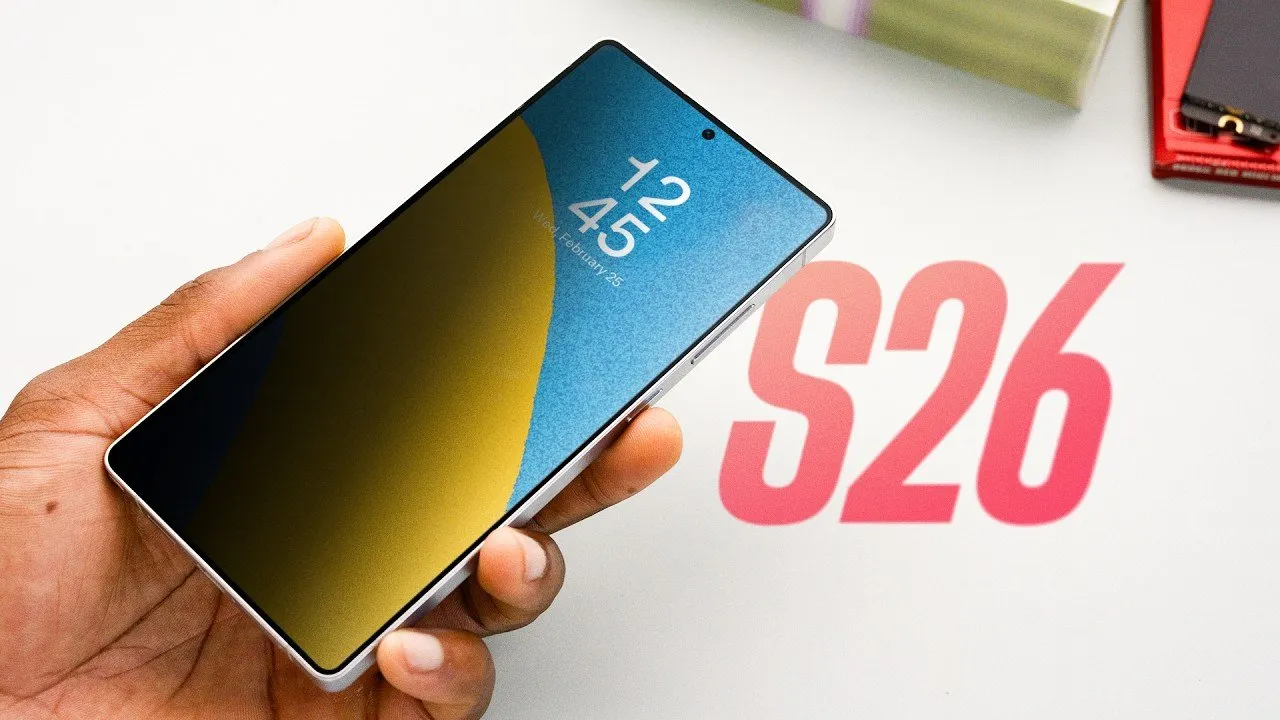
Samsung officially unveiled its flagship Galaxy S26 smartphone lineup during the Galaxy Unpacked event on February 24, 2026, signaling a strategic shift toward "agentic" artificial intelligence and hardware refinements for multi-year upgraders. The new series, which includes the Galaxy S26, S26 Plus, and S26 Ultra, features the custom Snapdragon 8 Elite Gen 5 processor and is scheduled for retail availability on March 11, 2026.
Key Points
- Price Increase: The entry-level Galaxy S26 now starts at $899.99, a $100 increase over the previous generation, while the Plus and Ultra models remain at $1,000 and approximately $1,300, respectively.
- Agentic AI Integration: Samsung is moving beyond baseline AI tools to "agentic" features, including cross-app Google Gemini actions and conversational photo editing.
- Hardware Innovations: The S26 Ultra introduces a Privacy Display that obscures on-screen content from off-axis viewing and utilizes Proscaler TV upscaling technology.
- Advanced Imaging: The Ultra model features a 200-megapixel main sensor with 47% improved light capture and a new "Ocean Mode" for processing underwater photography.
- Ecosystem Launch: Alongside the phones, Samsung announced the Galaxy Buds 4 and 4 Pro, as well as the Galaxy Book 6 laptop series, all arriving in March.
Hardware Refinement and Pricing Shifts
The Galaxy S26 series represents an incremental but focused evolution of Samsung’s flagship mobile strategy. While the physical design remains familiar, the Galaxy S26 Ultra is marketed as the company’s slimmest and lightest Ultra model to date, maintaining the integrated S Pen despite rumors of its removal. Internally, all three devices are powered by the Snapdragon 8 Elite Gen 5 for Galaxy, a chipset specifically optimized for Samsung’s ecosystem and on-device AI processing.
A notable shift in the 2026 lineup is the pricing of the base model. Following several years of price stability, the standard Galaxy S26 has seen a $100 price hike, bringing the entry point to $899.99. Tech analyst Jason Howell noted during Daily Tech News Show that this suggests Samsung is prioritizing high-end features even in its smallest flagship, though it may also reflect rising component costs for the 8K-capable sensors and advanced processors now standard across the line.
"Samsung even told us... that this isn't really intended for upgrades from like the Galaxy S25... this is really targeting people who have the S22 or the S23 and they're going to see a market improvement in the capabilities."
Charging speeds have seen modest improvements but continue to trail some international competitors. The base S26 supports 15W wireless charging, while the Plus and Ultra models offer 20W and 25W, respectively. For the display, Samsung has ported its Proscaler technology from its high-end television line to the S26 Plus and Ultra, allowing for more sophisticated upscaling of low-resolution content directly on the mobile screen.
The Transition to Agentic AI
The primary theme of the S26 launch is the transition from generative AI tools to "agentic" AI, where the device can perform complex, cross-app tasks with minimal user intervention. Central to this is a deeper partnership with Google, integrating Gemini features that allow the assistant to interact with various applications to schedule meetings or manage workflows based on natural language prompts.
Software and Productivity Features
- Photo Assist: A conversational editing tool within the native gallery that allows users to modify images—such as changing backgrounds or moving subjects—using natural language commands.
- Smart Document Scanner: Integrated directly into the camera app, this tool automatically removes fingers from the frame when holding receipts and smooths out wrinkles in paper documents.
- Nudge Keyboard: The Samsung keyboard now surfaces contextual "nudge" buttons; for example, if a user mentions a time and place in a text message, the keyboard will offer a one-tap option to create a calendar event.
While some of these features mirror capabilities found in the Google Pixel lineup, Samsung’s implementation focuses on deep integration within One UI. The company also confirmed a partnership with Perplexity to enhance multi-modal search capabilities, though specific details on the integration were limited during the initial technical briefings.
Advanced Camera Systems and "Privacy Display"
The Galaxy S26 Ultra remains the showcase for Samsung’s imaging technology. The device features a 200-megapixel f/1.4 aperture main lens, which the company claims captures 47% more light than its predecessor. This hardware is supported by a redesigned vapor chamber to manage heat during intensive tasks like 4K autoframing, which utilizes the 8K sensor to stabilize and frame shots in real time without a physical gimbal.
Samsung also introduced Ocean Mode (or nightography oceanography), a specialized processing mode designed to correct color distortion and light refraction in underwater environments. While the phone requires specialized housing for deep dives, the software is optimized to produce rich, saturated images in challenging aquatic lighting conditions.
Unique to the Ultra model is the new Privacy Display. When activated via the quick settings menu, the screen’s pixel orientation adjusts to significantly dim the display for anyone viewing it off-axis. This hardware-level feature is designed for users in public spaces, such as subways or airplanes, ensuring that sensitive emails or data remain visible only to the person directly facing the device.
Ecosystem Expansion: Galaxy Buds and Galaxy Book
The Unpacked event also served as the launchpad for Samsung's refreshed audio and computing lines. The Galaxy Buds 4 ($179) and Galaxy Buds 4 Pro ($249) feature a redesigned case with a clear lid that opens flat. The Pro model includes a dual-driver system consisting of an 11mm woofer and a 5mm planar tweeter, delivering six hours of battery life with Active Noise Cancellation (ANC) enabled.
The Samsung Galaxy Book 6 series will also debut in the U.S. market on March 11. These laptops are designed to mirror the "agentic" AI capabilities of the S26 phones, offering seamless cross-device task handoffs and shared AI processing power within the Samsung ecosystem.
Pre-orders for the Galaxy S26 series and accompanying accessories are currently open. With the official launch set for mid-March, industry observers will be watching closely to see if the $100 price increase on the base model affects Samsung’s market share in the competitive flagship segment.