Table of Contents
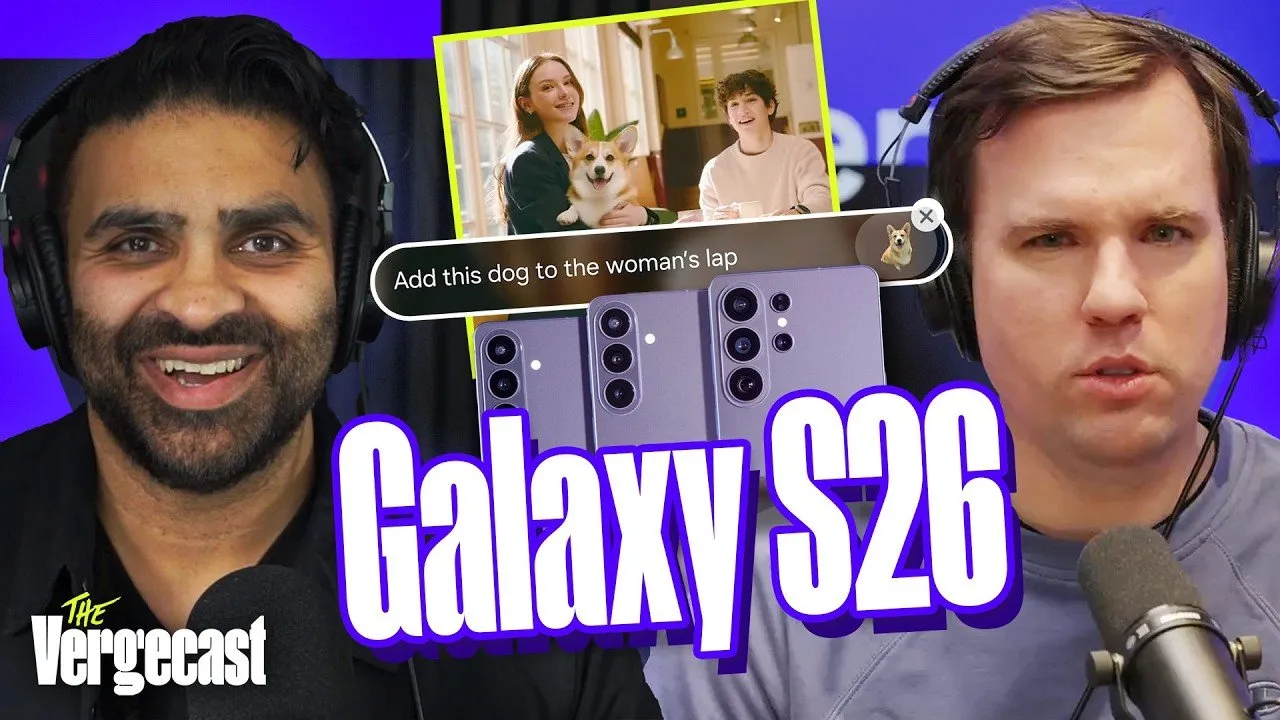
Samsung Electronics unveiled its Galaxy S26 flagship lineup this week, signaling a fundamental shift in mobile technology from capturing reality to generating synthetic imagery. The launch, which includes the S26, S26 Plus, and S26 Ultra, introduces controversial AI-driven photography tools and "agentic" assistant features that allow the devices to execute complex tasks within third-party applications.
Key Points
- Samsung’s Galaxy S26 series emphasizes software over hardware, with AI capabilities that can add objects to photos, change a subject's attire, and isolate audio in third-party video apps.
- A new Privacy Display utilizes specialized pixels to narrow viewing angles, allowing users to toggle privacy settings based on geographic location or specific application triggers.
- Microsoft announced a major leadership overhaul at Xbox, appointing former Meta and Instacart executive Asha Sharma as CEO of Microsoft Gaming following the departures of Phil Spencer and Sarah Bond.
- Google and Samsung are advancing "agentic AI," enabling the Gemini assistant to navigate apps like Uber on a user's behalf through virtualized app instances.
- Industry analysts warn that the move toward hyper-realistic AI photo editing at the OS level may permanently erode the boundary between photographic fact and synthetic fiction.
The S26 and the Crisis of Synthetic Photography
While the hardware upgrades for the Galaxy S26 series remain largely iterative—including brighter apertures on select cameras and increased base storage—the software represents a radical departure from traditional mobile photography. Samsung is leaning heavily into Galaxy AI, introducing features that allow users to alter the fundamental reality of their images. New tools enable the "merging" of objects from separate photos, such as placing a pet into a scene where it was never present, or entirely replacing a subject's outfit to remove spills or change styles.
The philosophical shift has sparked immediate criticism regarding the nature of digital evidence. During the Samsung Unpacked event, presenters suggested that the role of the smartphone camera has evolved from a tool of documentation to a tool of creation. This is evidenced by a bold claim in the company's marketing materials regarding the generative capabilities of the new hardware.
"The phone should not just help you AI remove things that shouldn't be there. It should help you add what should have been there."
Critics argue that making these tools accessible through natural language prompting removes the friction that previously limited "deepfake" technology to specialized software like Adobe Photoshop. As these capabilities scale to millions of users, the potential for misuse—particularly regarding non-consensual alterations to images of people—remains a significant concern for ethical AI advocates.
Agentic AI and the "DoorDash Problem"
Beyond photography, Samsung and Google are betting on "agentic AI," a system where the digital assistant acts as an autonomous operator. Using a framework known as the Model Context Protocol (MCP) and virtualized instances of Android apps, Gemini can now perform multi-step actions, such as ordering a ride through Uber or food through DoorDash, without the user ever opening the application's interface.
This "disintermediation" creates a strategic dilemma for app developers who rely on ad impressions and direct user engagement within their own ecosystems. Samir Samat, who leads Android at Google, described the shift as an inevitable progression of the technology, suggesting that developers will eventually need to "embrace" a world where AI handles the UI. By virtualizing these apps in a background "container," Google and Samsung can bypass traditional app boundaries, forcing a new standard for how mobile software interacts with human intent.
The Privacy Display and Hardware Customization
In a rare hardware-level innovation, Samsung introduced a Privacy Display that integrates two sets of pixels: standard wide-angle pixels and focused vertical pixels. This allows the screen to physically narrow its field of view, making the display unreadable from the side. Unlike previous software-based privacy filters that simply darkened the screen, this hardware solution can be automated through Samsung's "Routines," enabling the feature when a user enters a public space via geo-fencing or when a banking app is opened.
Microsoft’s Strategic Pivot at Xbox
Parallel to the mobile news, Microsoft confirmed a sweeping reorganization of its gaming division. Phil Spencer, the long-time face of Xbox, and Sarah Bond have stepped down, replaced by Asha Sharma. Sharma, a veteran of Meta and Instacart, brings a background in AI and operational scaling rather than traditional game development. This move signals Microsoft's intent to move beyond the "console wars" and refocus on a platform-agnostic strategy centered on Azure and mobile gaming.
The appointment comes at a time when Xbox hardware has struggled to compete with Sony's PlayStation 4 and 5 in terms of market share. Industry observers suggest that Sharma's mission will be to unlock the "mobile moat" that Apple and Google have maintained, potentially leveraging the Activision Blizzard acquisition to turn Xbox into a dominant software and AI brand that lives on every device, rather than just a box under the television.
The Ethics of Autonomy and Future Standards
As AI becomes more integrated into daily life, questions of "model welfare" and safety are moving from the fringe to the mainstream. Anthropic, the developer of the Claude AI model, recently addressed questions regarding AI consciousness. While the company stated that Claude is not "alive" in a biological sense, they acknowledged that as models become more sophisticated, questions regarding "internal experience" and "moral status" are serious topics of ongoing research.
This ethical ambiguity coincides with economic projections from the Federal Reserve Bank of Dallas, which recently modeled the impact of AI on GDP. The report highlighted three potential scenarios: a "benign singularity" resulting in vertical economic growth, a modest "AI-boosted trend" of 2% growth, and a "singularity extinction" event where GDP collapses as human labor becomes obsolete.
The industry now looks toward the Mobile World Congress (MWC) in Barcelona, where discussions are expected to shift from AI software to the infrastructure of the future, including the first meaningful conversations regarding 6G connectivity. For Samsung and its competitors, the challenge remains balancing the "sugar rush" of splashy, generative features with the long-term need for consumer trust and technological fidelity.