Table of Contents
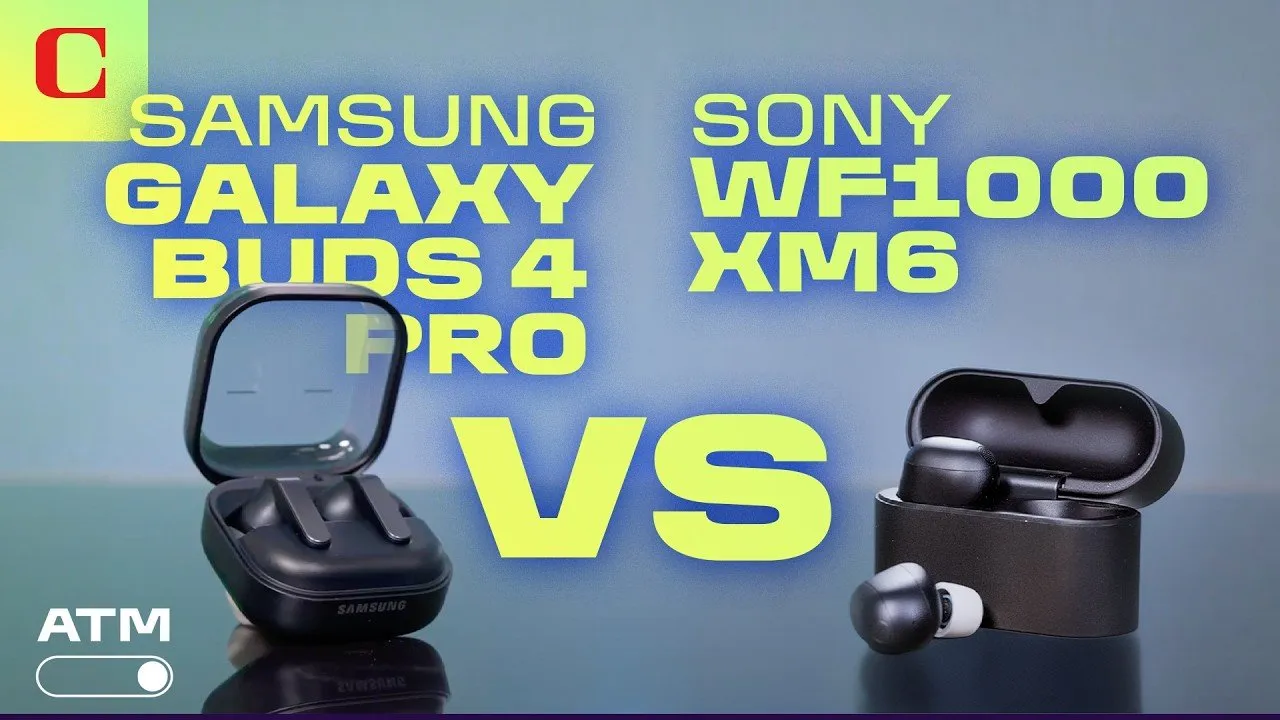
The high-end true wireless earbud market has reached a new peak with the launch of the Samsung Galaxy Buds 4 Pro and the Sony WF-1000XM6. While both sets of earbuds deliver premium audio experiences, they cater to different priorities, forcing consumers to weigh Samsung's aggressive pricing and ergonomic design against Sony's industry-leading noise cancellation and sound fidelity.
Key Points
- Price Disparity: The Galaxy Buds 4 Pro retail for $250, offering an $80 savings over the $330 Sony WF-1000XM6.
- Durability and Design: Samsung features an IP57 rating for dust and water resistance, whereas Sony is limited to IPX4 splash-proof protection.
- Noise Cancellation: Sony retains the crown for active noise cancellation (ANC), particularly in managing mid-to-high frequency sounds.
- Connectivity: The Galaxy Buds 4 Pro utilize Bluetooth 6.1, while the WF-1000XM6 rely on Bluetooth 5.3 and include standard multipoint pairing.
- User Experience: Samsung offers a superior fit for a wider range of ear shapes, though Sony provides a more "natural" audio profile for critical listening.
Design, Durability, and Comfort
The physical construction of these two flagships reveals divergent philosophies. The Galaxy Buds 4 Pro adopt a stemmed design similar to Apple AirPods, which assists in a secure fit and allows for intuitive pinch and swipe controls. Crucially, Samsung’s hardware boasts an IP57 rating, making them effectively dustproof and submersible in three feet of water for up to 30 minutes—a significant upgrade over Sony's basic IPX4 rating.
The Sony WF-1000XM6, while premium in build, utilize firm, proprietary foam ear tips that have proven divisive. While these tips can provide excellent isolation for some, they often present fit challenges for others. Swapping to third-party silicone tips may resolve the seal issue, but the initial barrier to entry remains a frustration for consumers paying a premium price point.
"I'd be pretty annoyed if I paid all that money for the buds, only to find out that I had to go out and buy a new set of ear tips for them," notes CNet contributor David Kline.
Performance: Sound Quality and ANC
When it comes to the core function of earbuds—audio reproduction—Sony maintains a marginal lead. The WF-1000XM6 offer a slightly more accurate and natural tonal quality. However, Samsung has made measurable strides in the Galaxy Buds 4 Pro, showing marked improvements in bass response and overall clarity compared to previous generations.
The story shifts regarding noise cancellation. Sony continues to set the benchmark for ANC performance. While Samsung’s adaptive noise canceling is highly competitive and sufficient for most environments, the WF-1000XM6 excel at filtering out complex, inconsistent noises, making them the preferred choice for frequent travelers or those working in high-decibel environments.
Ecosystem Integration and Features
For users already locked into the Samsung Galaxy ecosystem, the Buds 4 Pro offer a compelling value proposition. They provide seamless auto-switching between Galaxy devices, mimicking the fluidity of AirPods within the Apple ecosystem. Notably, the Buds 4 Pro lack traditional Bluetooth multipoint—a feature included in the Sony model—favoring proprietary ecosystem syncing instead.
Both devices perform exceptionally well in voice calls, even in challenging, high-noise environments like busy city streets. Additionally, both manufacturers have integrated "Conversation Awareness" modes, which automatically shift the device from noise cancellation to ambient pass-through when the user begins speaking.
Choosing the Right Fit
The decision ultimately hinges on whether the user prioritizes acoustic precision or day-to-day usability. The Sony WF-1000XM6 remain the superior choice for audiophiles who demand the best possible noise cancellation and sound accuracy, provided the user can secure a proper fit. Conversely, the Samsung Galaxy Buds 4 Pro emerge as the more practical, durable, and value-oriented option for the average user, particularly those who already rely on Samsung hardware.
As the market continues to evolve, consumers should watch for seasonal discounts on the Sony lineup, which may close the price gap. Regardless of the choice, prospective buyers are encouraged to verify fit, as the efficacy of both noise cancellation and sound quality remains entirely dependent on the physical seal against the ear canal.