Table of Contents
Samsung has officially expanded its wearable lineup with the release of the Galaxy Buds 4 Pro, opting to refine the controversial "blade" stem design introduced in the previous generation rather than returning to a traditional bud shape. Priced at $250, the new flagship earbuds debut alongside the standard Galaxy Buds 4, featuring upgraded internal acoustics, Bluetooth 6.1 connectivity, and a more premium metallic aesthetic aimed at high-end consumers.
Key Points
- The Galaxy Buds 4 Pro retail for $250, while the open-design Galaxy Buds 4 are positioned at $180.
- Internal hardware upgrades include a new dual-driver system with a separate woofer and planar tweeter for enhanced clarity and bass extension.
- Battery performance remains stagnant at six hours with active noise canceling (ANC) enabled, trailing behind the eight-hour runtime of the Apple AirPods Pro 3.
- The device features an IP57 rating for dust and water resistance, capable of surviving submersion in three feet of water for up to 30 minutes.
Refined Design and Ergonomics
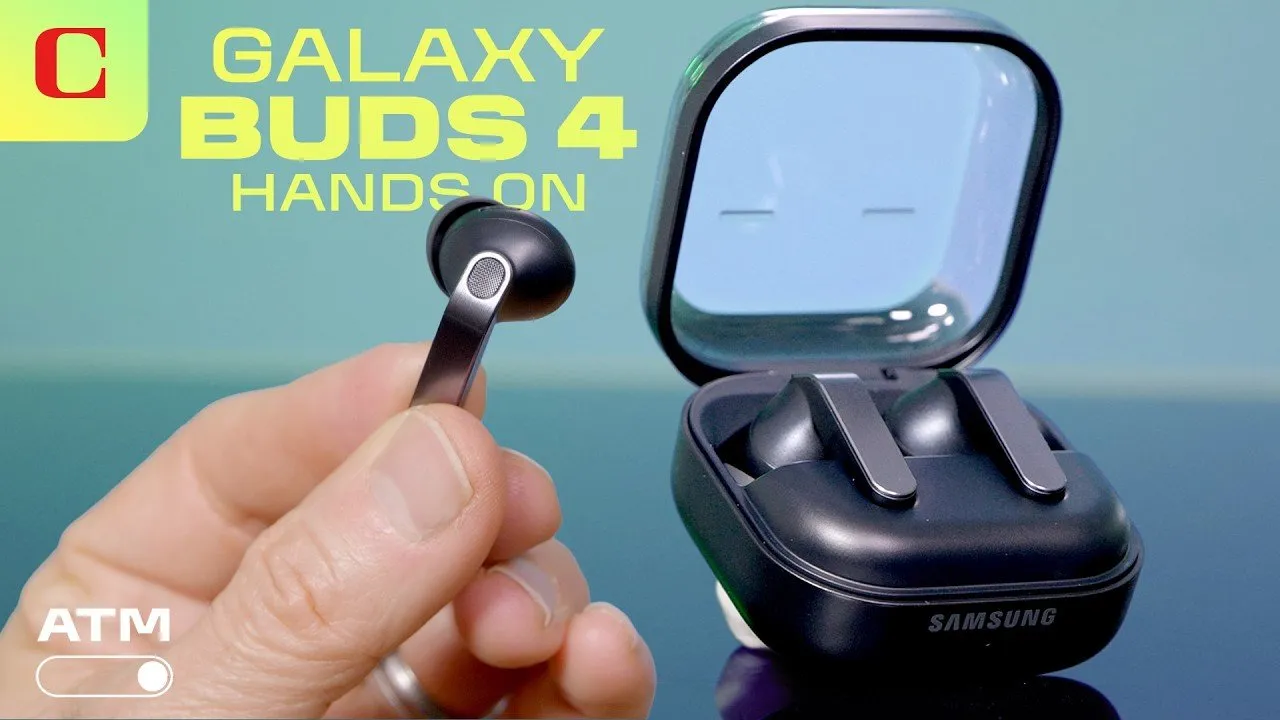
Following the significant design shift of the Galaxy Buds 3 Pro, Samsung has leaned further into the stem-based architecture, which the company refers to as "blades." The Buds 4 Pro swap the previous generation’s lighting elements for a sleek, metallic finish available in black, white, and a new pink gold. Samsung utilized computational design to update the shape of the buds, resulting in a fit that is reportedly more secure and comfortable for long-term wear.
The charging case has also seen a redesign, moving from a rectangular footprint to a more traditional square shape reminiscent of earlier Galaxy Buds models. While the case supports wireless charging, it remains slightly larger than some competitors. One notable drawback is the battery life; with only six hours of playback on a single charge and 20 additional hours in the case, the Buds 4 Pro fail to regain the 11-hour battery heights once reached by the Galaxy Buds Plus.
Audio Engineering and Connectivity Upgrades
Samsung focused heavily on internal components to justify the "Pro" moniker. The Buds 4 Pro utilize an upgraded dual-driver arrangement that delivers a more balanced soundstage and improved instrument separation. On the software side, the inclusion of Adaptive Noise Canceling 2.0 allows the earbuds to adjust isolation levels dynamically based on environmental sounds.
According to CNET’s David Carnoy, the audio improvements are subtle but effective:
"With the Buds 4 Pro, you get a bit more clarity and bass extension and slightly bigger, more open sound overall with good separation between instruments. I also thought that out of the box, the mids were a bit more forward and the sound was slightly more balanced overall."
The integration of Bluetooth 6.1 provides a more robust connection, though the earbuds still lack true multipoint Bluetooth support. Instead, they rely on Samsung’s proprietary seamless switching between Galaxy devices. For international travelers and professionals, the Live Translation feature—compatible with the Galaxy Interpreter app—and Auracast support remain core components of the feature set.
Microphone Performance and Call Quality
One of the strongest selling points for the new model is its voice-calling capability. During testing in harsh urban environments, the noise reduction algorithms effectively isolated the user's voice from background traffic and weather interference. A "sidetone" feature further enhances the user experience by allowing wearers to hear their own voice naturally during calls, reducing the muffled sensation common in sealed earbuds.
Market Positioning and Compatibility
The Galaxy Buds 4 Pro are positioned to compete directly with the Sony WF-1000XM6 and the Bose QuietComfort Ultra. While Samsung’s proprietary Seamless Codec supports up to 24-bit/96kHz audio, these high-fidelity benefits are primarily locked to the Galaxy ecosystem. Similarly, the 360 Audio with head-tracking remains an Android-exclusive feature, making these buds a harder sell for iOS users despite their technical proficiency.
For current owners of the Galaxy Buds 3 Pro, the 4 Pro represents an incremental rather than revolutionary upgrade. The decision to switch will likely depend on a preference for the new metallic aesthetic or the slight edge in microphone and ANC performance. As Samsung continues to roll out promotional trade-in offers alongside its latest smartphones, the Galaxy Buds 4 Pro are expected to become the new standard for the Android-loyal consumer base.