Table of Contents
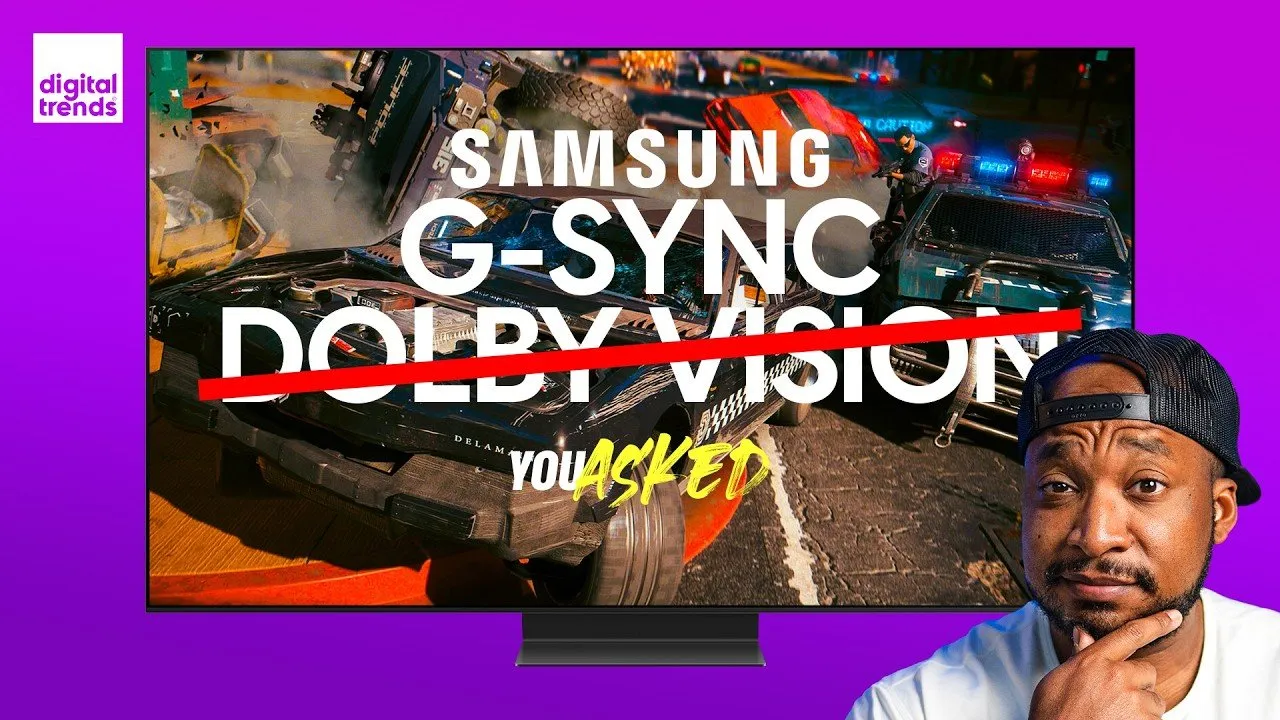
Samsung has confirmed a major strategic shift for its 2026 display lineup, announcing that upcoming OLED models will support Nvidia G-Sync while continuing to bypass the industry-standard Dolby Vision HDR format. This move underscores the tech giant's focus on capturing the high-end PC gaming market, even as consumers voice concerns regarding display brightness fatigue and HDR compatibility.
Key Points
- Gaming Expansion: Samsung’s 2026 OLED TVs (S95H, S90H, S85H) will natively support Nvidia G-Sync alongside AMD FreeSync Premium Pro.
- HDR Strategy: The company maintains its refusal to license Dolby Vision, relying instead on its proprietary HDR10 Plus Advanced format and QD-OLED color volume.
- Brightness Wars: Manufacturers continue to increase peak nit levels to demonstrate generational improvements, though experts note that calibration settings can mitigate eye fatigue.
- Bright Room Solutions: Mini LED technology remains the recommended standard for environments with wraparound windows or direct sunlight, outperforming OLED in raw luminance.
Samsung Prioritizes Gamers Over Cinephiles
In a move targeted directly at the enthusiast gaming sector, Samsung revealed that its 2026 OLED lineup—specifically the S95H, S90H, and S85H models—will feature official Nvidia G-Sync compatibility. This addition complements the existing AMD FreeSync Premium Pro support, effectively universalizing variable refresh rate (VRR) performance across the leading GPU architectures.
The integration of G-Sync suggests that Samsung views the gaming demographic as a critical growth vector for its high-end displays. By securing official certification, the manufacturer aims to assure PC gamers that its televisions can handle high-frame-rate output without screen tearing or stuttering, a feature set previously fragmented across different GPU brands.
The Dolby Vision Standoff Continues
Despite the concession to Nvidia, Samsung remains steadfast in its decision to exclude Dolby Vision support. This omission continues to be a point of friction for home theater enthusiasts who prefer Dolby’s dynamic metadata format for movies and television series. According to industry analysis, Samsung’s calculation is likely economic and technical: the licensing fees associated with Dolby Vision may not justify the marginal performance gains viewed on their specific panels.
Digital Trends notes that the native color volume of Samsung’s QD-OLED panels often negates the necessity for Dolby Vision in the eyes of the manufacturer. Furthermore, the company is doubling down on its own open standard, HDR10 Plus Advanced, which promises enhanced metadata control similar to Dolby’s offering.
"Safe to say Dolby Vision is not coming to Samsung anytime soon, but at least they're servicing the rest of the market with gaming upgrades. I would assume that having Nvidia G-Sync gives more to that crowd than Dolby Vision does to the general movie and TV show viewing audience."
Addressing Display Brightness Fatigue
As display technology evolves, manufacturers have aggressively pursued higher peak brightness, measured in nits, as a primary differentiator between product generations. While this improves contrast and HDR "sparkle," a growing segment of consumers reports "brightness fatigue," finding modern panels difficult to tame in dark viewing environments.
However, the issue is often one of configuration rather than hardware limitation. Modern displays, including units from manufacturers like Hisense, now include distinct profiles such as "Theater Day" and "Theater Night." These settings allow users to cap luminance levels for dark-room viewing while unleashing full power to combat ambient light during the day.
The push for brightness serves a technical purpose beyond marketing: high luminance is essential for the contrast ratios required by modern HDR standards. In OLED panels specifically, increased brightness helps differentiate specular highlights against perfect blacks, creating a more three-dimensional image.
"I just don't think TVs are too bright unless you want them to be. And personally, I'd rather have some room to spare on the bright end than finding my TV too dull when the sun's out."
Market Recommendations for High-Ambient Light
For consumers dealing with challenging lighting environments, such as rooms with wraparound windows, the consensus remains that Mini LED technology offers the superior value proposition. While MicroLED offers higher theoretical brightness, the prohibitive cost and sizing limitations make it impractical for the average consumer.
In the current market, Mini LED models from TCL and Hisense are highlighted as top performers for battling direct sunlight. Specific attention is drawn to high-performance models like the TCL QM8K and the Hisense U8QG. These displays utilize thousands of dimming zones to maintain contrast without succumbing to glare.
For those committed to OLED, options are narrowing to specific models equipped with advanced anti-glare coatings. The Samsung S95F is noted for its ability to diffuse reflections, while LG’s G5 series has made significant leaps in pure luminance output to compete in brighter living spaces.
As the 2026 production cycle approaches, the divide between gaming-centric features and cinematic standards appears to be widening, leaving consumers to choose displays based on their primary use case—competitive gaming or critical film viewing.