Table of Contents
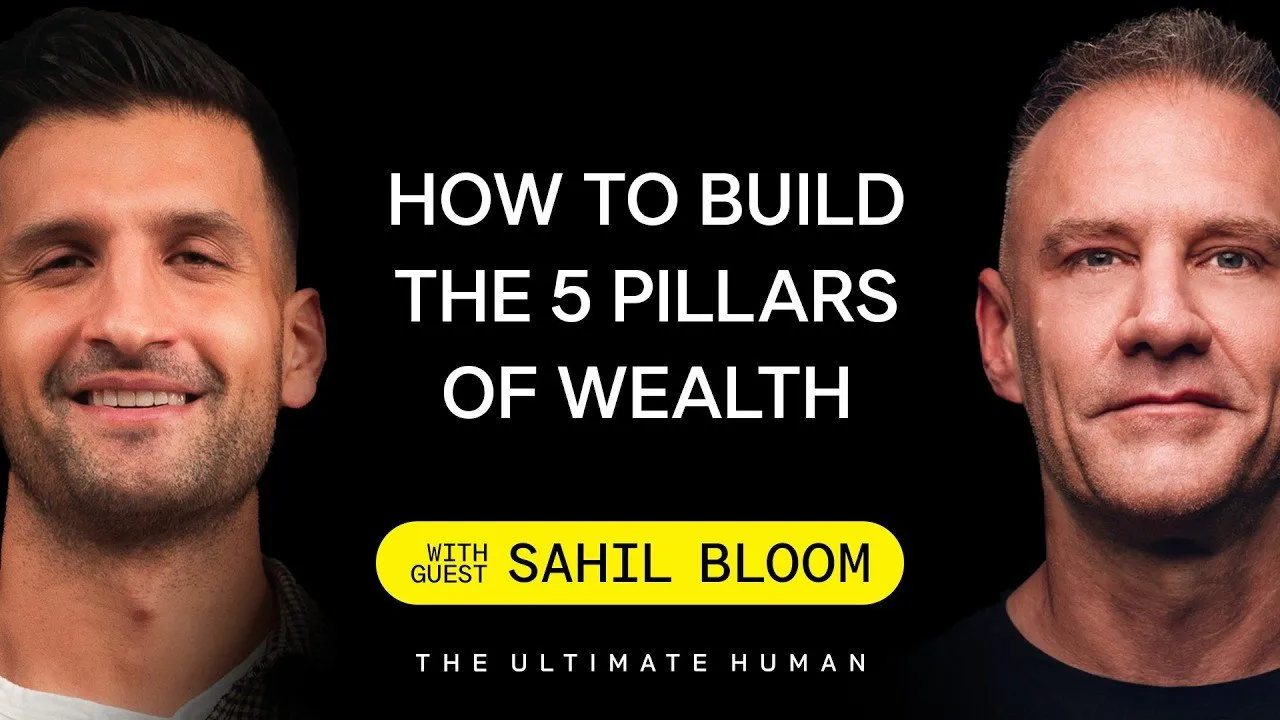
Sahil Bloom had achieved everything society tells us to want. A Stanford athlete with a high-flying career in Wall Street private equity, he was "winning" by every traditional metric. Yet, behind the scenes, he was 50 pounds overweight, drinking nearly every night, and emotionally bankrupt. A single, jarring conversation about the limited time he had left with his aging parents acted as a grenade, blowing up his old life and sparking a journey to redefine what it actually means to be wealthy. In this discussion with human biologist Gary Brecka, Bloom breaks down the frameworks for building a life that prioritizes time, relationships, and health over the endless pursuit of "more."
Key Takeaways
- The Arrival Fallacy: Achieving external goals rarely leads to lasting happiness; fulfillment requires a shift from conditional success to daily intentionality.
- The Five Pillars of Wealth: True wealth is a balance of Time, Social, Mental, Physical, and Financial assets.
- The Awareness-Action Gap: Growth is found in narrowing the distance between knowing what is important and actually doing something about it.
- Social Health as Longevity: Relationship satisfaction at age 50 is the single greatest predictor of physical health at age 80, outperforming even cholesterol and blood pressure metrics.
- Physical Agency: Starting with physical discipline is the fastest way to regain a sense of control and agency over your entire life.
The Arrival Fallacy and the Trap of "More"
Most high-achievers suffer from the "Arrival Fallacy"—the belief that once they reach a certain milestone, they will finally be happy. Whether it is a promotion, a specific net worth, or a house, this mindset makes happiness conditional on an ever-shifting finish line. Sahil Bloom argues that this creates a cycle of dopamine-induced euphoria followed by a rapid reset to a baseline of "never enough."
To combat this, Bloom suggests shifting focus toward the "beauty of enough." When our expectations rise faster than our assets, we remain perpetually poor regardless of the number in our bank account. True financial and emotional freedom comes from defining your own scoreboard rather than playing the game society has designed for you.
"Never let the quest for more distract you from the beauty of enough."
Defining Your Scoreboard
If you only measure net worth, your actions will only serve that number. By expanding your "scoreboard" to include metrics like sleep quality, time spent with family, and creative output, you naturally begin to prioritize those areas. Humans are wired to chase whatever is being measured; the key is to measure the things that actually lead to a fulfilled life.
The Five Pillars of Holistic Wealth
Bloom categorizes wealth into five distinct pillars. Focusing on one at the expense of others often leads to the "hollow success" many professionals experience in mid-life. Comprehensive wealth requires tending to all five:
- Time Wealth: Treating time as your most precious asset. It is the realization that a 20-year-old is a "time billionaire" with 30-plus years of seconds remaining.
- Social Wealth: The depth of your relationships and your connection to a community larger than yourself.
- Mental Wealth: Having a sense of purpose, a calling, and the mental space to tackle life's difficult questions.
- Physical Wealth: Your health and vitality. This is the foundation upon which all other forms of wealth are built.
- Financial Wealth: Money, viewed through the lens of having "enough" to support your ideal lifestyle without becoming a slave to the pursuit of excess.
The Loneliness Pandemic and Relationship Compounding
While society obsesses over biohacking and cellular biology, we often overlook the most potent "drug" for longevity: social connection. Isolation is a leading cause of all-cause mortality, and loneliness has been shown to be as damaging to health as smoking or excessive drinking. Bloom cites an 80-year Harvard study which found that the quality of a person's relationships at age 50 was the most accurate predictor of their physical health at age 80.
"The single greatest predictor of physical health at age 80 was relationship satisfaction at age 50."
Bloom views relationships through the lens of compounding. Just as a small financial investment grows over decades, small "social investments"—a ten-minute phone call, a text message, or a brief coffee date—stack up over time. The mistake most people make is letting the "optimal" get in the way of the "beneficial." If you don't have an hour for a deep conversation, you might do nothing. Instead, Bloom advocates for the "non-zero" approach: do something small every day to nurture your social wealth.
Closing the Awareness-Action Gap
The most successful people have a razor-thin gap between awareness and action. Most of us know what we need to do—we need to eat better, call our parents more often, or leave a toxic job—but we fail to act. Bloom argues that courage is the willingness to take action without knowing the outcome.
"Courage isn't courageous because it works out, courage is courageous because you act without knowing that it will."
Reassuming Agency Through Physicality
If you feel stuck or lack agency, Bloom suggests starting with physical discipline. Waking up at 5:00 a.m. and working out for 30 straight days is not just about fitness; it is a psychological intervention. It proves to your brain that you are the "captain of the ship" and capable of creating a desired outcome through effort. This sense of agency then ripples into your career and relationships.
The ROI of Boredom and Stillness
In a world of constant digital stimulation, the ability to be bored has become a competitive advantage. Constant stimulus prevents the brain from connecting ideas in unique, "asymmetric" ways. Bloom suggests that our best ideas—those that lead to major life pivots or business breakthroughs—rarely happen when we are staring at a screen. They happen in the shower, during a walk, or in the moments of stillness before sleep.
The Power of Walking
A simple, 15-minute technology-free walk can yield a massive return on investment. Research suggests a 70% increase in creative divergent thinking during and after walking. By removing the "noise" of phones and podcasts, you allow your thoughts to intermingle, leading to the creative breakthroughs that can fundamentally change the trajectory of your life.
Conclusion
Building a wealthy life is not about achieving a specific destination; it is about the daily actions that align with a clear personal vision. By redefining success through the five pillars and closing the gap between what we know and what we do, we can move from being "passengers" in our lives to being intentional architects of our future. Whether it is a 15-minute walk or a 30-day fitness challenge, the path to an "ultimate" life begins with the tiny, ordinary things done consistently over time.
Learn more about building a life of intention by visiting Sahil Bloom's official website or checking out his latest book, The Five Types of Wealth.