Table of Contents
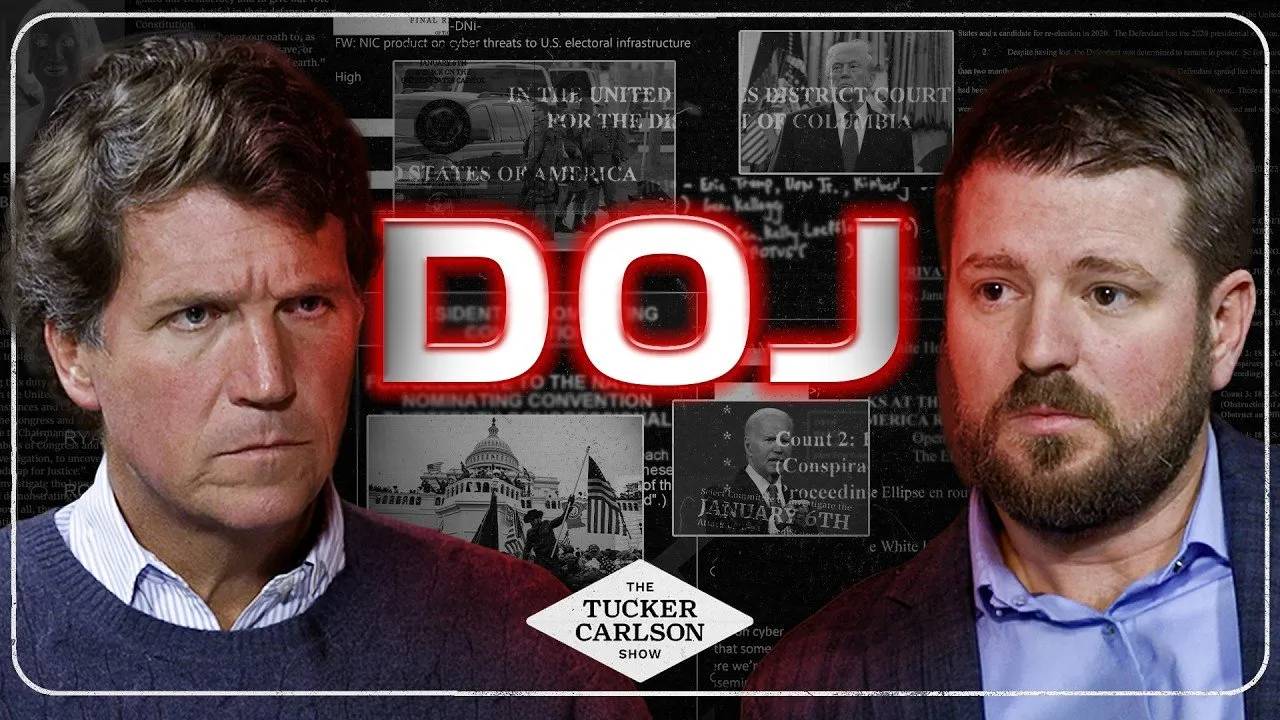
In the aftermath of January 6, 2021, hundreds of Americans faced legal scrutiny, but few stories illustrate the collision between citizens and the federal justice system as vividly as that of Ryan Zink. A congressional candidate for Texas District 19, Zink recently sat down to detail his transformation from a media student documenting his father’s campaign to a federal defendant, and finally, to a political contender seeking to reform the very system that prosecuted him. His account offers a harrowing look at the "American Gulag," alleging due process violations, physical mistreatment in custody, and a weaponized judicial process.
Zink’s narrative is not just about the events at the Capitol, but about the aggressive tactics employed by federal agencies during his arrest and the grim conditions he endured while incarcerated in Washington, D.C. Now, with his felony obstruction charge overturned and his rights restored, Zink is using his experience as a catalyst for his campaign, running on a platform of constitutional integrity, fiscal responsibility, and spiritual resilience.
Key Takeaways
- The Nature of the Charges: Despite being labeled a domestic terrorist, Zink maintains he never entered the Capitol building, assaulted officers, or destroyed property; he was present primarily to film campaign B-roll for his father.
- Excessive Force Allegations: Zink describes a pre-dawn FBI raid involving a battering ram, flashbangs, and laser sights trained on his chest, despite his willingness to cooperate.
- Prison Conditions: While detained in Washington, D.C., Zink alleges he faced "diesel therapy" transport, solitary confinement, malnutrition, and exposure to hazardous chemicals in his food.
- Legal Vindication: Following a Supreme Court ruling regarding the obstruction statute (1512c2), Zink’s felony conviction was overturned, leaving only misdemeanor charges.
- Political Platform: Zink’s congressional run focuses on West Texas values, including agricultural support, opposition to foreign spending, and the protection of First Amendment rights against tech censorship.
The Events of January 6th: A Media Strategy Turned Nightmare
According to Zink, his presence in Washington, D.C. on January 6 was professional rather than insurrectionist. At the time, he was a student of media strategy and public relations, assisting his father, who was running for Congress against Ruben Gallego. The goal was simple: capture B-roll footage of his father in front of the Capitol to project a "strong unified presence in media."
Zink describes the atmosphere on the East side of the Capitol as confusing but initially non-violent. He recounts witnessing individuals he identified as "Antifa" or agitators—specifically noting a man named Hunter Ehmke—smashing windows. Contrary to the narrative of an insurrectionist, Zink claims he actively shouted at these agitators to stop breaking the law and offered assistance to the Capitol Police.
"I never went inside the building. I never assaulted anybody. I never broke anything. I was assisting police officers on the porch, yelling at protesters... I asked a Capitol police officer... 'How can we help you?' And instead of saying... 'You need to leave,' he tells me stay on the porch and take pictures of them."
Zink argues that his actions were that of a journalist and a concerned citizen. He claims to have video evidence—previously suppressed during his trial—showing police officers acknowledging his assistance. Despite never crossing the threshold of the building, he became a target of the federal investigation that followed.
The Raid: February 4, 2021
The turning point in Zink’s life occurred just after 4:00 a.m. on February 4, 2021. Expecting a phone call or a request to surrender voluntarily, Zink was instead awakened by the sound of his front door being shattered by a 12-foot battering ram. He describes a chaotic scene where federal agents deployed flashbangs and breached his home in Lubbock, Texas.
A disproportionate Response
Zink, a staunch supporter of the Second Amendment, initially believed he was being burglarized. He describes reaching for his firearm to defend his home, only to realize the intruders were law enforcement just in time to drop the weapon. He recalls seeing red laser dots on his chest, realizing he was seconds away from being shot.
The raid left physical and psychological scars. Zink alleges that agents flash-banged his dogs, causing permanent injury to his chocolate lab, and destroyed property throughout the house. He was marched out barefoot into freezing temperatures, marking the beginning of his incarceration.
Inside the "American Gulag"
Following his arrest, Zink entered what he describes as a punitive and dehumanizing correctional system. His journey to Washington, D.C. involved "diesel therapy"—a term used to describe prolonged prisoner transport across multiple facilities, often in shackles and without communication with legal counsel or family.
Conditions in the DC Jail
Upon arriving at the DC detention facility, specifically the C2B pod, Zink describes conditions that violate basic human rights. He claims he was placed in a cell with no running water, covered in mold, urine, and feces. He was denied basic hygiene products and medical attention.
The allegations of mistreatment escalated after his attorney filed a complaint about the conditions. Zink asserts that in retaliation, he was moved to solitary confinement and his food was tampered with. He describes meals that smelled of bleach or Windex and recounts a horrifying incident where raw chicken was stuffed into his water faucet.
"I was looking out the window... at the cemetery... and I was like, I'm going to die in here... And God said very clearly, I know the path that I have for you. You'll be fine. Stay where I put you."
Zink lost approximately 50 pounds during his detention, surviving on faith and what little sustenance he could safely consume. He views this period not just as punishment, but as a spiritual battle that solidified his Christian faith.
Legal Battles and Vindication
Zink’s legal journey was long and costly. He was initially convicted of obstruction of an official proceeding, a felony carrying a potential 20-year sentence. However, the Supreme Court’s review of the 1512(c)(2) statute—which challenged the broad application of corporate fraud laws to the J6 protests—led to the overturning of his felony conviction.
Ultimately, Zink was resentenced on misdemeanors only. He highlights the disparity in how J6 defendants were treated compared to other political protestors, citing "Brady violations" where exculpatory evidence, such as his footage assisting police, was withheld by prosecutors. Today, his gun rights have been restored, and he views his survival of the legal system as a vetting process for public office.
Campaigning for District 19
Emerging from his legal and physical ordeal, Zink has returned to the political arena with renewed purpose. He is currently running for Congress in Texas District 19, a massive district covering over 30,000 square miles of West Texas. His platform is heavily influenced by his experiences with the federal government.
Core Policy Positions
- Fiscal Responsibility: Zink advocates for an "America First" budget, opposing foreign aid that does not directly benefit U.S. citizens. He is critical of the current national debt and government overspending.
- Agriculture and Energy: Acknowledging the district's reliance on farming and energy, Zink proposes using flare gas to power atmospheric water generators, addressing the region's water scarcity issues while supporting the energy sector.
- Tech Censorship: Zink reveals that Meta (Facebook) seized his congressional campaign page, citing "disingenuous behavior." He argues this is election interference and advocates for stronger protections for free speech online.
- Border Security and Sovereignty: He maintains a hardline stance on border security and opposes what he views as the weaponization of the justice system against political opponents.
Conclusion
Ryan Zink’s story is one of profound contrast: a man who went to Washington to film a campaign video and ended up the subject of a federal manhunt. His experience in the DC jail system has not silenced him; rather, it has radicalized his commitment to political reform. Viewing his survival as divinely ordained, Zink is now asking the voters of West Texas to send a man who has "walked through the fire" to represent them in Washington.
For voters in District 19, Zink presents himself not just as a politician, but as living proof of the system's excesses—and a fighter willing to stand against them.
To learn more about Ryan Zink’s campaign and policy positions, you can visit his official website at ryanzink.vote.