
Table of Contents
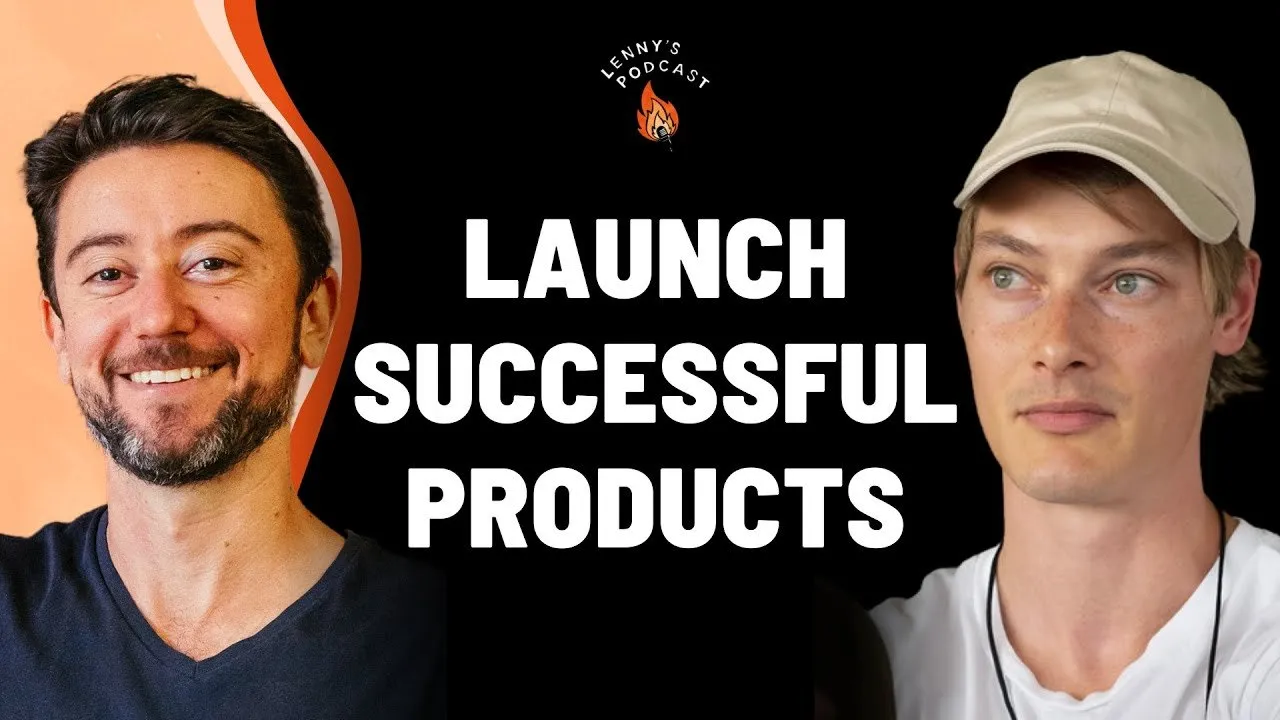
Ryan Hoover is synonymous with product discovery. As the founder of Product Hunt, he built the platform that became the default launchpad for the tech industry. Today, he has transitioned from operator to full-time investor with his venture firm, Weekend Fund, where he applies his product instincts to back early-stage founders.
Transitioning from a product manager to a founder, and eventually to a capitalist, offers a unique vantage point on what makes companies work. In this conversation, Hoover opens up about the tactical realities of launching, the psychological toll of the "founder mask," and the specific regrets he carries from his time running Product Hunt.
Whether you are refining a launch strategy, looking for your next startup idea, or trying to break into angel investing, Hoover’s retrospective offers a blueprint for navigating the chaos of building something new.
Key Takeaways
- Focus vertically before expanding horizontally: Attempting to conquer multiple categories (like games or podcasts) too early can dilute your core product's value.
- Launch for morale, not just users: While customer acquisition is a goal, the internal momentum and team morale generated by a launch are often more valuable.
- Write like a human: The biggest mistake founders make on Product Hunt is using "PR speak." Copy should sound like you are explaining the product to a friend at a bar.
- Keep a "Problem Journal": Great ideas often come from noting daily annoyances without immediately trying to solve them.
- Build a "Fantasy Portfolio": Aspiring investors without capital can build a track record by writing investment memos for companies they would back.
Reflections on Building Product Hunt
Looking back at the trajectory of Product Hunt, Hoover identifies specific strategic decisions that, with hindsight, he would have approached differently. These reflections provide critical lessons for founders currently scaling their own platforms.
The Trap of Horizontal Expansion
One of the most common temptations for a successful startup is to widen its scope too quickly. Product Hunt began as a destination for tech products, but the team quickly attempted to replicate that success in other verticals, such as podcasts, games, and books.
Hoover admits this was a miscalculation. Expanding horizontally requires not just a new category, but often an entirely different product experience. How a user discovers a podcast is fundamentally different from how they evaluate a SaaS tool. Furthermore, translating a community from one niche to another is notoriously difficult.
"We should not have tried to expand horizontally. We should have just focused entirely vertically and served the tech community better and with more things, which is effectively what we're doing now."
The Cost of Delayed Monetization
Product Hunt raised venture capital, which allowed them to defer revenue generation. However, Hoover notes that waiting until after their acquisition by AngelList to turn on revenue was a mistake. By not dedicating even a small percentage of resources—roughly 10%—to monetization earlier, the company lost a degree of autonomy.
Founders often fear that monetization will slow growth, but proving a business model early can actually provide the freedom to control your own destiny and extend your runway indefinitely.
The struggle with delegation
For product-obsessed founders, letting go of the details is physically painful. Hoover revealed that he personally edited the Product Hunt newsletter at 5:00 AM every morning for years, long past the point where it was a scalable use of his time.
While this "OCD-like" attention to detail helps establish a high quality bar initially, it eventually becomes a bottleneck. The transition from founder to CEO requires trusting the team to maintain standards so leadership can focus on high-leverage activities.
Mastering the Product Launch
Founders are often obsessed with the "launch," but they frequently misunderstand its utility. Hoover argues that if you are launching solely for customer acquisition, you might be disappointed. The true ROI of a launch often lies in secondary benefits: recruiting leverage, fundraising momentum, partnership opportunities, and team morale.
A successful launch acts as a forcing function that rallies the team. It allows employees to share their hard work with their families and creates a shared moment of celebration. This internal energy is just as vital as external traffic.
How to launch effectively
Having observed tens of thousands of launches, Hoover notes that the difference between a top-tier launch and a mediocre one usually comes down to communication style.
Ditch the corporate jargon. Founders often default to "PR speak," using buzzwords and vague value propositions. The copy that converts best is authentic and conversational. The litmus test for your tagline should be: Is this how I would describe the app to a friend while hanging out?
Visual Storytelling
On platforms like Product Hunt, the gallery is the first thing users engage with. The most successful makers treat their image gallery like a slide deck or a story. Rather than random screenshots, they use the visual space to walk the user through a narrative—problem, solution, and use case—before the user even reads the text.
Generating Venture-Scale Ideas
In the current market, executing on an idea is easier than ever, which means the quality of the insight matters more. Hoover suggests several frameworks for generating ideas that go beyond surface-level cloning.
The Problem Journal
One effective habit is maintaining a "problem journal." The goal is not to brainstorm startup ideas, but simply to log friction.
When you encounter something annoying—like the lack of in-unit laundry in San Francisco apartments—write it down. Do not force a solution immediately. By collecting these friction points over time, you build a repository of validated problems that can eventually be matched with technology shifts.
Immersion and Observation
Unique insights rarely come from looking at the mainstream. They come from:
- Niche Communities: immersing yourself in subreddits or hobbyist groups (e.g., robotics enthusiasts) to understand specific pain points.
- Macro Shifts: Observing changes in consumer behavior (e.g., the normalization of remote work) or technology (e.g., AI, Web3).
For consumer startups specifically, the bar is incredibly high. Unlike B2B, where you solve a clear financial or workflow problem, consumer apps compete for attention against giants like Netflix and TikTok. Therefore, consumer founders need a distinct insight into human psychology or a behavioral shift to break through the noise.
Angel Investing and the "Founder Mask"
Now fully focused on the Weekend Fund, Hoover brings his product background into investing. He views early-stage investing as an evaluation of the founder's product thinking rather than just market sizing.
The Emotional Reality of Founding
One of the reasons Hoover connects with founders is his intimate understanding of the "founder mask." CEOs often wake up with a "flutter in the stomach"—a mix of anxiety and stress—but must project total confidence to their team and investors later that morning.
"Being a CEO or founder makes it slightly harder in some ways because you still have to put on this mask... where people need to trust you. You also don't want to subject them to the same anxiety that you're feeling."
This shared experience allows for more authentic conversations where founders feel safe admitting when things are chaotic, rather than pretending everything is "crushing it."
Advice for Aspiring Investors
You do not need to be wealthy to start building a track record in investing. Hoover recommends a strategy of "permissionless investing":
- Fantasy Portfolios: Identify companies you would invest in if you could. Write a memo detailing why you like the product, the team, and the market.
- Publish Your Thinking: Share these memos publicly or send them to the founders (respectfully).
- Track Your Results: Over time, this creates a timestamped record of your judgment that can be used to get a job in VC or raise a fund later.
Conclusion
Whether building a community or an investment portfolio, Ryan Hoover’s approach is defined by curiosity and experimentation. He views startups not as binary pass/fail tests, but as experiments to learn from.
For founders, the takeaway is to prioritize momentum and authenticity. For investors, it is to look for the resilience in founders, knowing that the company you see today might pivot three times before it becomes a unicorn. As Hoover notes, "Never count a portfolio company out until it's over."


![Trump Market Manipulation Will Trap You! [This Happens Next]](/content/images/size/w1304/format/webp/2026/03/trump-market-manipulation-volatility-warning.jpg)
