Table of Contents
High-level diplomatic maneuvering is intensifying between Moscow and Washington, marked by a secretive four-hour meeting in the Kremlin and preparations for a rare trilateral security summit in the UAE. While public rhetoric remains hostile, back-channel negotiations involving top intelligence officials suggest a complex game of brinkmanship. From the introduction of new US intermediaries to the looming shadow of covert operations, the latest rounds of talks reveal a divergence between political posturing and the gritty reality of security imperatives.
Key Takeaways
- Trilateral Security Summit: Intelligence chiefs from Russia, the US, and Ukraine are set to meet in Abu Dhabi, likely to establish "red lines" following recent drone attacks on Russian leadership targets.
- Energy Ceasefire Rejected: Vladimir Putin has reportedly dismissed US proposals for a mutual halt on energy infrastructure attacks, signaling a continuation of Russia’s current military strategy.
- Frozen Asset Precedent: A US agreement to allow Russia to use frozen assets to pay for "Board of Peace" membership may legally undermine European efforts to seize Russian funds.
- Regime Change Concerns: emerging reports suggest factions within Western intelligence communities may still be pursuing regime change in Moscow out of desperation, despite diplomatic engagements.
The Abu Dhabi Pivot: Spies at the Negotiating Table
A significant shift in the negotiation format is occurring with the upcoming trilateral meeting in Abu Dhabi. Unlike previous diplomatic gatherings, this summit is slated to be dominated by the "spies"—the heads of intelligence services rather than foreign ministers.
The Russian delegation will include the head of the GRU, Admiral Igor Kostyukov, while Ukraine is sending Kyrylo Budanov, the head of military intelligence. American intelligence representatives are also expected to attend. Analysts suggest this meeting was likely an American proposal designed to address specific, urgent security escalations rather than general peace terms.
Addressing the Valdai Incident
The impetus for this security-focused gathering appears to be the recent drone incursions targeting Valdai and Novgorod. These attacks, which struck dangerously close to Russian presidential infrastructure, have seemingly alarmed Washington.
The prevailing theory is that the US aims to use the Abu Dhabi channel to establish deconfliction protocols. By bringing the intelligence chiefs into one room, the objective is to agree on technical "red lines" to prevent decapitation strikes that could lead to uncontrollable escalation. While Ukrainian President Zelensky has framed the meeting as a discussion of "technical issues," the composition of the delegations suggests a focused attempt to reign in covert operations that threaten the stability of the conflict's management.
Stalemate in the Kremlin: Energy and Economics
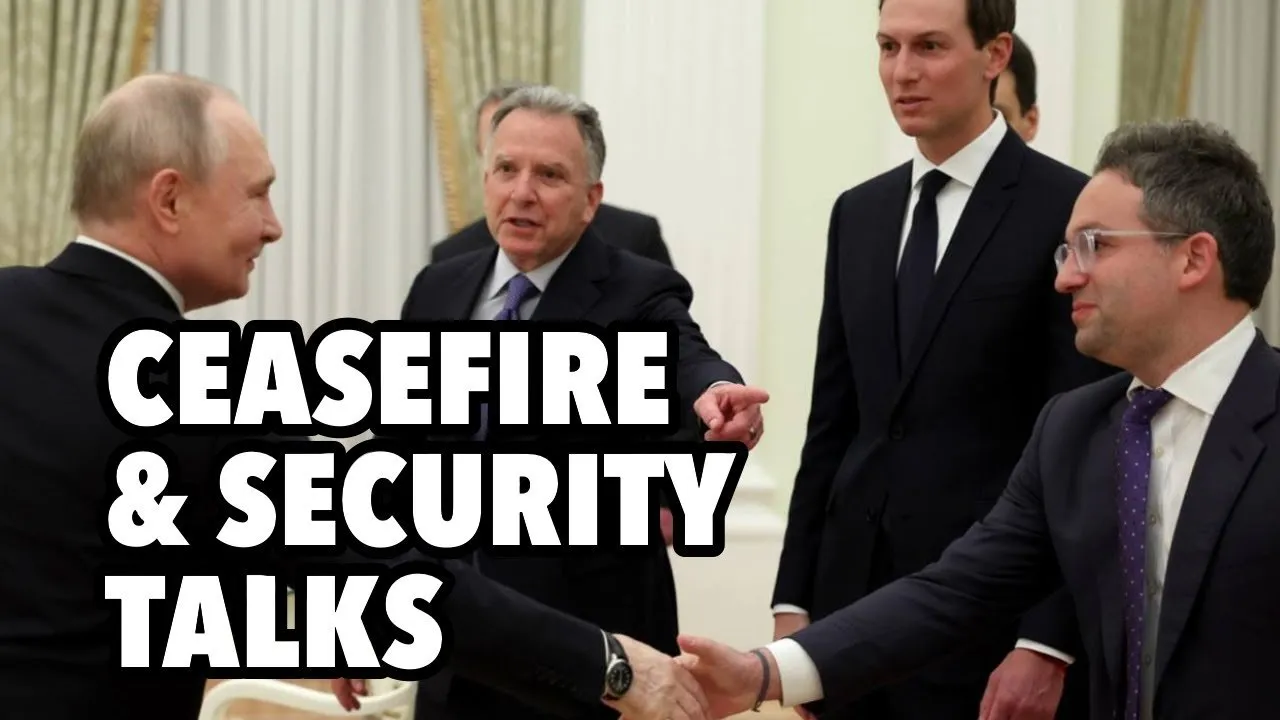
Prior to the Abu Dhabi summit, a four-hour meeting took place in the Kremlin involving Vladimir Putin, his aide Yuri Ushakov, and a US delegation that included Steven Witkoff, Jared Kushner, and a new figure identified as Josh Grundman. Despite the length of the discussion, the outcomes highlight a widening gap between US proposals and Russian acceptance.
The Rejection of an Energy Truce
A central topic of the discussion was a US proposal for an energy ceasefire—a mutual agreement where Russia would stop striking Ukraine's power grid in exchange for Ukraine halting attacks on Russian oil refineries.
Putin reportedly rejected this proposal outright. From the Russian perspective, the exchange is asymmetrical. While Russian strikes have caused catastrophic damage to Ukraine's energy generation capacity, Ukrainian drone attacks on Russian refineries have had a negligible impact on Russia’s overall crude production and export volumes. With Russia holding the strategic advantage in this domain, the Kremlin sees little incentive to agree to a truce that offers them "nothing" in return.
The "Board of Peace" and Financial Sovereignty
The conversation also pivoted to the "Board of Peace," a Trump administration initiative. In a surprising twist, the US reportedly signaled a willingness to allow Russia to utilize approximately $1 billion of its frozen assets held in the United States to pay for its "membership" or contribution to this initiative.
This development has profound legal implications. By allowing Russia to direct the use of these frozen funds, the US is tacitly acknowledging Russia's continued ownership and right of disposal. This maneuver potentially undercuts European allies, particularly those pushing to seize frozen assets to fund Ukraine. If Washington recognizes Russia's legal claim to the funds for specific purposes, Europe’s argument for unilateral seizure becomes legally and politically untenable.
The Shadow War: Regime Change Anxieties
While diplomats and spies arrange tables in Abu Dhabi, a darker narrative runs beneath the surface. Recent reporting, notably attributed to investigative journalist Seymour Hersh, indicates that elements within the US intelligence community may be growing increasingly desperate regarding the war's trajectory.
There is a concern that the "security guarantees" and diplomatic meetings act as a cover for continued efforts to effect regime change in Moscow. The theory posits that with no clear path to a conventional military victory for Ukraine, the focus has shifted entirely to destabilizing the Russian leadership.
"When people are desperate... when they see everything that they're doing starting to fall apart around them, well, people who are desperate start to do reckless and bizarre things... If we take out Putin, maybe just possibly the configuration could change."
This "desperation" within Western intelligence circles poses a significant risk. If the Abu Dhabi meeting is perceived by the Kremlin not as a genuine security dialogue but as a deception tactic to lower Russian defenses, the trust deficit will deepen. The Kremlin likely views these engagements through a lens of extreme caution, suspecting that the ultimate goal of their counterparts remains the removal of the current Russian government.
The Diplomatic "Groundhog Day"
Observers have noted a repetitive quality to these high-stakes meetings. We are now witnessing the seventh or eighth iteration of these lengthy discussions, yet they often cover the same ground with minimal breakthrough. This repetition has led to a downplaying of the events in Russian state media, signaling a management of expectations.
While the US attempts to broaden the conversation to bilateral economic working groups and global topics like Greenland, the core issue—the settlement of the Ukraine conflict—remains deadlocked. The US insists on returning to vague formulas discussed in previous meetings (such as the "Alaska agreement"), while Russia demands a recognition of territorial realities.
Ultimately, these meetings serve a dual purpose: they maintain the appearance of negotiation for domestic political audiences in the West, while providing a necessary, albeit fragile, channel to prevent the war from spiraling into a direct nuclear confrontation. Whether the upcoming talks in Abu Dhabi yield a tangible security framework or merely another stalemate remains to be seen.
Conclusion
The convergence of intelligence chiefs in the UAE represents a critical juncture in the conflict. It suggests that while a political peace settlement remains distant, there is a mutual recognition of the dangers posed by unchecked covert warfare. However, as long as the underlying strategic goals—regime change for one side, and territorial consolidation for the other—remain diametrically opposed, these diplomatic efforts will likely remain tactical pauses rather than steps toward a lasting resolution.