Table of Contents
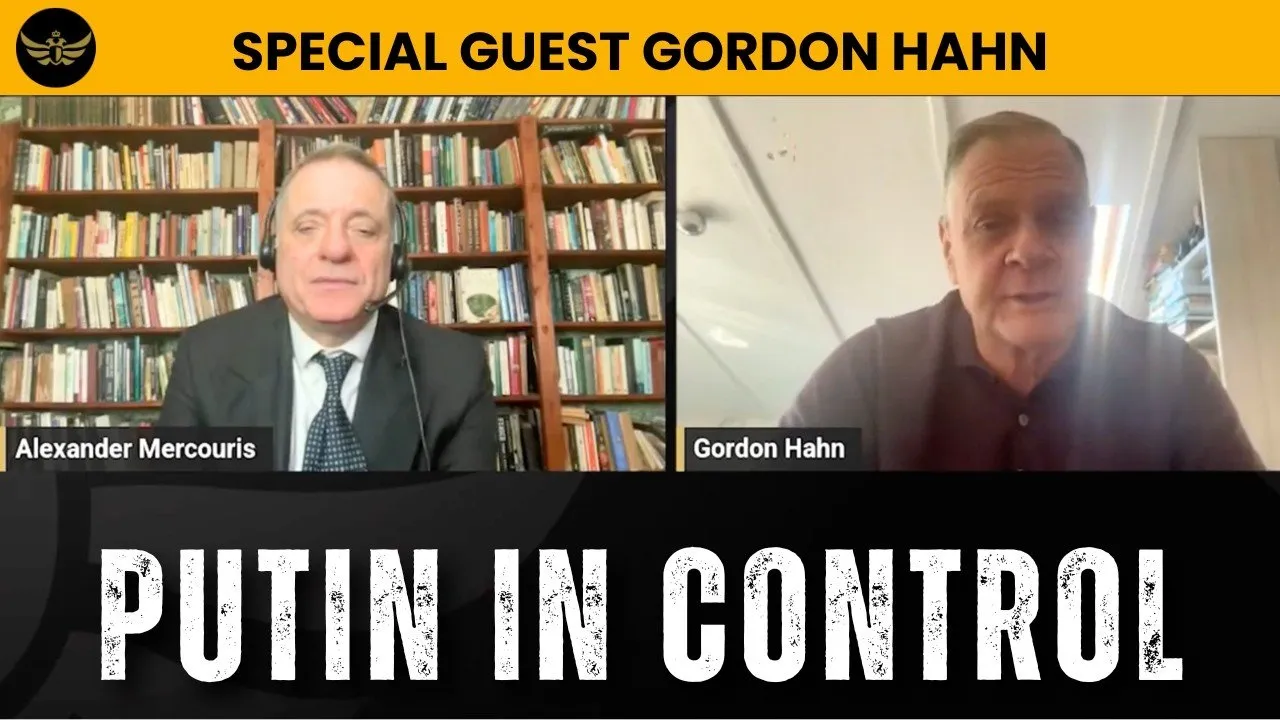
Understanding the current geopolitical landscape in Russia requires moving beyond surface-level headlines. While Western media outlets often speculate about internal instability, a closer examination of the Kremlin’s domestic position and its strategic approach to the conflict in Ukraine reveals a vastly different reality. Gordon Hahn, a recognized expert on Russian politics and security, suggests that Vladimir Putin maintains a firm grip on power, supported by a political system designed to consolidate rather than fracture during times of external pressure.
Key Takeaways
- Political Stability: There is no credible evidence of a coup or a pre-crisis situation within the Russian elite; the government remains unified despite ongoing war-time tensions.
- Strategic Patience: The Russian military's progress is driven by a calculated policy of "aggressive attrition" rather than incompetence, prioritizing the destruction of Ukrainian military capacity over rapid territorial expansion.
- Public Sentiment: Putin’s approval ratings remain consistently high, reflecting a general consensus within Russian society that supports his balanced approach to both domestic and foreign policy.
- The Cultural Factor: Western analysts often fail to grasp the conflict because they ignore deep-seated Russian historical, cultural, and security anxieties regarding Western interference.
- Need for Diplomacy: The current trajectory risks a broader geopolitical disaster; a new security architecture for Europe is essential, though current American political culture remains resistant to such negotiations.
The Myth of the Impending Coup
Speculation regarding a "pre-coup" environment in Moscow is largely inaccurate and ignores the functional reality of the Russian state. While disagreements exist—particularly among the hardline, patriotic wing of the political spectrum—these represent typical internal policy debates rather than a genuine opposition movement. There are no defections from the elite, and no evidence of coordinated efforts to remove Putin from power.
"My sense is that that's inaccurate. He probably one can say he has political problems. Every leader does... but they're not there's no crisis. Let's put it this way. There's no pre-coup situation." – Gordon Hahn
Furthermore, Russian political culture tends to consolidate ranks during national security crises. Unlike the periods preceding the falls of Khrushchev or Gorbachev, there is no evidence of a split at the highest levels of the Kremlin. Even officials sometimes painted as "discontented" have publicly defended the administration, confirming that the internal power structure remains intact.
Evaluating the Russian Military Strategy
Critics frequently point to the pace of the conflict in Ukraine as evidence of Russian weakness. However, this interpretation ignores the specific tactical goals of the Kremlin. Rather than engaging in mass frontal assaults—which would result in high casualties and potential domestic backlash—Russia has adopted a strategy of aggressive attrition.
The Logic of Attrition
By grinding down Ukraine’s combat capabilities, Russia aims to neutralize the threat with surgical precision. Territorial gains are treated as secondary to the goal of exhausting the enemy's fighting force. This approach allows Putin to balance the demands of the military, the public, and his own desire to avoid a wider, catastrophic war with NATO.
The Role of the "Balancer"
Putin operates as a balancer, navigating the divide between extremist factions within his own society. While some hardliners advocate for a total mobilization and more aggressive strikes on decision-making centers, Putin avoids these escalations to keep the country stable. He recognizes that moving toward a full-scale "war footing" carries inherent risks that could destabilize the very system he aims to defend.
The Cultural Disconnect in Western Analysis
A major failure in Western geopolitical analysis is the tendency to view Russian actions solely through the lens of rational choice theory. This framework often ignores the cultural and historical trauma that informs Russian policy. For Russia, the expansion of Western military blocs is not just a strategic threat; it is viewed as the latest chapter in a long history of foreign invasion and interference.
"Russia has a deep ingrained... fear of western invasion interference in its domestic politics... and it's deeply ingrained because it has a history of going back [to the 17th century]." – Gordon Hahn
This "Russophobia," deeply embedded in Western political culture, prevents policymakers from seeing Russia as a rational actor responding to legitimate security concerns. Because thinkers who acknowledge these realities are often marginalized, there is little room for the kind of nuanced diplomacy required to de-escalate the situation.
The Path Toward Geopolitical Reality
The current lack of a formal security architecture in Europe is akin to leaving a "loose cannon" on a ship. Both the United States and Russia are operating without a reliable framework for communication, significantly increasing the risk of miscalculation. While some observers suggest that a potential American withdrawal from NATO—or a shift in the political landscape—could provide an opening, the current consensus in Washington remains firmly rooted in an outdated perspective that underestimates Russia's resolve and influence.
"The problem is that the West they've painted such a picture of Putin as sort of the Hitler, the Stalin of today that they can't get their grasp around the reality of what Vladimir Putin really is." – Gordon Hahn
Ultimately, the Ukrainian strategy of hoping for a future shift in Western support is a high-stakes gamble that ignores the structural reality of the conflict. Peace, negotiated through a realistic lens that acknowledges the security interests of all parties, remains the only viable way to prevent a long-term geopolitical disaster. Without a fundamental shift in how the West views the Russian state, the cycle of conflict is unlikely to break.
The situation in Russia remains misunderstood by those who prioritize sensationalist narratives over structural analysis. Putin is neither in an unstable position nor is his government on the verge of collapse. As the conflict continues to evolve, it remains critical for international policymakers to look past domestic political theater and engage with the reality of Russia's strategic and cultural imperatives. Only by setting aside the limitations of current political dogmas can the international community hope to address the underlying tensions defining the modern era.