Table of Contents
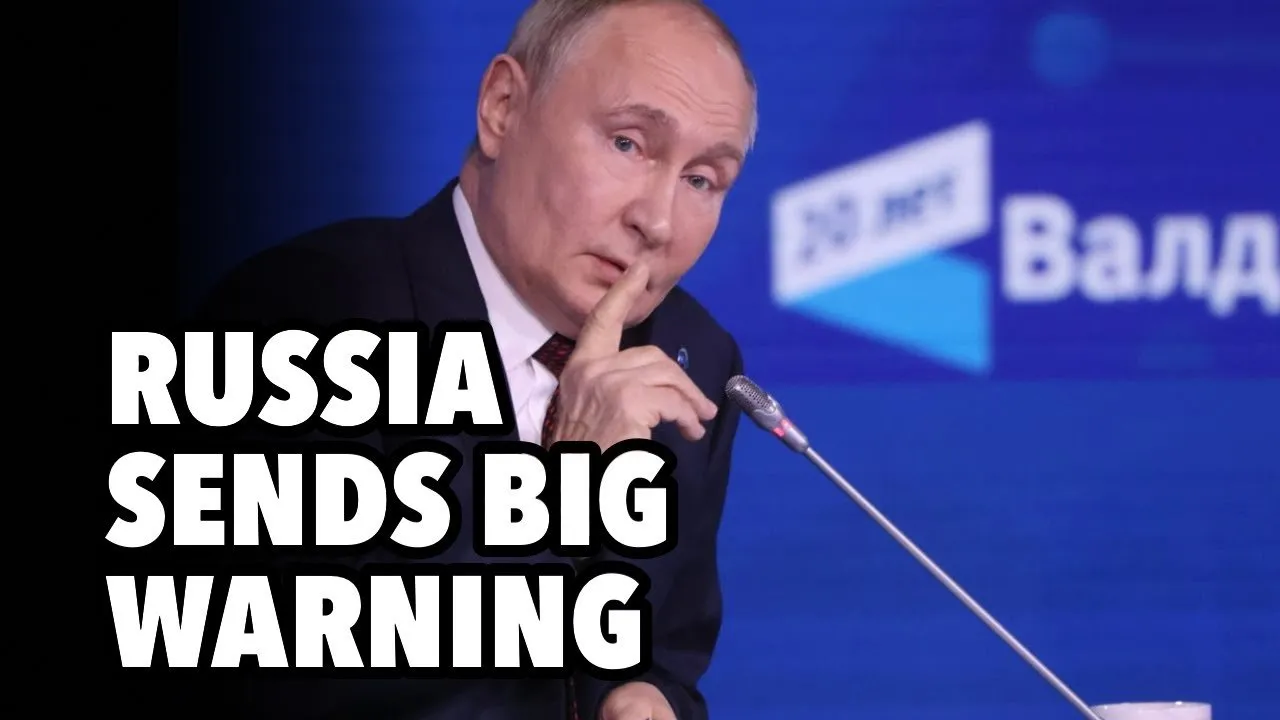
The conflict in Ukraine has entered a volatile new phase with the recent deployment of Russia’s "Oreshnik" missile system against targets in Western Ukraine. This development signals a significant escalation in military capabilities, challenging the assumptions of Western security guarantees. Simultaneously, complex diplomatic maneuvering is taking place on the high seas and within the corridors of Washington, as the incoming Trump administration signals a potential shift in US foreign policy. From devastating strikes on critical energy infrastructure to the quiet release of Russian sailors by the US, the geopolitical chessboard is being rearranged with profound implications for Europe’s economic stability and Ukraine’s survival.
Key Takeaways
- Unprecedented Missile Strike: Russia deployed the "Oreshnik" missile against a major gas storage facility in Lviv, demonstrating the ability to strike deep into Western Ukraine with a weapon that currently has no known Western counter-defense.
- Energy Crisis Amplified: The strike reportedly targeted a facility holding up to 50% of Ukraine’s gas reserves, which also serves as a critical storage hub for European energy supplies, particularly for Germany.
- Maritime De-escalation: In a separate incident involving the tanker "Marinara," the US seized the vessel but rapidly released its Russian crew members, suggesting a desire to avoid direct confrontation with Moscow.
- Diplomatic Divergence: While European leaders continue to push for security guarantees, the Trump administration appears to be distancing itself from binding commitments, relying instead on a more isolationist "America First" approach.
The Strategic Shift: Oreshnik Strikes Western Ukraine
The recent missile strike on Lviv represents a pivotal moment in the conflict, primarily due to the weapon system employed. The Russian Ministry of Defense described the attack as a retaliation for drone strikes on Russian territory, but the strategic implications extend far beyond a simple "tit-for-tat" exchange. The weapon used, identified as the "Oreshnik," is a hypersonic ballistic missile that entered serial production throughout 2025.
Military analysts note that this system covers vast distances in minutes—reaching Western Ukraine from Russian launch sites in roughly 15 minutes. This speed, combined with its maneuvering capabilities, renders current air defense systems, including the Patriot batteries supplied by the West, effectively obsolete against it. The strike serves as a stark message to NATO allies, specifically France and the UK, who have previously suggested basing troops in Western Ukraine under the assumption of safety from the front lines.
Targeting Critical Energy Infrastructure
The target of this strike was not merely military but economic. Evidence suggests the missile hit a massive gas reserve facility near the Polish border. This site is a legacy of the Soviet Union, created in the 1980s as part of the overarching pipeline system designed to pump natural gas to Europe.
Reports indicate that this single facility may contain nearly half of Ukraine’s total gas reserves. If the destruction is as total as preliminary reports suggest, it poses a catastrophic problem for Ukraine’s ability to sustain its energy needs through the winter. Furthermore, the psychological impact of using a nuclear-capable weapon for a conventional strike cannot be overstated; it demonstrates a capacity for devastation that does not require a nuclear warhead to be effective.
The 'Marinara' Incident: A Case Study in Brinkmanship
While missiles fell in Lviv, a tense maritime drama unfolded in the Atlantic involving a tanker known as the "Marinara" (formerly "Bella One"). This incident offers a rare glimpse into the current state of US-Russia crisis management. The vessel, accused by the US of smuggling oil and having ties to Iranian networks, attempted to evade seizure by re-registering in the Russian port of Sochi and hoisting the Russian flag.
The US Coast Guard, aided by British forces, eventually seized the ship off the coast of Scotland. However, the aftermath of this seizure reveals a cautious approach from Washington. Despite the ship’s questionable status—crewed largely by Ukrainians and Georgians, with only two Russian nationals—Moscow signaled that seizing a Russian-flagged vessel crossed a red line.
Diplomatic Signals and Rapid Release
In a surprising turn of events, the United States released the two Russian crew members almost immediately. This rapid de-escalation suggests that the US administration is keen to avoid providing Russia with a pretext for wider maritime conflict.
Some observers argue that the timing of the Oreshnik strike and the release of the sailors is not coincidental. The devastating display of military power in Lviv may have served as the "icing on the cake," expediting the American decision to release the Russian nationals and avoid a direct confrontation over the tanker. This pragmatic retreat indicates that, despite harsh rhetoric, there remain back-channel mechanisms to prevent spiraling escalation between the two nuclear superpowers.
Europe’s Economic Vulnerability and the "Dependent Submission"
The strike on the Lviv gas facility has exposed the fragility of Europe's energy security. This storage site does not merely serve Ukraine; it is integrated into the European energy grid, acting as a reserve for countries like Germany. With gas storage levels in Europe already running low due to colder winter temperatures, the potential loss of this reserve capacity is alarming.
If 30% to 35% of the gas intended for European markets was stored in the now-damaged facility, Europe faces the prospect of renewed energy price spikes. This dependency forces European nations to rely even more heavily on Liquefied Natural Gas (LNG) imports from the United States and Qatar.
The Inflationary Trap
Economically, Ukraine faces a paradox. The European Union has pledged billions in aid, yet the country’s industrial base has been systematically dismantled by relentless infrastructure attacks. When massive financial injections enter an economy with no production capacity and collapsed supply chains, the inevitable result is hyperinflation.
With power grids failing and industrial manufacturing all but impossible, the funds provided by the West have nowhere to go within the real economy. This dynamic suggests that much of the financial aid may essentially wash back out of the country or fuel a price spiral that further devastates the civilian population.
The Trump Factor and the Erosion of International Norms
Looming over these military and economic crises is the ambiguity of US foreign policy under Donald Trump. Recent statements suggest a move away from binding international frameworks toward a worldview centered on personal leverage and morality.
"There is one thing, my own morality, my own mind. It's the only thing that can stop me. I don't need international law." — Donald Trump, via The New York Times
This "conscience-based" foreign policy creates a precarious environment for US allies and adversaries alike. For the "Global South" and nations like Iran, the unreliability of signed treaties versus the whims of a leader introduces extreme volatility. However, it is Europe that finds itself in the most precarious position.
Critics argue that European leadership has maneuvered the continent into a state of "dependent submission." Lacking military autonomy and energy independence, Europe is now entirely reliant on US protection and energy exports. As Russia hardens its stance—rejecting Western peace plans and demanding a return to the realities on the ground—Europe’s inability to act independently has left it more exposed than at any time in recent history.
Conclusion
The convergence of the Oreshnik missile strikes, the calculated de-escalation of the Marinara incident, and the shifting political winds in Washington paint a grim picture for Ukraine and a challenging one for Europe. Russia appears to be systematically dismantling Ukraine's ability to function as a state while simultaneously signaling to the US that it will protect its sovereignty. Meanwhile, Europe finds itself caught in the middle—economically weakened, militarily dependent, and relying on security guarantees that may no longer hold weight in a changing world order.