Table of Contents
The conflict in Ukraine has entered a volatile new phase following reports of a massive drone barrage targeting the Novgorod region. While drone warfare has become a staple of the conflict, this specific incident carries significantly higher stakes: Russian officials allege the target was not military infrastructure, but President Vladimir Putin’s Valdai country residence. The conflicting narratives—Russia claiming an assassination attempt and Ukraine denying involvement—have triggered a diplomatic firestorm that involves incoming US leadership and signals a potential escalation in the theatre of war.
Key Takeaways
- The Allegation: Russia claims to have intercepted roughly 91 drones, with a significant number targeting Putin’s Valdai residence in the Novgorod region.
- Credibility Factors: despite Ukrainian denials, analysts point to recent rhetoric from Kyiv and historical assassination attempts as evidence supporting the Russian account.
- The Trump Connection: Putin reportedly briefed Donald Trump on the attack; analysts argue the lack of US intelligence rebuttal suggests the Russian data is accurate.
- Strategic Shift: Moscow has signaled a move away from previous negotiation frameworks (like "Istanbul"), seemingly hardening its stance toward regime change in Kyiv.
Anatomy of the Strike: Conflicting Narratives
The incident centers on a massive wave of aerial drones launched between late November 28th and the morning of the 29th. According to Russian Foreign Minister Sergey Lavrov and the Ministry of Defense, approximately 91 drones were tracked heading toward the Novgorod region. While there was a minor discrepancy in the exact timing and numbers reported by different Russian agencies—varying slightly between 89 and 91—the trajectory was the critical detail.
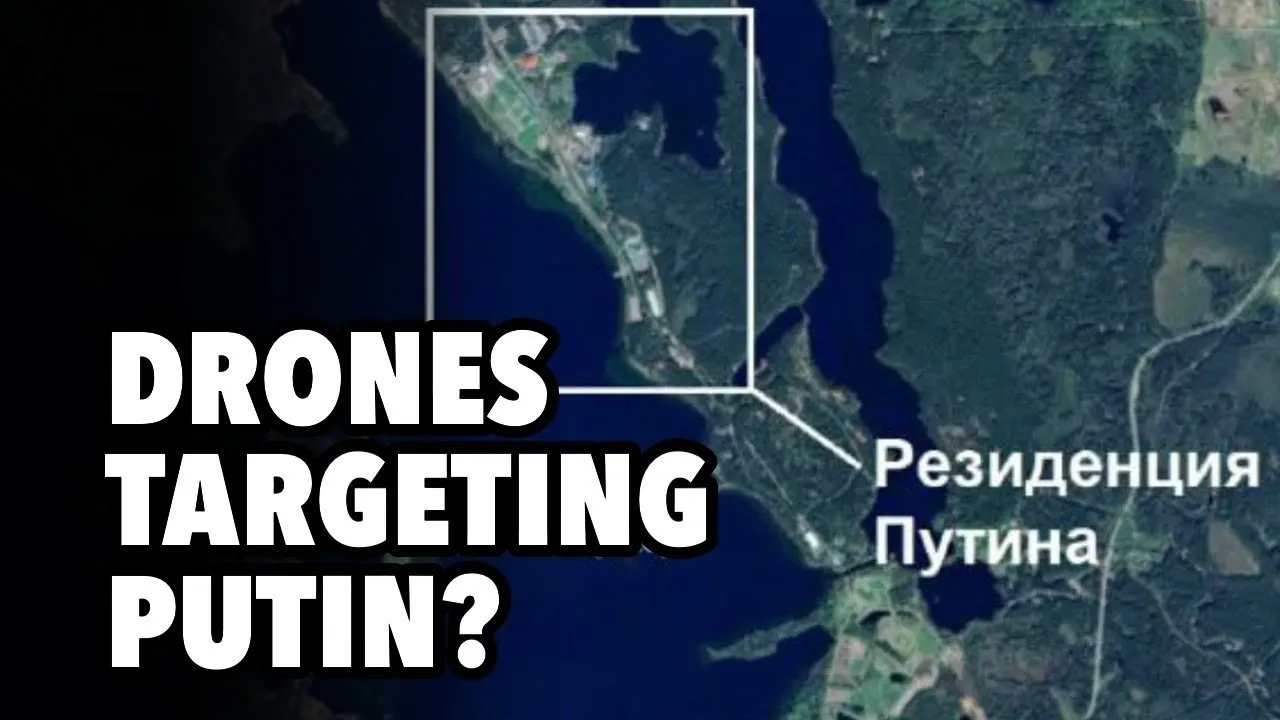
The target was identified as the Valdai residence, a location widely reported by Western media, including The Daily Telegraph, as a primary base of operations for the Russian President. While the Russian Ministry of Defense stated that all drones were neutralized with no casualties, the political fallout was immediate.
Ukrainian President Volodymyr Zelensky denied the accusations, labeling the report a "Russian false flag" operation designed to justify further aggression. However, geopolitical analysts argue that the "false flag" theory contradicts Russia's historical and psychological governance style.
"The concept of provocation tactics... is regarded with deep suspicion and even abhorrence within the Russian security services. It doesn't seem like the sort of thing the Russians would make up."
Historically, the Russian state views attacks on leadership—reminiscent of the assassinations of Alexander II or the attempt on Lenin—as sources of profound instability. Fabricating an attempt on the President’s life would arguably project weakness rather than strength to the domestic audience.
The Case for Ukrainian Involvement
Despite official denials from Kyiv, a pattern of behavior and recent rhetoric suggests a plausible motive and capability for such a strike. The context of a "dirty war"—involving assassinations and sabotage behind conflicting lines—has become increasingly visible.
Rhetorical Escalation
Analysts point to a Christmas address given by President Zelensky just days prior to the incident as a significant indicator of intent. In comments reported by international media, the Ukrainian leader appeared to openly wish for Putin's death.
"Today we all share one dream and we make one wish for all of us. May he perish."
This rhetoric aligns with admissions from Ukrainian intelligence officials. Kyrylo Budanov, the head of Ukraine's intelligence directorate, has previously acknowledged attempts to assassinate the Russian President. furthermore, outlets like Mediazona (in cooperation with the BBC) have tracked the deaths of Russian generals and officials, many of whom were targeted in assassination operations, confirming that decapitation strikes are a standard part of Ukraine's current operational playbook.
Western Intelligence and Complicity
A critical question regarding the strike is the role of Western technology. Long-range drone strikes deep into Russian territory typically require sophisticated satellite guidance and intelligence, often provided by NATO partners. While it is unlikely that President-elect Donald Trump was aware of or condoned such an attack—having recently survived assassination attempts himself—analysts speculate that elements within the US or UK intelligence communities may have facilitated the strike to disrupt potential peace negotiations.
The Trump-Putin Dialogue and Satellite Verification
Following the incident, Vladimir Putin reportedly discussed the strike directly with Donald Trump. The reaction from the President-elect was described as one of shock and anger. This interaction provides a unique litmus test for the veracity of the Russian claims.
The United States maintains the world's most sophisticated satellite surveillance network. If the Russian claim of a drone swarm heading toward Valdai were a fabrication, the US intelligence community would possess the data to debunk it immediately. The silence from Washington regarding the fact of the drone launches is viewed by many observers as a tacit admission that the event occurred as Moscow described.
If the US had evidence that Putin was lying to Trump, leaking that data would be a powerful diplomatic tool. The absence of such a rebuttal suggests the drones were indeed real and their trajectory was verified by Western monitoring systems.
Diplomatic Consequences: The End of "Istanbul"
The primary casualty of this drone strike appears to be the diplomatic framework for ending the war. For months, discussions revolved around a return to the "Istanbul" agreements or updated versions thereof, which focused on neutrality and territorial concessions. However, this attack has likely hardened Moscow's position irreversibly.
Russian officials have stated that the response to the attack will be "non-diplomatic." This signals two major shifts:
- Military Retaliation: Expect intensified strikes on "decision-making centers" in Kyiv. With the recent deployment of new hypersonic capabilities (such as the Oreshnik missile) and the degradation of Ukrainian air defenses, Russia may target the SBU (Security Service of Ukraine) or Ministry of Defense headquarters directly.
- Hardened Negotiation Terms: The window for a negotiated settlement based on previous frontlines has closed. Russia is now likely to demand permanent buffer zones in regions like Kharkiv and Dnipropetrovsk to secure its territory from short-range attacks.
The Future of the Zelensky Regime
Perhaps the most significant long-term implication is Russia's stance on Volodymyr Zelensky himself. Previously, Putin had reportedly issued orders against targeting the Ukrainian President, viewing him as a convenient adversary whose erratic decisions and friction with Western partners actually benefited Russia's military objectives.
However, an assassination attempt on the Russian head of state changes this calculus. While Russia may not immediately attempt to kill Zelensky—preferring to keep a compromised leader in charge during active hostilities—his political survival in a post-war scenario is now zero.
Moscow is signaling that any future peace deal will require total regime change in Kyiv. The Russian government views the current Ukrainian leadership not merely as enemies, but as fundamentally incapable of upholding a treaty. As the conflict grinds on, the Russian objective has shifted from territorial security to the complete removal of the current political architecture in Ukraine.
Conclusion
The alleged drone strike on the Valdai residence serves as a dangerous inflection point. It was likely intended to sabotage nascent back-channel talks between Moscow and the incoming Trump administration. While it may have succeeded in raising tensions, it has also backfired by solidifying Russian resolve to pursue a total military victory rather than a negotiated compromise. As the "dirty war" escalates, the path to de-escalation has become significantly narrower and more perilous.