Table of Contents
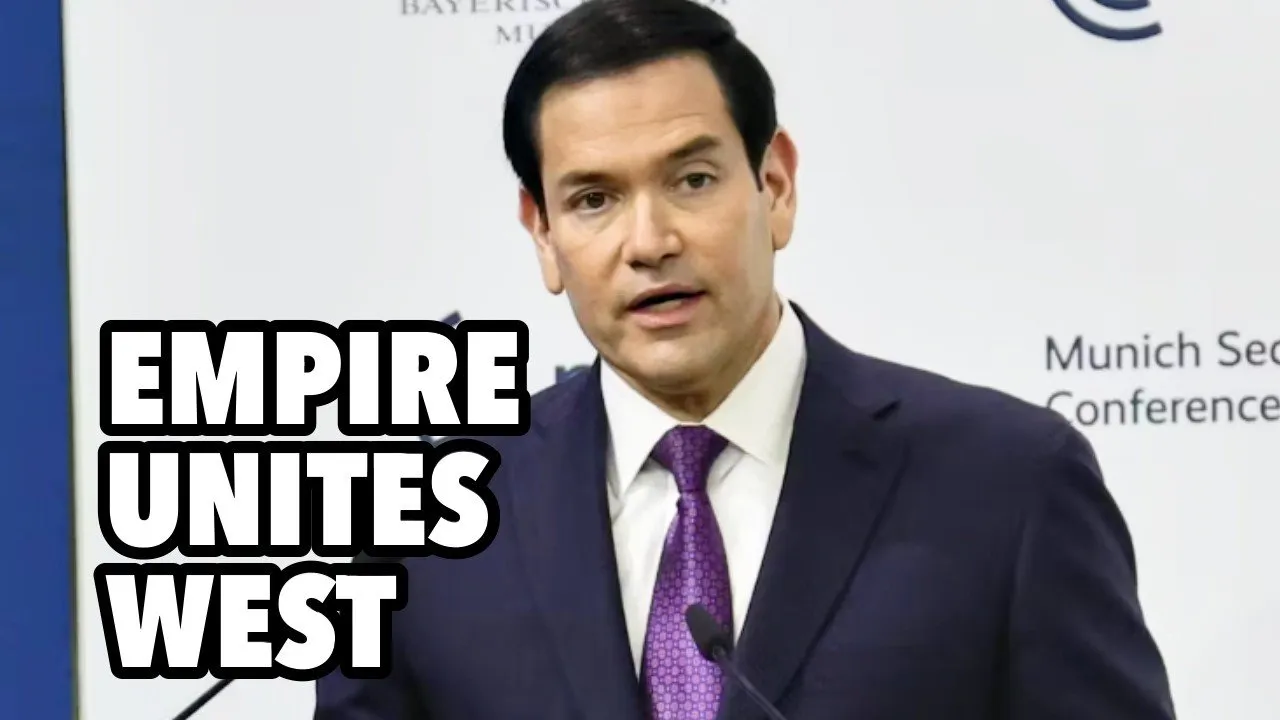
The recent Munich Security Conference marked a distinctive shift in transatlantic relations, highlighted by a polarizing yet celebrated speech from Marco Rubio. To the casual observer, the standing ovation Rubio received suggests a unified Western front. However, a deeper analysis reveals a complex dynamic of scolding, submission, and a fundamental transformation in how American power is projected. The conference exposed the friction between the traditional European desire for a "moral" cover for geopolitics and the emerging American strategy of "naked imperialism."
Key Takeaways
- The Shift to Unapologetic Power: Marco Rubio’s address is described by analysts as one of the most overtly imperialistic speeches in modern American history, stripping away the "liberal" sugarcoating of past administrations.
- Europe’s Demotion to Vassal Status: The rhetoric implies that European nations are no longer viewed as equal partners but as "warriors" or subordinates expected to secure the American imperial periphery.
- Style Over Substance: While European elites are ideologically aligned with American hegemony, they prefer the "Neoliberal" packaging of democracy and human rights over the "Neocon" reality of raw power projection.
- The Russia Reality Gap: The conference was characterized by a psychological "intoxication" regarding war with Russia, with leaders affirming Ukraine's victory despite contradictory economic and military realities on the ground.
The Return of Naked Imperialism
The defining feature of the Munich Security Conference was the abandonment of the diplomatic niceties that usually characterize such high-level summits. Analysts argue that Rubio’s speech signaled a departure from the "Globalist" or "Neoliberal" rhetoric of the past few decades. Instead of framing Western interventionism as a mission to spread democracy or protect human rights, the message was interpreted as a direct call for the re-establishment of empire for its own sake.
This approach harkens back to a pre-World War I era, reminiscent of the Theodore Roosevelt period, where power was justified by national strength rather than moral superiority. The speech suggested that the West has been in decline, and the only solution is an aggressive consolidation of power behind the United States. In this worldview, concepts like "liberalism" are tools that have served their purpose and can now be discarded in favor of economic coercion and military dominance.
"This was the most nakedly imperialistic speech that an American Secretary of State has given since... the foundation of the republic."
The speech effectively erased the distinction between "The West" and "The American Empire." Rubio laid out a hierarchy where the United States sits at the imperial center, while European nations are expected to act as loyal subordinates—holding the line in conflicts that serve American interests, even if those conflicts do not directly benefit Europe.
The Clash of Styles: Neocons vs. Neoliberals
Despite the applause, there was palpable tension in the room. This stems from the fundamental difference between the "Neoconservative" approach represented by Rubio (and historically by figures like Dick Cheney) and the "Neoliberal" approach favored by European leaders and the Obama/Biden administration. Both factions ultimately strive for the same goal: global hegemony and control over resources. However, their methods of packaging this dominance differ radically.
The Moral Cover
European leaders, described as Neoliberals, rely heavily on the veneer of morality. They prefer to frame geopolitical dominance through the lens of humanitarian intervention, green energy, and the defense of democracy. This "soft power" narrative allows European nations to view themselves as morally superior partners in a global coalition.
The Honest Predator
Conversely, the approach taken by Rubio is viewed as "honest" but predatory. It strips away the moral justifications and presents geopolitical actions as matters of naked self-interest. This honesty unsettles European elites, not because they disagree with the objective of ruling the world, but because it removes the disguise that makes the project palatable to their domestic populations.
"The Europeans were very upset with the fact that Rubio was saying it so honestly, where they like to hide their empire through the cover of morality."
For European leaders like Kaja Kallas, this transition is difficult. During the conference, exchanges highlighted a desperate need for validation from the U.S., with European representatives essentially reminding American officials that Europe is "dying" for American interests and pleading for acknowledgement of their contribution to the superpower's status.
Europe: Partners or Janissaries?
The dynamic at Munich clarified Europe’s evolving role within the Atlantic alliance. The rhetoric suggests a move away from the "honored passenger" status cultivated during the Obama years toward a relationship where Europeans are expected to be "warriors" for the empire. This parallels the historical role of Janissaries—formidable fighters who were nonetheless subordinates to the Sultan.
This subordination creates a strategic dilemma for Europe. The American-centric project focuses on expanding power globally—confronting China and securing resources—while treating specific European security concerns, such as the intricacies of the Ukraine conflict, as secondary. The message received was that the U.S. might not prioritize European issues unless they align strictly with American imperial expansion.
This creates anxiety among European leadership. They desire the benefits of American power to settle their continental disputes but are finding that the "Master" is uninterested in the demands of the "servant."
The Delusion of Affirmation
Beyond the structural changes in the alliance, the conference was dominated by a singular focus: war with Russia. Observers noted a psychological atmosphere similar to the "intoxication" of 2022, but with a darker, more nervous undertone. In 2022, there was genuine euphoria and an expectation of Russia's immediate economic collapse. In 2024, this has been replaced by a ritualistic affirmation.
Leaders repeated phrases like "Russia is losing" and "Ukraine is winning" with the intensity of a mantra, hoping that repetition would manifest reality. This "gaslighting" attempts to override the tangible facts on the ground:
- Massive casualty rates in the Ukraine theater.
- The resilience of the Russian economy.
- The accelerating de-industrialization of Germany and Europe.
There is a growing frustration among the elite that the European public is not mobilizing for this conflict. Despite accepting the narrative of Russian aggression, the average European citizen is resistant to enlistment and economic sacrifice. This disconnect has led leaders to rely on figures like Gavin Newsom and Hillary Clinton, who attended the conference to signal to Europe that they simply need to "hold on" until the political tides in Washington turn back toward the Neoliberal status quo.
Conclusion
The Munich Security Conference exposed the fragile state of the Western alliance. While the standing ovation for Rubio suggests unity, it masks a deep-seated anxiety about the future. Europe is being asked to shed its self-image as a moral arbiter and accept a role as a raw instrument of American power. As the U.S. pivots toward a more transactional and aggressive foreign policy, European leaders are left to navigate a reality where they must prepare for war while their industrial base crumbles, hoping that political shifts in the U.S. will eventually restore the comfortable illusions of the past.