Table of Contents
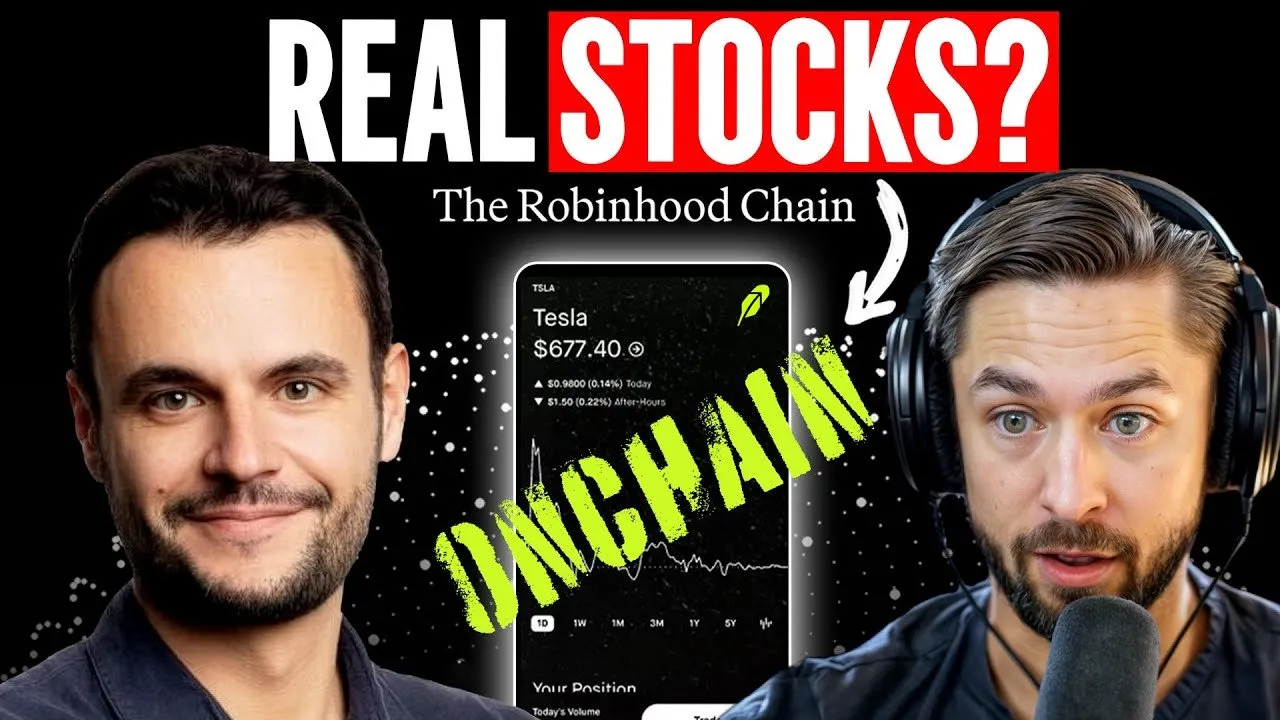
Robinhood has long been synonymous with retail investing, but the company is aggressively pivoting toward becoming a foundational infrastructure player in the crypto economy. In a recent discussion on the Bankless podcast, Robinhood Crypto General Manager Johann Kerbrat unveiled details about the newly announced Robinhood Chain testnet and the company’s broader strategy to tokenize the global financial system. By launching a permissionless Layer 2 on Ethereum, Robinhood is not just building a product; they are attempting to go toe-to-toe with traditional giants like the NYSE and Nasdaq by merging the reliability of traditional finance with the 24/7 efficiency of blockchain technology.
Key Takeaways
- Public Testnet Launch: Robinhood Chain has moved to a public testnet, inviting developers to build decentralized applications (dApps) that could eventually be "certified" for the main Robinhood app.
- Tokenization Strategy: Unlike private ledgers used by traditional exchanges, Robinhood is betting on an open, permissionless ecosystem to host tokenized stocks and Real World Assets (RWAs).
- Solving Liquidity: The platform plans to aggregate liquidity from multiple sources using smart order routing, ensuring tokenized assets maintain tight spreads and reliable pricing.
- Strategic Investments: Robinhood is making calculated investments in infrastructure projects like Talos and Lighter to bolster backend connectivity and decentralized trading capabilities.
- Regulatory Outlook: While stock tokens are currently live in the EU, US access remains paused pending legislative progress, specifically regarding the Clarity Act and stablecoin regulations.
The Robinhood Chain: An Open Financial Ecosystem
The headline announcement centers on the Robinhood Chain testnet. While many financial institutions opt for "walled garden" blockchains, Robinhood is taking a distinctly crypto-native approach. The chain is an Ethereum Layer 2 solution designed to be permissionless, meaning any developer can build on it without explicit authorization. However, Robinhood introduces a hybrid model to bridge the gap between the "wild west" of DeFi and the safety required for their 26 million customers.
The "Certified" Application Model
While the chain is open, not every application will be visible to the average Robinhood user. Kerbrat explained a certification process where specific dApps can be integrated directly into the Robinhood experience.
"It’s not necessarily certified in the sense like I’m going to come in and put a stamp on things... but for us to connect to a developer apps that is on the chain, we will have to make sure that it matches all the requirements that we have around customer protection, around regulation, and all these things."
This creates a powerful incentive structure: developers build on an open chain, but those who meet strict compliance and security standards gain access to Robinhood’s massive distribution network.
Taking on NYSE and Nasdaq with Tokenized Stocks
The ultimate vision for Robinhood Chain extends far beyond simple crypto transfers. The company is actively tokenizing traditional equities, aiming to solve the inefficiencies of the legacy financial system—specifically the lack of 24/7 trading and instant settlement.
A Three-Pronged Approach
The podcast highlighted three distinct strategies currently playing out in the market:
- NYSE: Building a new 24/7 tokenized marketplace with on-chain settlement rails.
- Nasdaq: Maintaining existing markets while allowing the DTCC to optionally deliver purchased tokens post-trade.
- Robinhood: Placing tokenized equities on an open, permissionless Layer 2 network.
Kerbrat emphasizes that Robinhood’s advantage lies in its dual expertise. They possess deep institutional knowledge of how brokerages, options, and clearinghouses work, paired with a native understanding of crypto infrastructure.
Solving the Liquidity Paradox
A major criticism of on-chain real-world assets (RWAs) is the lack of liquidity. Without deep order books, tokenized stocks cannot function as reliable collateral in DeFi. Robinhood plans to solve this via smart order routing—the same technology they use to fetch the best price for crypto trades. By connecting to multiple market makers and exchanges, Robinhood aggregates liquidity to ensure that the tokenized representation of a stock tracks the underlying asset price tightly, regardless of market fragmentation.
Strategic Investments: Talos and Lighter
Robinhood is not relying solely on internal development. The company has made strategic investments to fortify its backend and expand its reach into institutional and decentralized markets.
Talos: The Backend Connectivity Play
Robinhood recently invested in Talos, a premier institutional trading technology provider. This move signals a push into the institutional space, especially following Robinhood’s acquisition of Bitstamp. Talos allows Robinhood to connect with a wider net of liquidity providers and exchanges, functioning similarly to how a prime broker operates in traditional finance.
Lighter: Betting on Decentralized Perps
Kerbrat also discussed their investment in Lighter, a decentralized perpetuals exchange utilizing Zero-Knowledge (ZK) technology. Despite offering their own centralized trading products, investing in decentralized alternatives aligns with their "grow the pie" philosophy.
"We should be more focused on growing the pie in general. And if you think about the amount of people trading perps, it's still a very small fraction of people... If volume is going to Lighter, well, good. We invested in it."
The Regulatory Hurdle: Why the US Must Wait
Currently, Robinhood’s tokenized stock offering is live in the European Union, featuring over 2,000 assets. However, US customers are excluded due to the current regulatory environment. Kerbrat highlighted the importance of the Clarity Act and ongoing discussions in D.C. regarding the classification of tokenized securities. The uncertainty surrounding whether a tokenized stock is a new security or simply a new format for an existing security continues to stall innovation within American borders. Furthermore, the lack of clarity on stablecoins hinders institutional adoption. Kerbrat argues that for stablecoins to function as a true banking rail, regulations must clarify how yield and interest can be passed to holders without triggering securities violations.
The Robinhood Wallet and Sovereignty
Bridging the gap between their centralized exchange and the new chain is the Robinhood Wallet. This self-custody solution is designed for power users who want control over their private keys but desire the polished UX Robinhood is famous for. The wallet serves as the primary interface for the Robinhood Chain, allowing users to interact with tokenized assets and DeFi protocols directly. It represents a "graduation" path for customers: users can start on the custodial app and, as they become more crypto-native, migrate to the self-custody wallet without leaving the Robinhood ecosystem.
Conclusion
Robinhood is positioning itself for a 10 to 20-year horizon where the lines between traditional finance and crypto completely dissolve. By building a permissionless chain, solving liquidity fragmentation, and pushing for regulatory clarity, they are laying the rails for a future where buying a house, trading a stock, or swapping a memecoin all happen on the same network, 24/7. As the testnet opens to the public, the focus now shifts to the developers. The success of the Robinhood Chain will depend on whether builders can create applications that compel the average retail investor to take their first step on-chain.