Table of Contents
In the heart of the American Midwest, a quiet transformation is unfolding—one that critics argue is hollowing out the cultural and economic foundations of rural life. While typical political discourse centers on tax rates and regulatory tweaks, a deeper conversation is emerging about the systemic health of the land and the people who tend it. This shift moves beyond partisan talking points to address a fundamental question: What does it mean to preserve a heritage when the ground beneath your feet is being treated as a global asset class?
Key Takeaways
- Unprecedented Health Trends: Iowa currently faces the fastest-rising rate of new cancers in the history of human civilization, particularly within rural communities.
- Agricultural Monopolies: The consolidation of the seed and chemical industries into just three major players has created a "tax" on productivity, with Iowa farmers often paying significantly more for the same inputs than their international counterparts.
- The Financialization of Land: Roughly 25% of Iowa’s farmland is now owned by out-of-state investors and funds, signaling a shift from a community-based ownership model to a tenant-based system managed by opaque LLCs.
- The "Own Nothing" Agenda: Institutional buyers like Blackstone are expanding into single-family homes and farmland, mirroring a broader global trend toward the elimination of private property ownership for the middle class.
- Cultural Restoration: True political reform may require moving beyond "market fundamentalism" toward a philosophy that prioritizes community stability and the preservation of generational heritage.
The Health Crisis in the Heartland
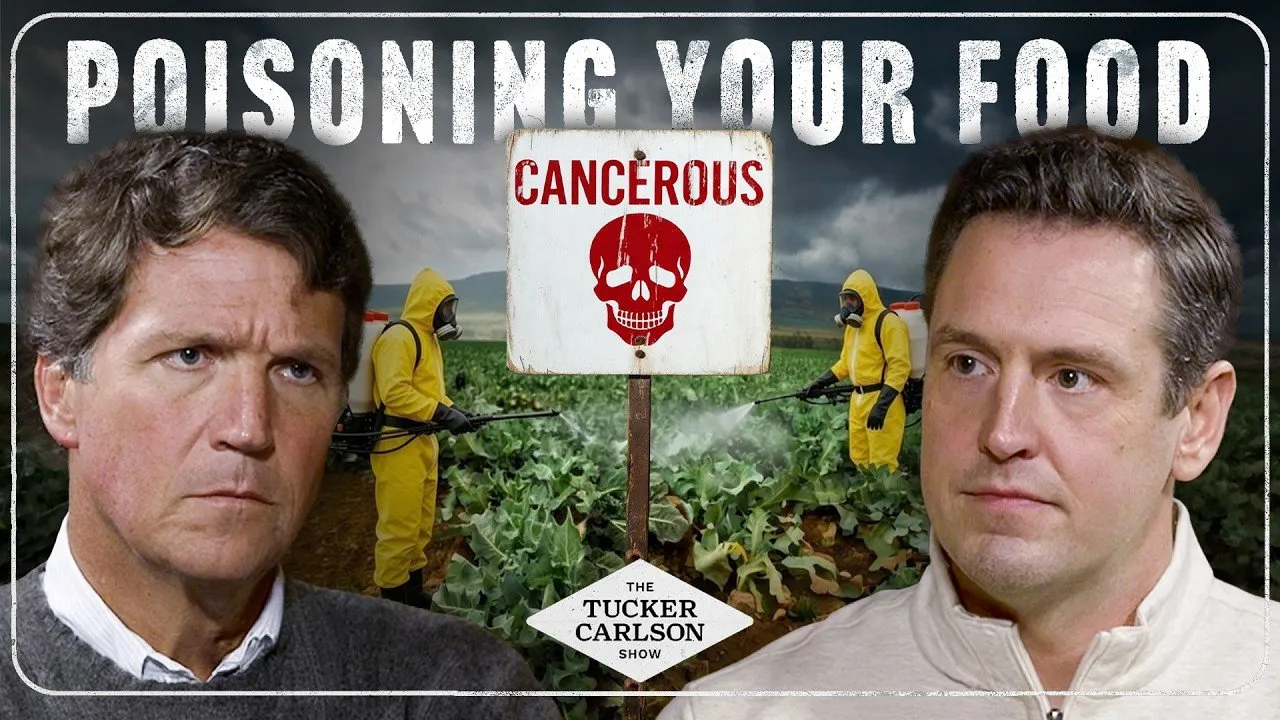
Perhaps the most alarming trend in rural America is the sudden and sharp rise in specific health pathologies. While urban centers often receive the bulk of public health attention, the data emerging from Iowa suggests a crisis of historic proportions. In several rural counties, the lifetime risk of a cancer diagnosis has reached a staggering one in two. This trend persists despite Iowa having significantly lower smoking rates compared to states like Nevada, which maintains lower cancer rates despite higher tobacco use.
The Chemicals in the Soil
The correlation between intensive industrial agriculture and these health outcomes has led many to scrutinize the chemicals used in modern farming. Two substances, in particular, have come under fire: glyphosate (the active ingredient in Roundup) and Paraquat. While glyphosate is ubiquitous, Paraquat is notably more toxic. Exposure to this herbicide is known to double the risk of Parkinson’s disease, and it is frequently used in lab settings specifically to induce Parkinson’s in test subjects.
"We have the fastest rate of new cancer of anywhere in the history of human civilization."
The issue, advocates argue, is not merely the existence of these chemicals but the "corporate capture" of regulatory agencies like the EPA. Internal documents from major chemical companies—often referred to as the "Monsanto Papers"—reveal a history of ghostwriting safety studies and influencing regulators to suppress independent research. This lack of transparency prevents farmers from making informed decisions about the risks they take to maintain their yields.
The Death of the Independent Farmer
The economic landscape of farming has shifted from a competitive marketplace to a series of unchecked monopolies. In previous generations, Iowa was home to hundreds of independent seed and input companies. Today, the market is dominated by three giants: Bayer, Corteva, and Syngenta. These companies control 85% of the market, allowing them to implement "regional-based pricing" that extracts maximum profit from the most productive land.
Exploitation and Input Costs
Evidence suggests that Iowa farmers are being charged roughly $150 more per acre for the same seed technology used by farmers in Brazil. Because these conglomerates operate as an oligopoly, the price of inputs—seeds, fertilizers, and chemicals—often rises in lockstep with commodity prices. This ensures that even when crop prices are high, the surplus value is captured by the corporation rather than the producer. As a result, many family farms are operating at a net loss, surviving only through debt and government subsidies.
The Financialization of the American Prairie
Farmland was traditionally viewed as an inheritance—a stable foundation for families to build churches, schools, and local economies. However, in the last decade, land has been rebranded as an "asset class" for global investors. This shift has driven land prices to levels that are no longer supported by the agricultural output of the soil, reaching as high as $32,000 per acre in some regions.
LLCs and the Loss of Transparency
One of the primary drivers of this trend is the lack of "human-level disclosure" in land ownership. Large tracts of land are frequently purchased by LLCs, which are in turn owned by trusts or private equity firms. This anonymity makes it impossible for residents to know who their neighbors are or to hold landowners accountable for the stewardship of the community. When land is owned by a fund in New York or a state-owned enterprise in China, the long-term health of the local Main Street becomes a secondary concern to quarterly dividends.
"Our land isn't an asset class. It's actually was meant as the inheritance for the sons and daughters."
Beyond Market Fundamentalism
For decades, American politics has been dominated by a "religion of economic thinking," often referred to as market fundamentalism. This ideology suggests that the market should be the final arbiter of all social and cultural decisions. However, critics argue that this has led to "corporatism" or "oligarchy" rather than true free-market capitalism. When the market prioritizes cheap labor and mobile capital over national interest, the result is the "Rust Belt" phenomenon: the outsourcing of productivity and the importation of social decay.
Restoring Public Virtue
The Founders of the American Republic did not view the nation as a mere economic zone. Figures like John Adams argued that the survival of a free state depended on the "private virtue" of its citizens. This perspective suggests that the government has a legitimate role in protecting the moral and physical health of its people, even if it requires intervening in the "unrestrained" market.
- Tariffs and Protectionism: Re-evaluating trade policies to ensure that national security and domestic productivity are prioritized over cheap consumer goods.
- Anti-Trust Enforcement: Using the Department of Justice to break up monopolies that stifle competition and exploit producers.
- Disincentivizing Prospecting: Implementing tax structures that favor owner-operators over out-of-state investment funds.
The Cultural Significance of Creation
At its core, the struggle for the American heartland is a spiritual one. The shift toward a digital, outsourced, and automated life has stripped many of the "joy of creation." Whether it is farming, woodworking, or writing, the act of making something tangible is a uniquely human endeavor that provides purpose and stability. The "own nothing and be happy" vision promoted by globalist organizations like the World Economic Forum represents a direct threat to this human need for agency and ownership.
"Public virtue is dependent on private virtue... the only foundation of a republic."
The restoration of rural life requires more than just better policy; it requires a commitment to "remembering" where we came from. This involves protecting the right to speak, the right to own land, and the right to raise a family in a healthy environment. By refocusing on the community rather than the global spreadsheet, there is a path toward a "rich agrarian society" that honors its ancestors and provides a future for its children.
Conclusion
The challenges facing Iowa and the broader Midwest are symptoms of a systemic disregard for the value of local culture and generational health. From the rise in rural cancer rates to the corporate consolidation of farmland, the current trajectory is one of extraction rather than stewardship. Reversing this trend requires a bold departure from status-quo politics, prioritizing the "divinity of humanity" over the efficiency of the machine. Only by reclaiming the land and the culture can the American people ensure that they remain owners of their destiny, rather than tenants in their own country.