Table of Contents
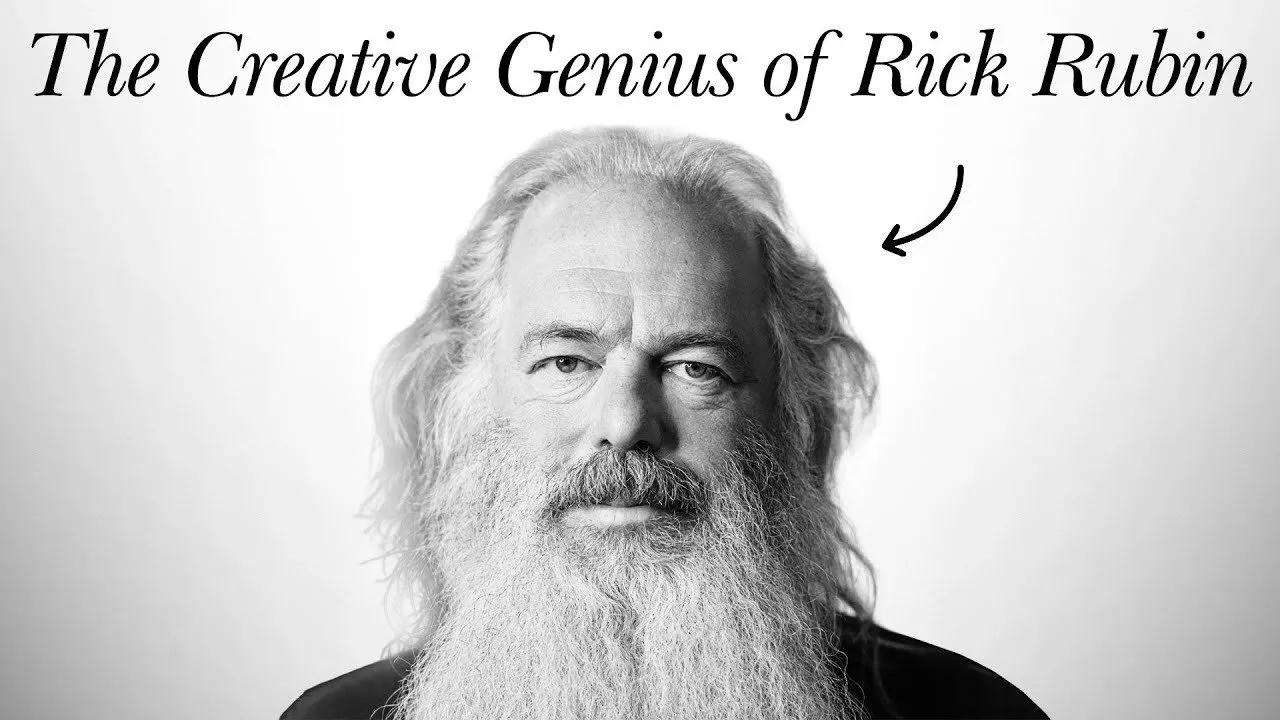
Rick Rubin is a singular figure in the music industry. Having started his career at 18 and remaining relevant into his 60s, he resists easy categorization. He is not just a producer; he is a professional listener and a custodian of the creative spark. His book, The Creative Act: A Way of Being, is not merely a manual on how to produce art. As Rubin himself notes, "I set out to write a book about what to do to make a great work of art. Instead, it revealed itself to be a book on how to be."
The philosophy within the book suggests that creativity is not a rare lightning strike reserved for the chosen few, but a habit of existence. It is about how one views the world, processes information, and handles the inevitable self-doubt that accompanies any meaningful pursuit. By analyzing Rubin’s thoughts—alongside insights from John Wooden, Steve Jobs, and other visionaries—we can uncover the mindset required to sustain high-level creative output over a lifetime.
Key Takeaways
- How you do anything is how you do everything: Excellence is a habit built on small, seemingly insignificant details, from tying your shoes to composing a symphony.
- Create a vacuum for ideas: Creativity requires space. You must disconnect from the noise of daily life to receive the signals and ideas the universe is broadcasting.
- Curate your inputs relentlessly: Submerge yourself in classic literature and masterpieces to calibrate your internal meter for greatness.
- Distinguish between doubting the work and doubting yourself: Doubting the quality of your output can lead to improvement; doubting your worthiness leads to paralysis.
- Create for an audience of one: The only viable metric for success is whether you have made something you love. Greatness cannot be engineered for a market; it must be personal.
The Discipline of Details and the Art of Being
The foundation of creative excellence often lies in the mundane. John Wooden, arguably the most successful coach in college basketball history, did not begin his first practice by teaching complex plays or shooting techniques. Instead, he taught his elite athletes how to put on their socks and tie their shoes. He insisted that wrinkles in a sock cause blisters, blisters hamper performance, and poor performance loses games.
Rick Rubin draws a direct parallel between Wooden’s coaching and the creative life. It is easy for an artist or entrepreneur to dismiss small details as irrelevant to the "big picture," but this is a mistake. Rubin argues that creating effective habits down to the smallest detail is what separates the good from the great. The goal is immaculate performance, where the only competition is yourself.
"The way we do anything is the way we do everything. Treat each choice you make, each action you take, each word you speak with skillful care. The goal is to live your life in the service of art."
This philosophy extends beyond the mechanics of the work and into the psychology of the worker. Napoleon famously noted that clever men take advantage of everything and neglect nothing, while the less clever miss everything by neglecting one thing. In the creative act, there are no throwaway moments.
Tuning In: Creating a Vacuum for Inspiration
A recurring theme in Rubin's philosophy is the idea that we do not generate ideas so much as we receive them. Ideas are out in the ether, waiting to be claimed. If you have an idea that excites you and you fail to bring it to life, it is common for that same idea to find its voice through another maker. This is not theft; it is simply that the idea’s time has come.
The Necessity of Empty Space
To pick up on these signals, one must cultivate silence. Modern life is an "overpacked condition," a constant barrage of sensory input that blocks creative reception. Rubin, despite his work ethic, emphasizes the need for time away—walking, swimming, or reading fiction. This downtime is not a lack of productivity; it is the mechanism of reception.
This practice is mirrored by other innovators. Elon Musk and Jim Simons, the founder of Renaissance Technologies, have both utilized sensory deprivation—lying in the dark in total silence—to think. This creates a vacuum, drawing down ideas that the universe is making available.
"The ability to look deeply is the root of creativity. To see past the ordinary and mundane and get to what might otherwise be invisible."
Action produces information. While silence allows for the reception of ideas, only starting the work reveals what needs to happen next. One must balance the passive receptivity of "tuning in" with the active faith of starting before you fully understand the destination.
Curating Inputs and The Internal Meter
If you want to output greatness, you must input greatness. Rubin advises artists to submerge themselves in the canon of great works. This means reading the finest literature, watching cinematic masterpieces, and visiting architectural landmarks rather than doom-scrolling the news.
The objective here is not mimicry. You study great art not to copy it, but to calibrate your internal scale. By exposing yourself to the best history has to offer, you hone your sensitivity. You learn to distinguish "good" from "very good," and "very good" from "great."
The Comparison to History
We have limited bandwidth. Every moment spent consuming mediocre content is a missed opportunity to refine your taste. If you read classic literature every day for a year, your ability to recognize quality in your own writing will be vastly superior to someone who spent that year reading social media headlines.
This curation extends to your social circle. The conversations you have and the people you surround yourself with affect your ability to judge your own work. As Rubin notes, we must carefully curate what we allow in, because these inputs ultimately determine the quality of our outputs.
Navigating Fear, Doubt, and Intuition
Even the most successful artists struggle with insecurity. However, there is a vital distinction to be made between two types of doubt. Doubting the work is healthy; thinking "I don't know if this song is as good as it can be" drives iteration and excellence. Doubting yourself—thinking "I am not capable of writing a good song"—is destructive. It attacks the nervous system and leads to hopelessness.
The Role of Intuition
In a world of endless data and conflicting advice, intuition is the artist’s most valuable tool. Steve Jobs famously stated that intuition is more powerful than intellect. Rubin echoes this, noting that he has been advised against every major career turn he has taken, yet he succeeded by following his intuition rather than the "rational" advice of others.
"It helps to realize that it's better to follow the universe than those around you."
When friends, family, or business associates offer advice, they are often projecting their own fears or financial interests. The artist must realize that we are often "unreliable narrators" of our own experience. To navigate this, one must trust the gut feeling over the spreadsheet. Logic is a tool for validation, not for discovery.
The Paradox of Patience and Urgency
Creative work requires a difficult balance of contradictory behaviors. On one hand, patience is non-negotiable. There are no shortcuts; you must be willing to read and re-read, to listen and re-listen. Impatience is an argument with reality.
On the other hand, when inspiration strikes, the artist must be ferocious. Rubin and other high-performers like Jeff Bezos advocate for a "step by step, ferociously" approach. When the conduit is open, you must prioritize the work above all else.
This often requires a level of selfishness. Michael Jordan noted that "success is selfish," meaning that the time required to achieve mastery must be taken from somewhere else—often from personal relationships or social obligations. If a song calls in the middle of a dinner, the serious artist answers the call.
The Audience of One
Perhaps the most liberating and controversial aspect of Rubin’s philosophy is his stance on the audience: they come last. The commercial result, the critics, and the desire to "change the world" are all undermining forces in the quest for greatness.
Great art is like building a magnificent home that no one will ever visit. You choose the finest wood and the perfect aesthetics not for the approval of a guest, but because you inhabit the space. You are performing for an audience of one.
When you focus purely on making the best thing you can make—based on your own taste—a ripple effect occurs. Greatness begets greatness. By refusing to compromise your vision for the sake of marketability, you often end up creating something that resonates more deeply with the market than a product engineered to please it.
"And any story beyond 'I want to make the best thing I can make, whatever it is,' are all undermining forces in the quest for greatness."
Conclusion
Rick Rubin’s The Creative Act frames the artistic life not as a career, but as a service. By honing your craft, you are honoring creation itself. The process requires a blend of childlike enthusiasm and clinical discipline—obsessive note-taking, endless repetition, and a willingness to look foolish.
Ultimately, the goal is not to win, but to play. Perfectionism inhibits play, but a commitment to excellence enhances it. By treating every choice with care, trusting your intuition, and remaining a faithful observer of the world, you fulfill your function as an artist. The work is done when you feel it is done, and the reward for great work is simply the opportunity to do more work.