Table of Contents
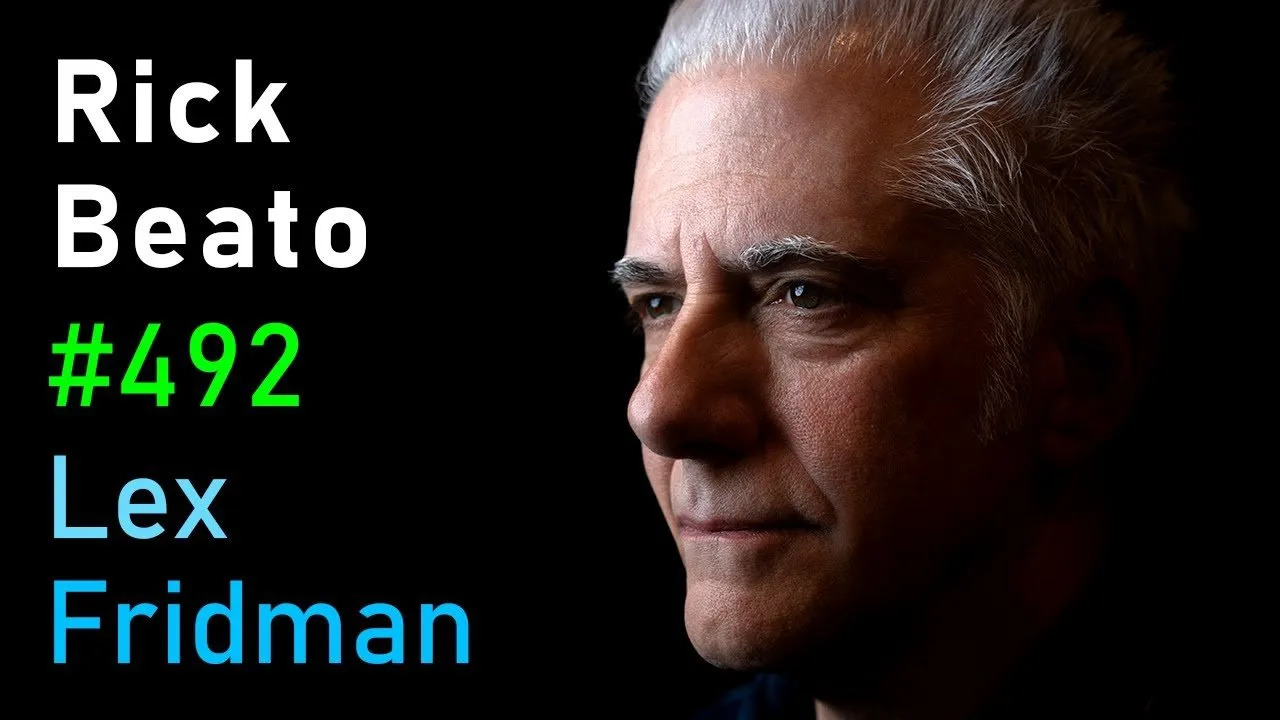
Music is more than just a collection of notes; it is a complex language that shapes our emotional reality. In a wide-ranging conversation on the Lex Fridman Podcast, legendary music educator and producer Rick Beato explored the depths of musical theory, the history of jazz, and the evolving landscape of the digital music industry. From the physical struggle of learning a first chord to the neurological phenomenon of perfect pitch, Beato provides a masterclass in how we perceive, create, and preserve the "soundtrack of our lives."
Key Takeaways
- Musical Fluency: Much like spoken language, musical ability—specifically perfect pitch—is often determined by "high information" exposure during the first nine months of life.
- The Age of Innovation: Evidence suggests a peak in musical creativity before age 30, driven by fluid intelligence, while later works often rely on "crystallized" life experience.
- The Authenticity Gap: While AI can generate technically proficient tracks, it currently lacks the "soul" and intentional dissonance that define human connection to music.
- Production Mastery: Great producers like Rick Rubin or George Martin succeed by fostering an environment where "thought is not the enemy of flow."
The Foundations of Musical Mastery
The journey into music often begins with a single moment of spiritual connection to a sound. For Beato, this was the E minor pentatonic scale found in Jimi Hendrix’s "Hey Joe." Learning the guitar is as much a physical challenge as it is a mental one, requiring "haptic" adjustments that eventually become subconscious. Beginners often struggle with the pain of calluses and the frustration of muting strings, yet these micro-adjustments are the building blocks of professional performance.
The Song-First Approach to Learning
Beato argues that keeping students motivated requires prioritizing songs over dry theory. By learning the open chords in the first position and basic strumming patterns, a student builds an emotional bond with the instrument. Theory should follow inspiration, acting as a way to name the sounds a player has already fallen in love with. This method ensures that the "struggle" of practice leads to a rewarding musical output early in the process.
Physicality and Tone
The distinction between a hobbyist and a legend often lies in the "cleanliness" of their tone. Whether it is David Gilmour’s melodic phrasing or B.B. King’s singular vibrato, tone is a result of physical positioning and equipment choices. Beato notes that even the way a guitarist wears their instrument—high or low—changes the mechanics of their fretting hand, influencing the final sound captured on a record.
The Language of Bebop and Jazz Evolution
Bebop represents one of the most sophisticated languages in music history. Developing in the 1940s as a reaction to the predictable structures of big band swing, bebop introduced angular lines, fast tempos, and intense chromaticism. For Beato, whose father played records by Charlie Parker and Dizzy Gillespie, early exposure to this complexity was vital for developing a sophisticated ear.
"Bebop is one of the hardest styles to improvise in; it is a language you must learn."
The Innovation of Miles Davis
All roads in jazz lead to Miles Davis, a figure Beato identifies as the greatest innovator in the genre's history. Davis’s ability to pivot from the "Birth of the Cool" to modal jazz and eventually fusion demonstrated a relentless drive to move forward. His sessions were famously unrehearsed, a deliberate choice intended to force musicians into a state of "flow" where they had to rely on instinct rather than calculated thought.
The Danger of Live Performance
Great music often feels like it is "toes hanging over the cliff." This sense of risk is what makes jazz and rock feel alive. When a band is willing to let a performance potentially fall apart, they create a tension that draws the listener in. This authenticity is a recurring theme in Beato’s interviews with modern greats like Flea, who brings a fierce, jazz-influenced intensity to the Red Hot Chili Peppers.
The Science of Hearing: Perfect Pitch and Early Acquisition
One of the most famous segments of Beato’s career involved his son, Dylan, demonstrating perfect pitch—the ability to identify any note without a reference tone. Beato posits a theory that every child is born with this ability but begins to lose it around nine months of age as they become "culturally bound listeners."
The Impact of High-Information Music
To foster Dylan’s ability, Beato exposed him to "high information" music—Bach, Keith Jarrett, and complex jazz improvisations—while he was still in the womb and throughout his first year. By engaging the "social brain" and treating music as a primary language, Beato believe Dylan achieved a form of "native music fluency."
Relative Pitch vs. Perfect Pitch
While perfect pitch is rare and often innate, relative pitch is a skill any musician can and should develop. Relative pitch involves identifying the relationship between notes (intervals). Developing this skill allows a musician to "hear" the architecture of a song, making it easier to transcribe solos and understand chord progressions without needing a sheet of music.
The Art of Production and the "Gilmour Effect"
As a producer, Beato has spent decades analyzing what makes a recording iconic. He notes that producers often have a broader perspective than musicians because they work across genres simultaneously. From Rick Rubin’s work with the Beastie Boys to George Martin’s studio experiments with the Beatles, the producer's role is to capture "lightning in a bottle."
Melodic Phrasing and Silence
In his interviews with David Gilmour, Beato explored the concept of the "Gilmour Effect"—the preference for soul and melody over technical speed. Gilmour’s genius lies in his understanding of tempo and the value of silence. His solos are like speaking; there is space between the phrases, allowing the listener to breathe and process the emotion of the notes.
"Thought is the enemy of flow."
The Technicality of Tone
Even the greatest musicians struggle with their own work. Brian May of Queen admitted to Beato that certain "imperfections" in "Bohemian Rhapsody" still bother him decades later. This perfectionism is what drives the exploration of gear, from 1990s digital modeling to vintage tube amplifiers, in a constant search for the "perfect" sound that matches the artist's internal vision.
Defining Greatness: From Metallica to Beethoven
Greatness in music is often a intersection of talent and historical timing. Beato points to Metallica’s 1991 performance in Moscow, where they played to over 1.6 million people as the Soviet Union collapsed, as a pinnacle of musical impact. The energy of that moment transformed a metal concert into a profound cultural event.
The Tragic Genius of Beethoven
Beethoven’s Ninth Symphony remains a miracle of human achievement. Composed while he was profoundly deaf, the work required Beethoven to "hear" the entire orchestration within his mind. This ability to edit and refine a 40-minute masterpiece without external audio feedback is perhaps the ultimate testament to the power of a trained musical brain.
The "27 Club" and the Cost of Creativity
The history of music is inextricably linked to the "27 Club"—the tragic loss of icons like Hendrix, Joplin, and Cobain at age 27. Beato discusses the dopamine rollercoaster of performing for thousands and the subsequent "come down" that often leads to substance abuse. While drugs have historically been used to boost creativity, they have also cut short the lives of those who were redefining the medium.
The Future of Music: AI vs. Human Authenticity
The rise of AI music generators like Suno and Udio has created a state of "freakout" within the industry. While these tools can generate convincing tracks in seconds, Beato identifies a phenomenon he calls "AI slop"—music that sounds technically proficient but lacks the "edge" or intentionality of human creation.
Recognizing the "Artifacts"
Younger listeners, like Beato’s children, can instantly identify AI-generated music by its "ringing" artifacts and lack of authentic vocal reverb. AI struggles with the nuances of human emotion, such as the raspiness of a smoker’s voice or the slight timing imperfections that give a song its "soul."
AI as a Creative Tool
Rather than replacing musicians, Beato sees AI as a potential "idea generator." Songwriters may use it to spark a melody or a lyrical theme, which they then refine and perform themselves. The role of the musician in an AI world becomes one of an "authenticity filter," determining what is worth keeping and what is merely digital noise.
Conclusion
Music remains one of the few universal languages capable of bridging cultural and temporal divides. Whether it is the structured counterpoint of Bach or the raw aggression of a Metallica riff, music provides a necessary outlet for the human condition. As we move into an era of unprecedented technological change, the value of raw, authentic talent only increases. In the end, music is not just a profession or a hobby; it is a fundamental human need that, as Nietzsche famously noted, prevents life from being a "mistake."