Table of Contents
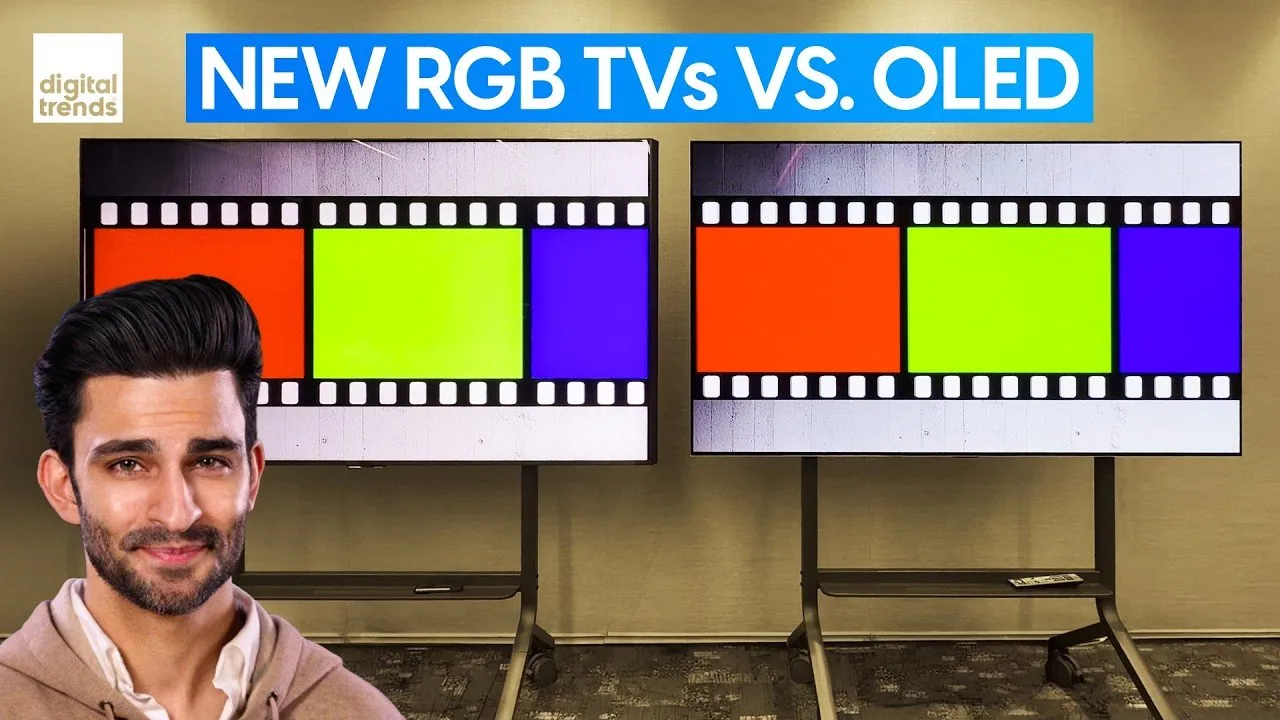
The debate between OLED and the emerging RGB backlighting technology in LCD panels is heating up as television manufacturers seek to push the boundaries of display performance. Recent side-by-side testing conducted at LG’s headquarters reveals that while RGB backlighting offers significant improvements in color saturation, it still faces fundamental challenges compared to the self-emissive nature of OLED technology.
Key Points
- OLED panels feature 8.3 million independently controlled, self-emissive pixels, eliminating the need for a backlight.
- RGB backlighting replaces standard white LEDs with red, green, and blue diodes to improve color gamut, but relies on complex local dimming zones that can lead to color "cross talk."
- Performance gaps remain, as RGB TVs often struggle with light bleed and desaturation when displaying complex, multi-colored scenes.
- Strategic positioning suggests RGB backlighting serves as a viable, cost-effective alternative for consumers seeking high-end performance at larger screen sizes where OLED becomes cost-prohibitive.
The Core Technology Divide
The fundamental difference between these two display types lies in light production. OLED (Organic Light Emitting Diode) technology is self-emissive, meaning every one of the 8.3 million pixels generates its own light and color simultaneously. In contrast, RGB backlighting is an evolution of traditional LCD (Liquid Crystal Display) technology. By utilizing red, green, and blue LEDs behind the liquid crystal layer, these TVs attempt to produce purer white light and more vibrant color palettes, pushing deeper into the BT.2020 color space.
However, the reliance on a backlight system creates a technical bottleneck. Unlike OLED, which provides perfect pixel-level control, LCD-based RGB TVs must manage backlighting zones. When a screen displays high-contrast content—such as a white cross on a red background—the backlight system must choose between brightness and color accuracy, often resulting in a noticeable compromise.
"The backlight system to help these colors be very saturated has changed to red. But when you have backlighting and pixels, when you don't have an equal number, there's compromises. You see something called color cross talk, where the ball has somewhat of a pink tint. It is being affected by the backlighting system." — Scott, Product Marketing Lead at LG.
Addressing Limitations Through Processing
The primary critique of RGB backlighting centers on "halo" effects and color bleeding, where light from one zone spills into adjacent areas. To mitigate these issues, manufacturers are turning to high-powered processors. For instance, LG’s MRGB95 model utilizes the Alpha 11 Gen 3 processor, a chip originally developed for its OLED lineup. By borrowing advanced algorithms from the self-emissive sector, RGB displays can better manage their local dimming zones to simulate the precision of OLED.
Despite these processing advancements, the demonstration highlighted that the physical limitations of backlighting remain. In motion tests, objects moving across the screen on an RGB display exhibited slight shifts in brightness and color as they transitioned between zones, whereas OLED panels maintained perfect consistency and intensity throughout the movement.
Market Implications and Future Outlook
While OLED continues to lead in pure image fidelity and consistency, RGB backlighting represents a critical step forward for LCD panels. As the technology matures, it offers a pragmatic solution for consumers who prioritize large-format displays. At sizes approaching 100 inches, the manufacturing costs associated with OLED panels can become prohibitive for many households.
For the average consumer, the choice between these technologies will likely come down to the balance between budget and performance. RGB backlighting is rapidly closing the gap, providing a high-brightness, high-saturation experience that is "as close to OLED as you can get." Moving forward, industry competition will focus on increasing the number of dimming zones and refining processing power to further reduce the artifacts currently inherent in backlight-dependent displays.


![Trump Market Manipulation Will Trap You! [This Happens Next]](/content/images/size/w1304/format/webp/2026/03/trump-market-manipulation-volatility-warning.jpg)