Table of Contents
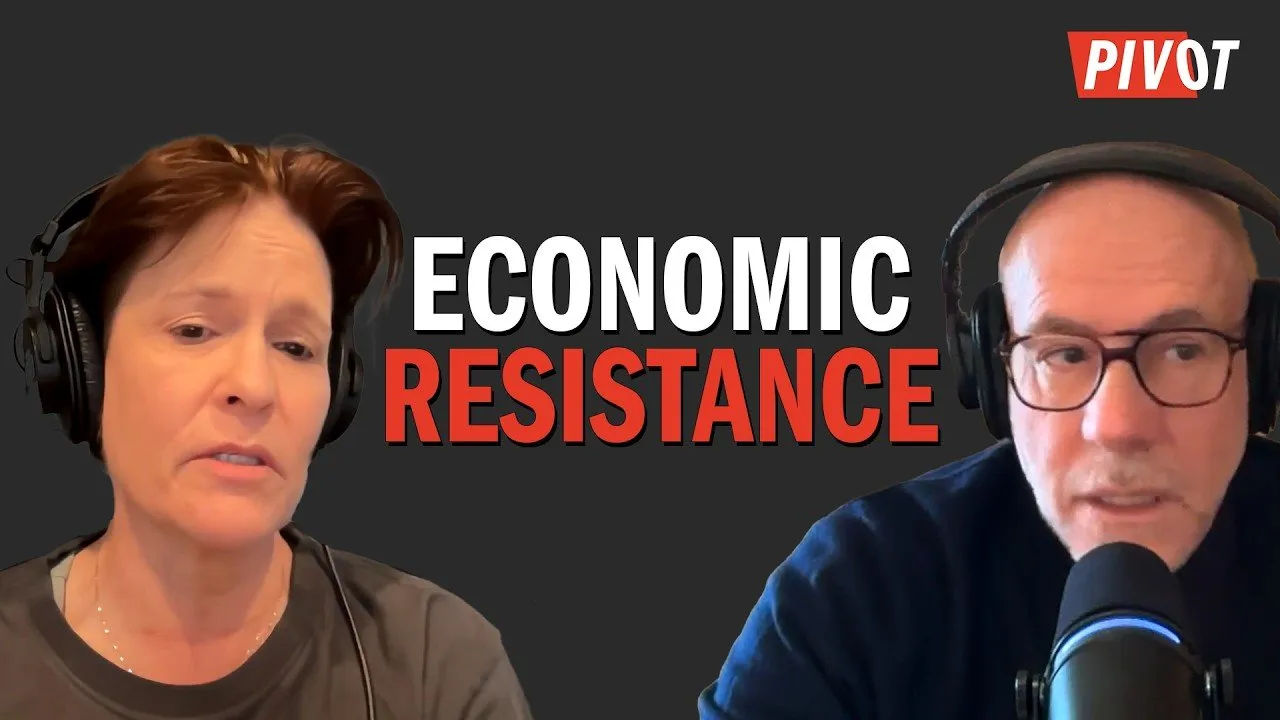
In a landscape where political anxiety is high and citizens often feel powerless to influence government policy, the latest discourse from the Pivot podcast suggests a shift in strategy. Rather than relying solely on traditional protests or voting cycles, Scott Galloway and Kara Swisher explore the efficacy of financial activism. The central thesis is that while administrations may ignore political outcry, they respond rapidly to market fluctuations.
This discussion introduces the "Resist and Unsubscribe" movement—a calculated economic boycott designed to target the "soft tissue" of the economy: Big Tech growth stocks. Alongside this strategy, the conversation spans the legal reckoning facing social media platforms regarding addiction, the implications of AI on the workforce, and a pragmatic look at human longevity. The following analysis breaks down these complex intersections of capitalism, technology, and health.
Key Takeaways
- Economic Activism as a Lever: Galloway proposes that the fastest way to influence government policy is through market pressure, specifically by unsubscribing from high-growth tech services rather than essential goods.
- Targeting "Ground Zero" and the "Blast Zone": The boycott strategy bifurcates targets into Big Tech companies driving the S&P 500 (Ground Zero) and companies directly contracting with agencies like ICE (Blast Zone).
- The "Big Tobacco" Moment for Social Media: A major lawsuit in Los Angeles is treating social media algorithms as addictive products, drawing comparisons to historical litigation against cigarette manufacturers.
- "Corporate Ozempic": Artificial Intelligence is increasingly viewed as a tool for efficiency that allows companies to decouple revenue growth from headcount, signaling a shift in labor economics.
- The Science of Longevity: Beyond bio-hacking trends, evidence suggests that the primary driver of health span is not supplements or technology, but the quality of human relationships.
The "Resist and Unsubscribe" Strategy
The core of Galloway’s argument rests on the observation that modern administrations react more decisively to stock market volatility than to civic unrest. Historically, movements that rely on stopping essential consumption—such as buying groceries or gas—often fail because they require unsustainable sacrifice from the populace. To achieve maximum impact with feasible effort, the focus must shift to discretionary spending.
Defining "Ground Zero"
Galloway identifies a specific sector he terms "Ground Zero": Big Tech companies that currently control roughly 40% of the S&P 500. These organizations—including Amazon, Google, Microsoft, Meta, and Netflix—are valued based on aggressive growth metrics. Consequently, even a minor slowdown in subscriber growth can have a disproportionate effect on their stock valuation.
The strategy involves a sustained "unsubscribe" movement (suggested for February) where consumers cancel streaming services, premium memberships, and cloud subscriptions. The rationale is that these companies are the "soft tissue" of the economy; they are highly sensitive to consumer sentiment and hold significant sway over political leadership due to their market dominance.
The most radical act in a capitalist society, hands down, is nonparticipation.
The "Blast Zone"
The second tier of the strategy, labeled the "Blast Zone," targets companies with direct operational ties to controversial government agencies, particularly ICE. This list includes telecommunications and logistics giants such as AT&T, Comcast, Palantir, and FedEx. While acknowledging that divesting from these services is more difficult for the average consumer, the goal is to provide transparency so individuals can make informed decisions about where their money flows.
This approach offers a "free gift with purchase" for the consumer: by consolidating streaming services and cutting recurring subscriptions, households can significantly reduce monthly expenses while simultaneously engaging in political expression.
Social Media Litigation and the Addiction Crisis
Parallel to the discussion of economic boycotts is the growing legal scrutiny surrounding social media platforms. A significant trial currently underway in Los Angeles accuses major platforms—including Meta, TikTok, Snap, and YouTube—of causing personal injury through addictive product design. Plaintiffs argue that features like infinite scrolling and algorithmic recommendations create compulsive usage patterns leading to depression, anxiety, and self-harm.
This litigation represents a potential turning point, often compared to the reckoning faced by "Big Tobacco." The argument is not just that these products are popular, but that their creators knowingly engineered them to override user agency. Swisher and Galloway discuss the internal communications of these companies, which may reveal that executives were fully aware of the psychological toll their products take on users, particularly teenagers.
The Impact on Youth
The data regarding teen usage is stark. Reports indicate that while a small percentage of teens qualify as addicted to substances like alcohol, a significantly higher percentage exhibit signs of addiction to social media. Heavy usage correlates with higher rates of suicidal intent and body dysmorphia. Galloway argues for a cultural shift in how parents view these platforms, suggesting that unrestricted access to social media for a 16-year-old may be more detrimental than exposure to traditional vices.
Big Tech Earnings and "Corporate Ozempic"
Despite the proposed boycotts and legal challenges, Big Tech continues to post staggering financial results, though the source of this success is shifting. Recent earnings reports from Meta, Amazon, and Microsoft highlight a massive pivot toward Artificial Intelligence and robotics.
Galloway introduces the metaphor of AI as "Corporate Ozempic." Just as the drug suppresses appetite to reduce weight, AI allows corporations to suppress headcount while maintaining or increasing revenue. This trend is evident in Amazon's projection of doubling top-line retail revenue over the next few years without a corresponding increase in their workforce. Similarly, heavy investments in industrial robotics—Amazon alone utilizes approximately one million robots—signal a move toward automated efficiency.
Divergent Fortunes
- Meta and Microsoft: Both companies are investing billions in capital expenditures for AI infrastructure. Meta reported a 24% increase in sales, while Microsoft’s cloud division continues to grow, driven by the demand for AI computing power.
- Tesla: In contrast, Tesla faces significant headwinds, with net income dropping and margins compressing. The company is pivoting its narrative from electric vehicles to robotics (specifically the Optimus robot) and AI, a move that critics argue is a high-risk bet to justify its valuation as it struggles with core automotive sales.
The Reality of Longevity
Shifting focus from corporate health to human health, the conversation addresses the booming "longevity" industry. This sector has largely been dominated by ultra-wealthy individuals promoting expensive bio-hacks, supplements, and experimental therapies. However, Swisher’s upcoming exploration into this topic aims to democratize the findings based on medical science rather than influencer trends.
While developments in GLP-1 agonists (obesity drugs), gene editing, and cancer vaccines show promise, the most accessible and effective factor in longevity remains low-tech. Evidence consistently points to social connection as the primary determinant of a long, healthy life. Isolation and the reliance on "synthetic relationships" via social media are detrimental to health span. Ultimately, the most effective longevity strategy is fostering deep, real-world relationships and engaging in community activities.
Conclusion
The intersection of these topics paints a picture of a society at a crossroads. On one hand, technology companies are pushing toward a future of automated efficiency and algorithmic engagement that generates immense wealth but poses risks to mental health and labor stability. On the other hand, citizens possess a dormant power: the ability to withhold their capital and their attention.
Whether through the "Resist and Unsubscribe" movement or by strictly regulating social media consumption within the home, the overarching message is one of reclaiming agency. By understanding the mechanisms of the market and the biology of human needs, individuals can make choices that not only impact their personal well-being but potentially steer the broader culture toward more humane outcomes.