Table of Contents
The American education system stands at a critical crossroads. Educators and policymakers are grappling with historic levels of chronic absenteeism, rising youth disconnection, and a polarized civic landscape. While many systems have historically sought student "voice" as a superficial feedback mechanism, a growing movement seeks to transform students from mere consultants into active "co-agents" of change. By shifting from symbolic participation to structural leadership, schools can tap into what experts call the world’s most untapped resource for hope: the ingenuity of the next generation.
Key Takeaways
- Transition to Co-Agency: True engagement moves beyond "student voice" (tokenism) toward co-agency, where students and adults share the responsibility of designing educational outcomes.
- Structural Integration: Effective student leadership requires formal power, such as full voting rights on boards of education and inclusion in legislative processes.
- Equity in Rural Access: Students in rural districts often use their agency to advocate for basic resources, such as AP testing access and modern school facilities.
- Adult Capacity Building: For co-agency to succeed, adults must be trained to listen differently and view students as professional colleagues rather than just subjects of study.
The Paradigm Shift: From Voice to Co-Agency
For decades, student engagement was often treated as a "one-off" initiative—a survey sent out once a year or a student invited to speak briefly at a board meeting. Dr. Janice Jackson of the Aspen Institute argues that this pattern of asking for input and then making decisions behind closed doors leads to deep-seated student disengagement. The alternative is co-agency, a model where students and adults navigate the complexities of education together.
Moving Beyond Tokenism
Tokenism occurs when a single student is "stood up" to offer a perspective before adults return to a predetermined plan. Authentic engagement requires moving from symbolic spaces to structural ones. This means involving youth in budgeting, policy drafting, and the actual delivery of educational solutions. When students see their input resulting in tangible policy changes, their investment in the system increases exponentially.
The Research of Engagement
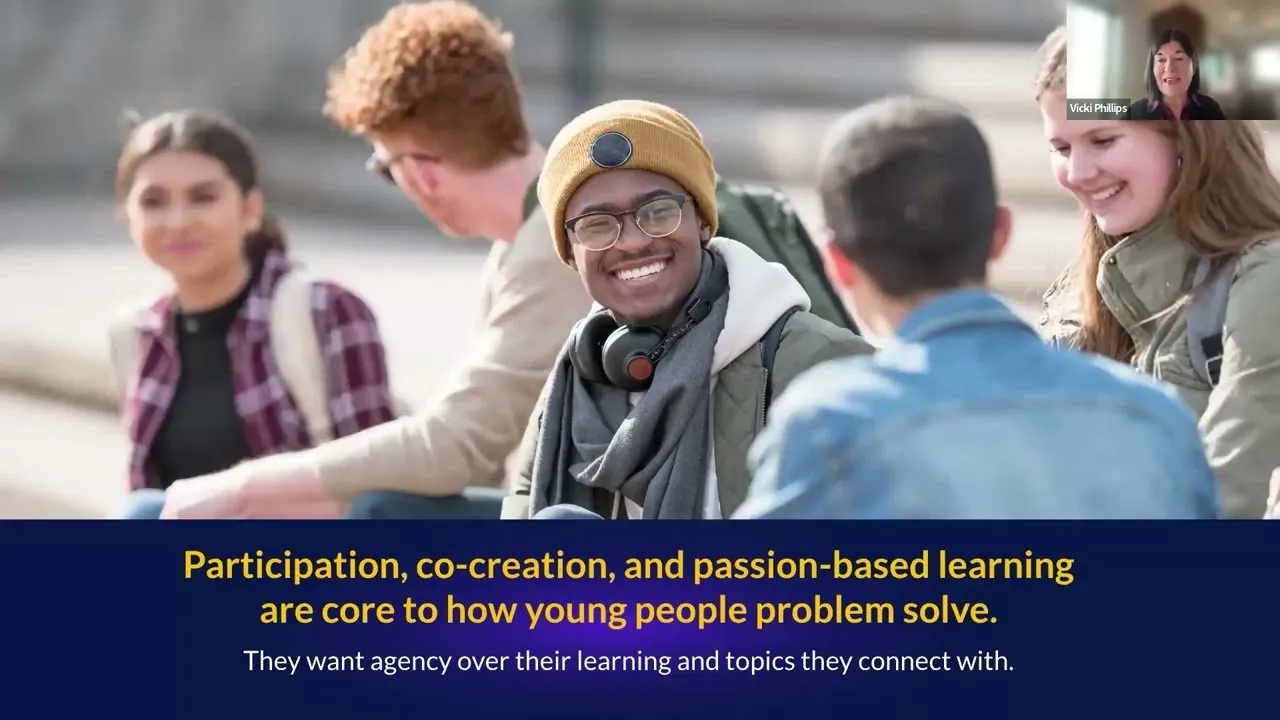
Decades of school improvement research confirm that student perceptions are the most reliable predictors of effective teaching and learning. Dr. Vicky Phillips, CEO of the National Center on Education and the Economy, notes that youth naturally value collective action over individual leadership. They are "solution seekers" who tire of movements that merely admire problems without acting on them.
"Young people are the earth's most untapped resource for hope. We would be unfortunate if we didn't harness the power they bring."
Structural Power: The Voting Student Member
One of the most robust models of student agency is found in Maryland, where the student member of the State Board of Education (SMOB) serves as a full voting member. Omari Barnes, the current SMOB, emphasizes that his role is a gubernatorial appointment confirmed by the State Senate. This status gives him the same weight as adult colleagues on matters ranging from the state budget to literacy standards.
Leveling the Playing Field
Authentic partnership requires a level playing field. Barnes highlights that when he joined the board, he received the exact same orientation as adult members. Separating student and adult training creates an implicit hierarchy that undermines collaboration. By integrating these processes, systems send a clear signal that every member’s judgment is valued equally, regardless of age.
Educating Peers and Leaders
A student leader in a high-stakes role acts as a bridge. Barnes notes that while he cannot make unilateral decisions, his presence forces the board to consider the immediate, daily impact of policies—such as the condition of school-issued technology or the nuances of cell phone bans—on the student body. This "independent judgment backed by youth perspective" ensures that policy data doesn't just look backward but addresses the current reality of the classroom.
Rural Realities and Student Advocacy
The challenges of engagement look different in rural contexts, where the struggle is often for basic educational equity. Emily Grace Adams, a student in Louisiana’s Win Parish, highlights how student agency is being used to bridge the gap in resources. In her district, which lacks Advanced Placement (AP) classes, students are using legislative advisory councils to advocate for "self-study" bills that would allow them to take AP tests at neighboring schools.
The Power of Collective Testimony
In White Pine County, Nevada, Superintendent Dr. Adam Young has seen student agency drive massive infrastructure wins. When the district struggled to fund school replacements for buildings nearly a century old, students engaged in a cross-curricular advocacy project. They used math, social studies, and technology to build a case for new facilities, eventually testifying before the state legislature.
- Authentic Evidence: Students collected data on how their environment hindered learning.
- Legislative Impact: The student-led testimony helped secure a $100 million bond to replace failing school buildings.
- Civic Literacy: By participating in real-world governance, students gained "durable skills" that far exceed what can be learned from a textbook.
Building Adult Capacity for Partnership
Perhaps the greatest hurdle to student co-agency is not student apathy, but adult readiness. Many educators and administrators lack the tools to effectively partner with young people in a way that feels respectful and productive. Shifting the culture requires adults to move from "listening" to "learning with" youth.
Listening Without Brushing Off
Students often feel unheard when their suggestions are met with silence or a lack of follow-up. Adams suggests that even when a student's idea cannot be implemented immediately due to budget or logistical constraints, adults must explain why. Acknowledging that a voice was heard—and providing a transparent reason for the decision—preserves the student’s sense of value and encourages future participation.
Managing Polarization through Shared Work
Co-agency can serve as a powerful tool for lowering political polarization. Because students tend to see issues holistically rather than ideologically, they build coalitions across differences more naturally than adults. When schools model shared power, they teach students that leadership is not about "fighting over" power, but about the collective responsibility to solve community problems.
"Youth leadership is most effective when it moves beyond symbolic to structural... having them involved in policy, budgeting, and actual delivery."
Conclusion
The journey from student voice to co-agency is not a quick fix, but a necessary evolution for a modern democracy. By embedding students into the very fabric of decision-making, education leaders can reduce chronic absenteeism and mental health crises by providing students with a sense of purpose and belonging. Whether it is through voting rights on state boards or student-led legislative bills, the goal remains the same: ensuring the next generation is prepared not just to inherit the world, but to actively shape it. As educational systems move from programs to integrated systems of engagement, the divide between adult decision-makers and the youth they serve will continue to narrow, creating a more resilient and equitable future for all.