Table of Contents
History rarely repeats itself exactly, but it often rhymes. According to legendary macro investor Ray Dalio, the United States is currently following a predictable historical arc—one that has defined the rise and fall of empires for centuries. By analyzing the mechanics of past civilizations, from the Roman Empire to Chinese dynasties, Dalio has identified specific symptoms that indicate where a nation stands in its lifecycle.
The current diagnosis is sobering. Dalio argues that the U.S. is navigating a precarious "Stage 5" in a six-stage cycle, characterized by high debt, internal conflict, and the loss of relative power. However, this is not a prophecy of doom, but rather a mechanical assessment of cause and effect. Understanding these forces offers the clarity needed to navigate economic turbulence, potential civil strife, and the shifting geopolitical landscape.
Key Takeaways
- The U.S. is in Stage 5: We are currently in the phase immediately preceding a potential breakdown of order, characterized by intense polarization and financial overextension.
- The Debt Trap is Mechanical: When debt service costs squeeze government spending, nations almost inevitably resort to printing money, leading to currency devaluation.
- Wealth is Not Money: There is a critical difference between illiquid "wealth" (assets) and "money" (liquidity); knowing the difference is vital during a crisis.
- Gold as a constant: In times of fiat currency instability, gold remains the only asset that is not someone else's liability.
- Civil Conflict Dynamics: History shows that when political compromise becomes impossible and opponents are dehumanized, the risk of domestic conflict rises exponentially.
The Five Forces Driving History
To understand the current global volatility, one must look beyond the daily news cycle and examine the structural forces at play. Dalio identifies five distinct, interconnected forces that drive the "Big Cycle" of history.
- The Monetary Order: This involves the cycle of money, credit, and debt. It dictates how economies grow through credit creation and eventually stagnate when debt service payments overwhelm income.
- The Domestic Political Order: This refers to the internal system of governance. When wealth gaps widen and values diverge, populations become polarized, leading to the rise of populism on both the left and the right.
- The Geopolitical Order: This is the external struggle for power. As dominant powers decline and new powers (like China) rise, the existing multilateral systems and rule-based orders are challenged.
- Acts of Nature: Historically, droughts, floods, and pandemics have claimed more lives and toppled more civilizations than wars. These biological and environmental stressors often act as catalysts for political change.
- Technology and Invention: New technologies determine the winner of economic and military wars. Whoever dominates the technological frontier dominates the geopolitical landscape.
These forces do not operate in a vacuum. They compound one another. A nation struggling with debt is less resilient to acts of nature; a nation with internal political strife is less capable of projecting power abroad.
Understanding Stage 5: The Brink of Disorder
Dalio outlines a six-stage lifecycle for empires. Stage 1 begins with a new order and low debt, while Stage 6 represents the breakdown of that order, often involving civil war or revolution. Currently, the United States is situated in Stage 5.
This stage is defined by significant wealth and value differences, leading to a sensation that the system is no longer working for the majority. Consequently, compromise disappears. Politics becomes a "win at all costs" game where the opposition is viewed not as a political rival, but as an enemy of the state.
"When the causes that people are behind are more important to them than the system, the system is in jeopardy."
This dynamic was visible in the 1930s, where economic hardship led four major democracies to revert to autocracies. When a population believes the judicial, political, or media systems are rigged, they lose the willingness to accept defeat. This breakdown of the "rule of law" is the primary marker of Stage 5.
The Mechanics of Debt and Inflation
One of the most immutable mechanics in Dalio’s model is the debt cycle. The United States faces a classic supply-and-demand problem regarding its debt. To fund operations, the government issues bonds. However, if there is insufficient demand for this debt from foreign buyers, interest rates must rise to attract capital.
Rising interest rates, however, crush the domestic economy. This leaves the government "stuck" with two painful options:
- Austerity: Raise taxes and cut benefits (politically suicidal and deflationary).
- Print Money: The central bank buys the debt, effectively monetizing it.
History shows that governments almost always choose the second option. They print money to make debt payments easier, which functions like "the hair of the dog" for a hangover—it provides temporary relief but worsens the long-term ailment. This occurred when Roosevelt severed the gold link in 1933 and when Nixon ended the gold standard in 1971. The result is inevitably a depreciation of the currency.
Wealth vs. Money: Protecting Your Assets
A critical distinction investors often miss is the difference between wealth and money. Wealth is financial accounting—it is the estimated value of assets like stocks, bonds, or real estate. Money is the medium of exchange used to settle transactions.
During a liquidity crisis, wealth can evaporate. If too many people try to convert their wealth into money simultaneously, the "value" of that wealth collapses. This is what pops asset bubbles. Furthermore, as governments seek to close budget deficits, wealth becomes a target for taxation.
The Role of Gold
In this environment, Dalio advocates for a diversified portfolio that includes assets capable of performing when fiat currencies weaken. Central banks around the world are currently buying gold at historic rates. They are moving away from dollar-denominated debt due to fears of sanctions and currency debasement.
"Gold is the one asset you can have that’s not somebody else’s liability."
For the individual investor, Dalio suggests that gold should constitute roughly 5% to 15% of a portfolio. It acts as a counter-balance: when traditional money and credit markets fail, gold typically performs well.
The Threat of Civil Conflict and Control
The transition from Stage 5 to Stage 6 involves a shift from political polarization to actual conflict. This doesn't always mean armies on a battlefield; it begins with the dehumanization of political opponents and the weaponization of the legal system.
In this volatile environment, citizens typically choose one of three paths:
- Pick a side and fight.
- Keep their heads down to avoid injury.
- Flee to safer jurisdictions.
Central Bank Digital Currencies (CBDCs)
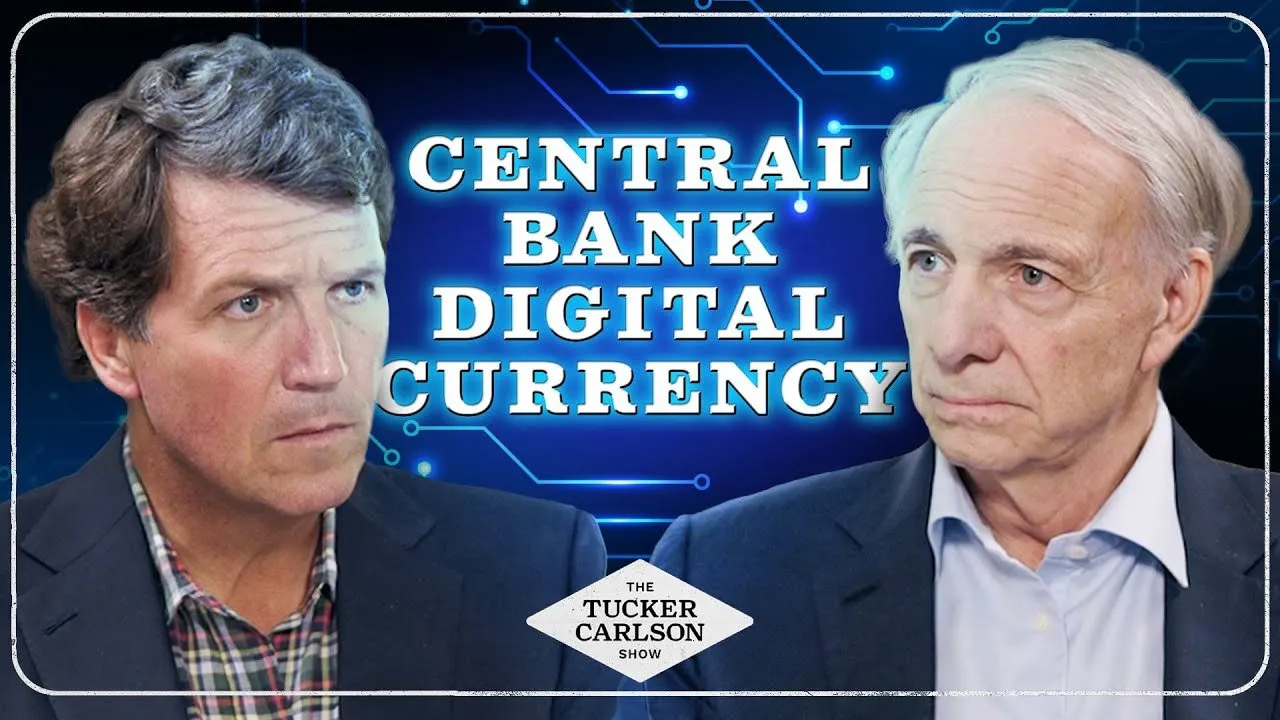
As governments struggle to maintain control over the monetary system and tax revenue, Central Bank Digital Currencies (CBDCs) are likely to be introduced. While convenient, Dalio warns they offer governments total surveillance over transactions. A CBDC allows the state to apply negative interest rates directly to your holdings or freeze assets of political dissidents. However, because of these privacy concerns and the risk of sanctions, Dalio believes CBDCs may struggle to gain international trust compared to neutral assets like gold.
Conclusion: How to Prepare
While the cycle appears deterministic, the outcome for individuals is not. Dalio’s philosophy is rooted in productive worry: "If you worry, you don’t have to worry. And if you don’t worry, you need to worry." By acknowledging the risks, you can take steps to mitigate them.
Preparation involves financial prudence—earning more than you spend and diversifying into assets that protect against currency devaluation. It also involves seeking environments that offer "civility and opportunity." States and nations with lower internal conflict and sounder balance sheets will see an influx of capital and talent as people "vote with their feet."
Ultimately, the most effective preparation is fundamental: educate the next generation to be productive, civil, and adaptable. While we may not be able to stop the turning of the wheel of history, we can certainly position ourselves to survive the rotation.