Table of Contents
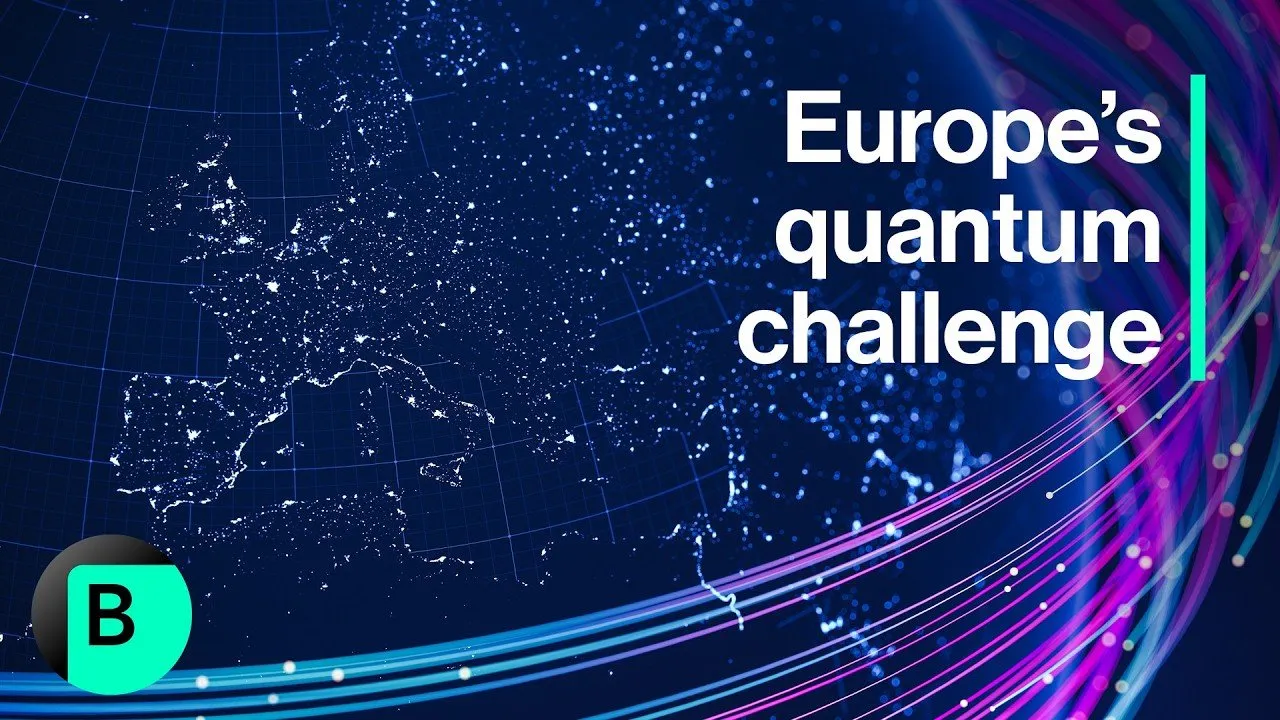
Europe possesses a robust foundation of quantum computing startups and research but faces a critical challenge in scaling these ventures to global leadership status comparable to U.S. and Chinese competitors. Industry executives warn that without increased engagement from major technology corporations and improved execution of government strategies, the continent risks falling into technological dependency and losing its geopolitical influence.
Key Points
- Scaling Challenge: While Europe has more quantum startups than the U.S., it lacks the massive capital investment from "Big Tech" giants like Google or Amazon required to scale globally.
- Infrastructure Strategy: Unlike the U.S. focus on cloud-based access, Europe is leading in deploying quantum hardware directly into data centers and supercomputing facilities.
- Sovereignty Stakes: Mastery of quantum technology is viewed as essential for national security, particularly regarding encryption standards and dual-use applications.
- Market Focus: Immediate commercialization targets include the educational sector to address talent shortages and hybrid integration with traditional supercomputers.
The Investment and Execution Gap
Despite a vibrant ecosystem of early-stage ventures and strong fundamental science, Europe struggles to bridge the gap between startup innovation and industrial dominance. The primary deficit lies in the absence of European technology behemoths willing to invest heavily in the sector, a stark contrast to the U.S. landscape where companies like IBM and Google drive development.
Industry leaders note that while political will exists in Brussels, with the European Commission announcing strong quantum strategies, the execution remains fragmented. The challenge is not a lack of innovation, but the inability to nurture companies that can scale rapidly to become global champions. To mitigate this, successful European quantum firms are actively seeking to activate corporate ecosystems, encouraging traditional industries to support the technological journey.
Strategic Sovereignty and Security
The race for quantum supremacy is not merely economic; it is a matter of continental security. Quantum computing offers dual-use capabilities: while it promises breakthroughs in drug discovery, material science, and fertilizers, it also poses a threat to current encryption schemes through codebreaking.
"With a large enough quantum computer, you can break our current encryption scheme. It's very much a sovereign technology where Europe needs to make sure that we have a grip on it and we don't fall into dependencies."
Experts argue that if Europe fails to control its own quantum supply chain, it risks repeating the outcome of the artificial intelligence hardware race, where the region lost significant ground to American chip manufacturers. Losing this foothold could cost Europe its "seat at the table" during global political negotiations regarding technology and security standards.
A Distinct Approach to Infrastructure
Rather than strictly copying the U.S. model, which heavily favors cloud-based access to quantum processors, Europe is carving out a niche in on-premise infrastructure. Reports indicate that more quantum computers are currently deployed in European data centers than in their U.S. counterparts. This strategy focuses on integrating quantum hardware directly into existing supercomputing facilities, working in tandem with CPUs and GPUs.
Commercialization is already underway in two key areas:
- Education: Placing quantum computers in universities to train the next generation of engineers, addressing a critical global talent shortage.
- Supercomputing: collaborating with hardware leaders like Nvidia to integrate quantum processors into high-performance computing environments.
Future Outlook and Industrial Adoption
The path forward requires a shift in mindset from local protectionism to global ambition. While building a sovereign supply chain is necessary, European companies must also compete in U.S. and Asian markets to remain viable. There are positive signals of industrial adoption; for example, pharmaceutical giant Novo Nordisk and the Schwarz Group have begun investing in quantum infrastructure and research.
Ultimately, the timeline for widespread industrial application—unlocking massive potential in sectors like logistics and pharma—remains several years away. However, the foundational hardware sales to educational and research institutions are creating the necessary revenue streams and ecosystem to support the technology until it reaches maturity.